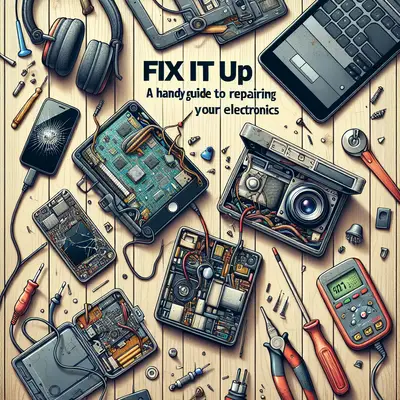
When a favorite gadget suddenly stops working, most people think “time to replace it.” For DIY fans, that moment is an opportunity. Many “dead” electronics are one simple fault away from working again—if you know where to look and how to work safely. This guide walks through five practical, step‑by‑step repair workflows you can apply to a wide range of devices, from game controllers to Bluetooth speakers and laptops.
Whether you’re brand‑new to electronics repair or already comfortable with a multimeter, these methods focus on safe, repeatable steps you can use again and again instead of one‑off fixes for a single gadget.
Start Smart: Safety, Tools, and a Simple Troubleshooting Routine
Before you open anything, having a consistent routine saves time and prevents damage.
Disconnect and discharge first
Always unplug devices from the wall, remove batteries, and power them off before you start. For anything with a large battery (laptops, power tools) shut down completely and disconnect the pack. Avoid working on devices that plug directly into the wall while they’re energized. Capacitors in power supplies can hold a charge—if you’re not trained in high‑voltage safety, skip repairs on open power supplies and microwaves.
Build a basic tool kit
A compact kit covers most small electronics: - Precision screwdriver set (including Phillips, flat, Torx, and security bits) - Plastic spudger and opening picks - Tweezers - Isopropyl alcohol (≥ 90%) and cotton swabs - Multimeter (for continuity and basic voltage checks) - ESD wrist strap or at least a habit of touching grounded metal before handling boards
Follow a “least invasive first” checklist
Before opening anything: - Try a different outlet, USB port, or cable - Test with a known‑good charger or power brick - Remove and reseat batteries (or leave out for 5–10 minutes) - Check for software resets (button combos, reset holes, or factory‑reset options)
Document as you go
Use your phone to photograph each step so you know where screws and cables go. Lay out screws on a sheet of paper in the pattern you removed them, and label areas if needed.
Know when to stop
If you smell burning, see bulging batteries, or find liquid on power supply boards, pause. Some repairs are not safe DIY projects and are better left to experienced technicians or replacement.
Step‑By‑Step Tip 1: Revive Buttons That Don’t Respond
Unresponsive buttons are one of the most common (and fixable) issues in remotes, game controllers, and handheld devices.
Confirm it’s really a hardware issue
Try fresh batteries, test the device on something else (for example, another console or TV), and confirm the connection isn't the problem (Bluetooth pairing, USB cable, etc.). If only certain buttons fail while others work, it’s likely mechanical or contact‑related, not a full device failure.
Open the device carefully
Remove batteries and visible screws. Many cases also snap together—use a plastic spudger instead of a metal screwdriver to avoid cracking the shell. Work around the seams gently until the housing separates.
Inspect the button area
Look for: - Dust, crumbs, or sticky residue - Torn rubber membranes - Cracked plastic posts or worn button caps
Clean the contacts
On most remotes and controllers, each button presses a carbon pad onto a matching pad on the circuit board. - Dampen a cotton swab with isopropyl alcohol (not dripping) - Gently scrub the black or metal contact pads on the board - Wipe the rubber button pads too, especially the underside where the dark conductive material is
Let everything dry completely (alcohol evaporates quickly).
Reassemble and test
Put the rubber pads and buttons back in place, making sure they’re aligned and not pinched. Reassemble the shell and install batteries. Test every button deliberately. If one still fails, the trace for that button may be cracked; advanced users can inspect for hairline breaks and bridge them with conductive paint or a small jumper wire, but this requires more skill and a steady hand.
Step‑By‑Step Tip 2: Fix Devices That Power On… Then Cut Out
Bluetooth speakers, laptops, and handheld consoles often show this behavior: they start fine, then shut off suddenly. That pattern often points to power delivery or battery issues.
Rule out a bad power source
- Try another charger that matches the correct voltage and polarity - Test with another cable - Plug into a different outlet or USB port
If the device is stable while plugged in but fails on battery, the battery is the prime suspect.
Check the battery condition (when possible)
For removable batteries: - Inspect for swelling, leaks, or corrosion around the terminals - Clean corroded contacts gently with a cotton swab and a bit of isopropyl alcohol
For laptops, you can often see battery health in system settings (Windows “Battery report,” macOS “System Information → Power”). A high cycle count plus low capacity suggests replacement.
Open the device to inspect power connectors
If you’re comfortable opening the case: - Remove screws and pry open the shell carefully - Locate the battery connector and DC‑in or USB‑C jack - Gently wiggle connectors to see if they’re loose or partially unplugged (don’t force anything)
Reseat connectors and check for stress damage
- Unplug the battery connector, wait 30 seconds, and plug it back in firmly - Check solder joints on charging ports: if the port is physically wobbly on the board, the solder may be cracked
Advanced DIYers can reflow or resolder a loose port, but overheating the board is a risk. If in doubt, stop at diagnosis and seek professional solder work.
Test in stages
- First, test with the back cover loosely in place and screws not fully tightened - If the device behaves better, something was pressing on the board or connector previously - Then close it completely and retest on battery and wall power
If the device still shuts down under load (e.g., when volume is high or CPU is busy), the battery may not be able to supply peak current. At that point, a battery replacement is the most practical fix.
Step‑By‑Step Tip 3: Rescue Gadgets From Minor Liquid Spills
Spills happen—coffee on a keyboard, water on a TV remote, or soda on a game controller. Quick, correct actions can prevent permanent damage.
Kill power immediately
- Unplug from the wall - Remove batteries or disconnect battery packs - For laptops/phones, if possible, power down quickly; avoid pressing lots of keys or buttons as you do
Don’t try to “see if it still works” while it’s wet.
Drain and blot, don’t shake violently
- Hold the device so liquid can drain out of openings - Blot gently with a lint‑free cloth or paper towel - Avoid hot air directly (like hair dryers), which can warp plastics and push liquid deeper
Open and inspect
If you’re comfortable: - Remove covers, keycaps (for mechanical keyboards), or shells - Look for pooled liquid, sticky residue, or corrosion starting at metal parts
Clean with isopropyl alcohol
- Use ≥ 90% isopropyl alcohol on a soft brush or cotton swab - Gently clean circuit boards and contacts where liquid reached - Focus on connector pins, switch contacts, and under removable parts
Alcohol helps displace water and dissolves residue from sugary drinks.
Dry thoroughly before testing
- Let the opened device air‑dry at room temperature for at least 24–48 hours - For thicker devices, gently circulate air around (not blasting heat into) them - Rebuild and test only when you’re confident all moisture is gone
If a device still misbehaves after drying (random key presses, ghost touches), there may be lingering corrosion under ICs or between traces. Professional ultrasonic cleaning or board‑level repair might be needed, but your first‑aid steps greatly improve the odds.
Step‑By‑Step Tip 4: Silence Buzzing Audio and Crackling Connections
Annoying hums, crackles, and intermittent sound from headphones, speakers, and aux cables often come down to dirty or worn connectors.
Identify where the noise comes from
- Test headphones or speakers with more than one device - Try another cable between your audio source and speaker/amp - Move the cable while listening—if noise appears only when the cable bends or the plug wiggles, the connector is suspect
Clean the jacks and plugs
- Power off devices - Dip the tip of the plug (headphone or aux) in a small amount of isopropyl alcohol - Insert and remove it from the jack several times to scrub the contacts - Wipe any visible dirt or oxidation off the plug itself
Inspect cables for damage
- Look for kinks, crushed sections, or exposed wire near the plug - If twisting a section causes sound to cut in and out, the conductor inside is likely broken
Resolder or replace suspect cables
For detachable cables: - Replacement is usually faster and safer than repair
For fixed cables (wired headphones, small speakers):
- Open the housing near where the cable enters
- Note which wire color goes where (photograph it)
- Desolder broken wires and trim to fresh copper
- Strip, tin, and resolder to the original pads, then provide strain relief with a small dab of hot glue or tape
Check for ground loop hum
If a constant low hum appears only when your device is connected to power and audio equipment (like a laptop into powered speakers), it may be a ground loop: - Try powering both devices from the same outlet strip - Use a ground loop isolator on the audio line - Avoid defeating safety grounds; never remove the earth pin from power plugs
These steps don’t just fix existing noise—they often extend the life of your gear by reducing wear and corrosion on key connections.
Step‑By‑Step Tip 5: Bring Dim or Flickering Screens Back to Life
From monitors and laptops to handheld game systems, display problems are common—but not always fatal.
Differentiate between “no picture” and “no backlight”
- In a dark room, shine a flashlight at an angle onto the screen while the device is on - If you can faintly see an image, your backlight (or its power circuit) is failing - If you see nothing at all, it could be a signal, cable, or board issue
Check external connections first (for monitors and TVs)
- Try a different HDMI/DisplayPort cable - Test another input source (another computer, console, or streaming device) - Confirm the correct input is selected in the device menu
Inspect and reseat display cables (laptops and handhelds)
If you’re comfortable opening the case: - Disconnect power and battery - Open the device and locate the ribbon cable to the display - Unlock the cable connector (usually a small latch) and gently reseat the ribbon fully and evenly - Check for kinks or visible damage in the ribbon, especially where it bends near hinges
Look for obvious backlight failures
On some monitors and TVs (CCFL or LED backlit): - Burnt‑smelling areas or visibly bulged capacitors on power/inverter boards strongly suggest a power issue - Swollen electrolytic capacitors (domed or leaking tops) can sometimes be replaced by experienced solderers with identical value and voltage parts
Working on high‑voltage backlight circuits carries risk; if you’re not trained, stick to visual diagnosis and leave board‑level repair to professionals.
Test with an external display (for laptops and some consoles)
- Connect to an external monitor or TV - If the external display works fine, your graphics output is okay; the problem sits between the GPU and the built‑in display (cable, panel, or backlight) - If both are blank, look toward deeper system or GPU issues that may not be practical DIY fixes
In many cases, reseating a loose ribbon or replacing a damaged cable restores a “dead” screen without needing an entirely new device.
Conclusion
Most electronics don’t fail in mysterious ways—they fail in patterns. Unresponsive buttons, flaky power, liquid mishaps, noisy audio, and screen problems cover a huge portion of the everyday issues people face with gadgets. With a small set of tools, a consistent safety‑first routine, and the five step‑by‑step workflows in this guide, you can turn “it’s broken” into “let’s see what’s really wrong” and rescue gear that would otherwise end up in a drawer or the trash.
Start with low‑risk devices, document your process, and treat every repair as practice for the next one. Over time, you’ll recognize common failure signs faster and fix them with confidence—and you’ll get more life out of the electronics you already own.
Sources
- U.S. Consumer Product Safety Commission – Electrical Safety – General guidance on safely working around electrical products and avoiding shock and fire hazards
- iFixit Repair Guides – Detailed, device‑specific teardown and repair instructions that illustrate many of the techniques mentioned (opening devices, reseating cables, replacing parts)
- Apple Support – Liquid Damage and Handling Spills – Official recommendations on what to do after liquid exposure, useful as a reference for safe handling and expectations
- IEEE – Electronic Equipment Cleaning and Maintenance Practices – Technical discussion of proper cleaning methods, including the use of isopropyl alcohol on electronic assemblies
- NIOSH – Preventing Worker Injuries and Deaths from Electrical Hazards – Broader electrical safety principles that DIY enthusiasts should be aware of when working on powered equipment
Key Takeaway
The most important thing to remember from this article is that this information can change how you think about Electronics.