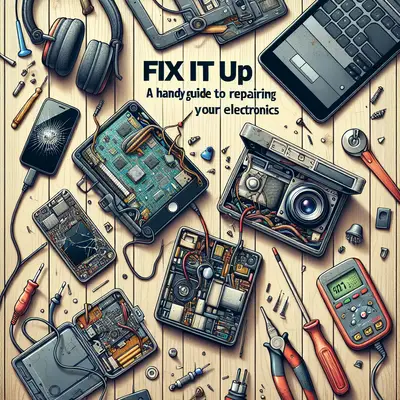
When a favorite gadget goes silent, most people think “replacement” instead of “repair.” But a lot of “dead” electronics are actually just suffering from simple, fixable issues: loose connections, worn switches, dirty ports, or tired batteries. With some basic tools and a methodical approach, you can bring many devices back to life, save money, and keep e‑waste out of landfills.
This guide walks through five practical, step‑by‑step repair moves that DIY enthusiasts can use on everything from TVs to game consoles and Bluetooth speakers. No advanced electronics background required—just patience, safety awareness, and a willingness to learn.
Before You Start: Safety, Tools, and Mindset
Before opening anything with a plug or battery, slow down and set yourself up for success.
First, think safety. Always unplug devices from the wall and remove batteries before you start. Capacitors in power supplies (TVs, monitors, microwaves, some speakers) can hold a dangerous charge even when unplugged—if you’re not sure how to safely discharge capacitors or avoid those areas, don’t touch the power-supply section. Never work on powered circuits unless you specifically know how to do that safely.
Next, gather basic tools. A good starter kit includes a precision screwdriver set (Phillips, flat, Torx), a plastic spudger or guitar pick for opening plastic cases, tweezers, a small flashlight or headlamp, isopropyl alcohol (90%+ preferred), cotton swabs, a soft brush, compressed air, a digital multimeter, and some masking tape or small containers for screws. Optional but very useful: a USB power meter, soldering iron with fine tip, and heat‑shrink tubing.
Adopt a “document everything” mindset. Take photos at each step so you can reverse the process. Label cables, keep screws grouped by location, and never force plastic clips—most gadgets are designed to snap open if you pry in the right direction. Finally, accept that the first time you open a device is a learning experience. Even if the repair fails, you’ll understand the hardware better and be more confident the next time.
Step‑By‑Step Tip 1: Revive Devices That “Won’t Turn On” with a Power Path Check
When an electronic device seems completely dead, the failure is often somewhere along the power path—not necessarily in a complex circuit. Follow this systematic approach before assuming the worst.
Start on the outside. Check the outlet with another known‑working device. Try a different power strip, or bypass it entirely. If there’s an external power brick, inspect it for damage: frayed cables, bent connectors, burn marks, or a loose jack. Wiggle the connector gently at the device end—if power flickers on and off, the jack or cable may be loose or cracked.
Verify the power adapter output. Look at the label for voltage (V) and current (A). With a multimeter set to DC voltage, measure the adapter output and confirm it’s within about ±10% of the rated value. If you get zero or a wildly off reading, the adapter is likely dead; replacing it is simple and often cheaper than replacing the entire device.
Move to the battery (if applicable). For laptops, handhelds, or Bluetooth devices, remove the battery and inspect contacts for corrosion or dirt. Clean gently with isopropyl alcohol on a cotton swab. Try powering on with only the charger connected and battery removed (if the design allows). If the device works this way, the battery is probably at fault.
Inspect the power button or switch. Sometimes the “failure” is just a sticky or worn switch. Rapidly press the button multiple times to free any internal debris. If the button feels mushy or fails to “click,” the mechanical part may have failed; on many devices, the switch can be replaced once you access the main board.
Finally, open the device only if you’re comfortable and the warranty is already expired. Once open, look for obvious signs: blown fuses, burnt areas, bulging capacitors (tops domed instead of flat), or loose connectors. Replace internal fuses only with the exact same type and rating. If you’re not confident working near the power-supply section or see signs of major damage, that’s the point to stop and consult a professional.
Step‑By‑Step Tip 2: Stop “No Signal” Problems in TVs and Monitors at the Source
Blank screens with “No Signal” messages often get blamed on the TV or monitor itself, but the culprit is more often a cable, port, or source setting. Before assuming a failed display panel, walk through this structured checklist.
Start with the basics: Is the display actually on? Look for a power LED, backlight glow, or startup logo when you press the power button. If the screen is completely black with no indicators but you hear startup chimes, you may have a backlight or power-board issue—more advanced and best left if you’re just starting out.
Confirm the input. Use the TV or monitor’s remote or front buttons to cycle through HDMI1, HDMI2, DisplayPort, etc. Many “dead” screens are simply on the wrong input. If your device has an “Auto” input setting, try disabling it and manually choose the correct port.
Check the video source. Swap the HDMI or DisplayPort cable to a different input on the same display, or connect the same source (laptop, console, streaming box) to another television or monitor. If the source doesn’t work anywhere, the problem may be with that device, not the display. Conversely, if another device works fine on the original display input, your display is probably healthy.
Inspect and reseat cables. Power off both devices. Disconnect the cable at both ends, check for bent pins, damaged shields, or loose connectors, then firmly plug them back in. Try a different, known‑good cable; HDMI cables in particular can fail internally or be sensitive to bending and strain.
Dive into the settings. On laptops, press the display toggle keys (for example, Windows key + P on Windows, or display toggles like F4/F8 on older systems) to ensure the external display is enabled. On game consoles, there may be a separate video output configuration or “safe mode” that forces a lower resolution compatible with older TVs.
If problems persist and you’re comfortable opening the device, inspect the display’s input board. With power disconnected and capacitors discharged, open the case and look for cracked solder joints on the HDMI/DisplayPort connector (often from rough plugging/unplugging), or obvious damage around the ports. Many input boards are modular and can be replaced as a single part with basic tools, avoiding the need for an entirely new TV.
Step‑By‑Step Tip 3: Cure Intermittent Sound by Tracking the Audio Chain
Crackling headphones, one‑sided earbuds, or Bluetooth speakers that cut in and out are incredibly common—and often fixable. Instead of replacing the entire device, follow the “audio chain” from source to speaker to spot and fix weak links.
Start with the easy swap. Test the same headphones or speaker on a different phone, laptop, or audio source. Then test a different set of headphones or speaker on the original device. This quickly reveals whether the issue lives in the playback device, the cable/speaker, or the audio source.
Inspect the jack and plug. For wired audio, gently wiggle the plug while listening. If you hear crackles or the sound cuts in and out, suspect a worn jack or a broken wire near the connector. Check for visible kinks or crushed sections in the cable, especially near the plug and near any in‑line controls.
Clean the connectors. Power down the device. Use a wooden toothpick or soft brush to gently remove lint and debris from headphone jacks. Then apply a small amount of isopropyl alcohol to a cotton swab (or specialized electronics cleaning swab) and rotate it inside the jack to remove oxidation. Clean the headphone plug the same way and let everything dry fully before testing again.
Repair or replace the cable when possible. Some headphones and speakers use detachable cables; replacing the cable is the fastest fix. For fixed‑cable headphones with one dead channel, you can often cut off the original plug and solder on a new one: strip the outer insulation, identify left/right/ground wires (often color‑coded), tin them with solder, and attach to a replacement TRS or TRRS plug following its pinout. Finish with heat‑shrink tubing to protect the joint.
For Bluetooth devices with skipping sound, check for interference and software issues. Move closer to the source, power off other wireless gear nearby, and unpair/re‑pair the connection. Update firmware on both the device and the speaker/headphones if updates are available. A factory reset on many Bluetooth speakers (following the manufacturer’s button combination) can solve stubborn pairing and audio‑glitch problems.
Step‑By‑Step Tip 4: Fix “Dead” USB Ports and Charging Problems with Port Maintenance
USB ports on laptops, game consoles, and phones take a lot of abuse—constant plugging, dust, pocket lint, and accidental tugs. Before assuming your device’s motherboard is shot, do some careful USB and charging‑port troubleshooting.
Begin with port triage. Test each USB or charging port with a known‑good cable and device. Use a USB power meter if you have one to see whether the port is delivering power. Note which ports work, which don’t, and whether the problem is charging only, data only, or both.
Clean the ports. Power down and unplug the device. Use a flashlight to inspect the port interior. If you see lint or debris, use a plastic or wooden tool (never metal) to gently loosen it, then blow it out with short bursts of compressed air. For slightly oxidized USB‑A or USB‑C contacts, you can very lightly brush with a soft, dry brush, then follow with a minimal amount of isopropyl alcohol on a lint‑free swab.
Inspect connectors for physical damage. In USB‑C ports, the central tongue can bend or break; in micro‑USB, the internal pins can flatten or get pushed back. If you see bent pins, stop using that port to avoid short circuits. On some devices, the charging port is on a small daughterboard that can be replaced cheaply with basic disassembly and a screwdriver.
Rule out the cable and charger. Swap both with known‑good parts that meet the correct specs. Using low‑quality or underpowered chargers can cause slow or intermittent charging that looks like a port problem but isn’t. For fast‑charging devices, test with the original manufacturer’s charger to confirm behavior.
For computers, check software and power settings. On Windows, open Device Manager and look for warning icons next to USB controllers, then uninstall and let Windows reinstall them on reboot. In power‑saving modes, some operating systems disable power to USB ports—adjust those settings and retest. For phones and tablets, check the battery health and charging stats in settings; if other chargers and cables all behave the same and the port is clean, battery replacement may be the real fix.
Only consider board‑level solder work if you have experience. Resoldering a surface‑mount USB port on a main board is an advanced project. For many DIYers, the sweet spot is replacing modular charging‑port boards and flex cables—these are widely available and designed for simple screw‑and‑connector swaps.
Step‑By‑Step Tip 5: Rescue Overheating Laptops and Game Consoles with a Cooling Refresh
Sudden shutdowns, roaring fans, and performance slowdowns under load often trace back to overheating—not a dying CPU or GPU. Dust, dried thermal paste, and blocked vents are common and typically repairable with careful maintenance.
Start from the outside. Power down and unplug the device. Check all vents and fan intakes for dust mats. Use compressed air in short bursts from the outside, keeping the fan blades from spinning freely by holding them with a toothpick or plastic tool; overspinning can damage fan bearings. Never use a vacuum directly on electronics, as static discharge can harm components.
If temperatures are still high, open the device for internal cleaning. Follow a model‑specific disassembly guide so you don’t miss hidden screws or clips. Once inside, gently brush dust off fans and heatsinks, and then use compressed air to blow debris out of the vents. Keep the can upright to avoid blasting liquid propellant onto components.
Refresh thermal paste on older devices. If your laptop or console is several years old and running hot, dried or cracked thermal compound between the CPU/GPU and heatsink is a common culprit. Carefully remove the heatsink assembly, clean both the chip surface and heatsink contact area with isopropyl alcohol and lint‑free wipes until the old paste is completely gone, then apply a thin, pea‑sized amount of high‑quality thermal paste before reinstalling the heatsink evenly.
Inspect fans for wear. If a fan is noisy, wobbles, or fails to spin smoothly, it may need replacement. Many laptop and console fans are modular, held in with a few screws and a small cable. Replacing the fan can radically improve cooling and noise levels without major expense.
Finish by optimizing airflow and usage. Elevate laptops slightly so bottom vents can breathe; avoid using them on soft surfaces like beds that block intake. For desktops and some consoles, ensure there’s several inches of clearance behind exhaust vents and that they’re not pushed tight against a wall or inside a closed cabinet. After the cleaning and refresh, monitor temperatures using system tools or third‑party utilities while running a game or heavy application to confirm that cooling performance has improved.
Conclusion
Most electronics that “suddenly die” or start acting up aren’t suffering from mysterious failures—they’ve run into a handful of common, fixable problems: power path issues, dirty or damaged ports, failing cables, overheating, or minor mechanical wear. By working methodically through the power chain, checking inputs and outputs, maintaining ports, and refreshing cooling, you can bring a surprising number of gadgets back from the brink.
The key is to combine safety with structure: start with external checks, move to simple cleaning and part replacements, and only crack open a device when you understand the risks. Over time you’ll build a personal playbook of fixes that save money, extend device life, and keep more electronics out of the trash—exactly the kind of repair buzz worth sharing.
Sources
- [U.S. Environmental Protection Agency – Electronics Donation and Recycling](https://www.epa.gov/recycle/electronics-donation-and-recycling) - Background on e‑waste and why extending device life through repair matters
- [iFixit Repair Guides](https://www.ifixit.com/Device) - Model‑specific, step‑by‑step teardown and repair instructions for thousands of electronics
- [OSHA – Working Safely with Electricity](https://www.osha.gov/electrical-safety) - Core electrical safety practices relevant to DIY electronics repair
- [Harvard University – Electronics Cleaning and Maintenance Tips](https://huit.harvard.edu/news/dos-and-donts-cleaning-your-electronics) - Best practices for cleaning electronics without causing damage
- [Microsoft Support – Troubleshoot “No Signal” or Black Screen Problems](https://support.microsoft.com/en-us/windows/troubleshoot-black-screen-or-blank-screen-errors-in-windows-10-79bcd7ed-c9e2-5e63-8d59-4020a56e7919) - Official guidance for diagnosing display issues that complements the signal‑path approach in this article
Key Takeaway
The most important thing to remember from this article is that this information can change how you think about Electronics.