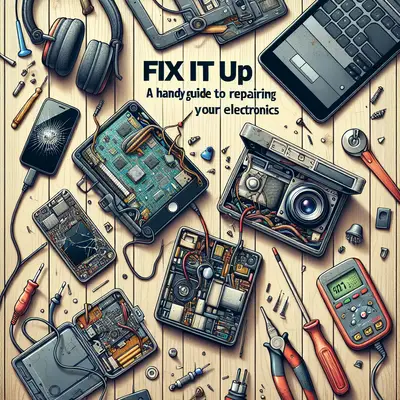
If your favorite gadgets are piling up in a “maybe I’ll fix it later” drawer, you’re not alone. The good news: a lot of everyday electronics problems are simple enough to tackle at home with basic tools, a bit of patience, and the right steps. This guide walks through five practical, beginner‑friendly fixes that can save money, extend the life of your devices, and build your confidence along the way.
Before You Start: Safety and Tools You Really Need
Before you crack anything open, it’s worth setting up a safe, predictable routine. Thoughtful preparation prevents damage—to you and your devices.
Key safety basics:
- Always unplug mains-powered devices before opening them.
- For anything with a battery, power it down completely and, if possible, remove the battery.
- Avoid working on swollen or damaged lithium batteries; those are a job for a professional or proper recycling center.
- If you smell burning plastic, see smoke, or find scorch marks on a circuit board, stop. That’s a “do not DIY” situation.
Core tools worth having:
- Precision screwdriver set (Phillips, flat, Torx, and pentalobe for phones/laptops)
- Plastic spudger or opening picks (to avoid scratching or shorting circuits)
- Tweezers (non‑magnetic if possible)
- Isopropyl alcohol (at least 90%) and cotton swabs
- Contact cleaner (for switches, jacks, and sliders)
- Multimeter (for checking power, continuity, and batteries)
- Small flashlight or headlamp
With that foundation in place, here are five step-by-step repair jobs you can realistically tackle at home.
Step-by-Step Repair 1: Revive a Phone That Won’t Charge Reliably
A flaky charging connection is often caused by dirt, pocket lint, or a loose cable—not a dead phone. Start with the easy wins.
Step 1 – Inspect the charger and cable
Look closely at the cable connector and the USB plug on the charger. Bent pins, frayed insulation, or discoloration are red flags. Test with another known‑good cable and charger before assuming the phone is the problem.
Step 2 – Power down the phone
Turn the phone off completely. This reduces the chance of a short and makes it easier to see inside the port without the screen lighting up.
Step 3 – Clean out the charging port
Use a bright light to examine the port. If you see lint or debris:
- Use a wooden or plastic toothpick to gently scrape compacted lint from the bottom and sides of the port.
- Work slowly, aiming to lift material out, not push it deeper.
- Avoid metal pins or needles; they can short pins or scratch contacts.
Step 4 – Use compressed air (carefully)
Short bursts of compressed air can blow out residual dust. Hold the can upright (to avoid propellant liquid) and keep the nozzle a short distance from the port.
Step 5 – Test the connection
Reconnect the charger. The plug should click in firmly and stay put. Gently wiggle the connector; if charging drops in and out with the slightest touch, the port itself may be loose or damaged—often requiring professional microsoldering or port replacement.
When to stop:
If the port looks broken, feels loose, or the phone only charges at specific angles even after cleaning, further DIY attempts can worsen the damage. At that point, document what you’ve tried and consult a repair shop.
Step-by-Step Repair 2: Quiet a Noisy Laptop Fan and Overheating Laptop
A laptop that feels like a space heater and sounds like a jet engine is often struggling with dust buildup and poor airflow, not a doomed CPU.
Step 1 – Back up and power down
Back up important files. Shut down the laptop, disconnect the charger, and remove the battery if it’s user‑removable.
Step 2 – Remove the bottom cover
Consult a model‑specific guide (from the manufacturer or a reputable repair community) to identify the screws and clips. Keep screws organized so you know where they go back. Gently lift the cover using a plastic spudger if needed.
Step 3 – Blow out dust
Hold the fan blades in place with a toothpick or a finger to prevent overspinning. Use compressed air to blow dust out of:
- The fan blades
- Heatsink fins
- Air intake and exhaust vents
Always blow air out of the laptop, not into it, to avoid pushing dust deeper.
Step 4 – Clean surface dust
Use a soft brush or cotton swab to loosen stubborn dust on the motherboard and around ports. Don’t soak anything; if needed, very lightly dampen a swab with isopropyl alcohol and avoid contact with connectors and labels.
Step 5 – Reassemble and test
Reinstall the bottom cover, making sure no cables are pinched. Boot the laptop and listen: the fans should ramp up only under load and settle quickly. Monitor temperatures with a simple utility recommended by your laptop’s brand or a widely used monitoring app.
When to stop:
If you see corrosion, burn marks, or a fan that physically won’t spin, a deeper repair (like fan replacement or board work) might be needed. That’s still DIY‑able for some, but it’s beyond “quick beginner fix” territory.
Step-by-Step Repair 3: Fix “No Sound” on Headphones or Earbuds (Wired)
Wired headphones often fail at predictable stress points: the plug, the inline remote, or where the cable meets the earcups. Sometimes, you can get them working again with simple troubleshooting and a basic solder repair.
Step 1 – Confirm the source isn’t the problem
Test another set of headphones in the same device and port. Then test your “broken” headphones in a different device. If only one combination fails, the issue may be the jack, not the headphones.
Step 2 – Find the bad section of cable
Gently bend and wiggle the cable in these areas while listening:
- Near the plug
- Around the inline remote/microphone
- Just before the earcups or earbuds
If sound cuts in and out when you move a specific spot, you’ve found the likely break.
Step 3 – Decide if it’s worth opening
If the failure is at the plug, replacing just the plug is often the simplest fix. If your headphones are inexpensive or fully sealed with no visible screws, opening them may be more effort than they’re worth.
Step 4 – Replace a damaged plug (basic soldering)
If you’re comfortable soldering:
- Cut off the old plug a few centimeters back from the damage.
- Strip the outer jacket to expose inner wires (usually left, right, and ground—colors vary).
- Lightly scrape off enamel on colored wires if present, then tin them with solder.
- Solder the wires to a new stereo plug: left to tip, right to ring, ground to sleeve.
- Add heat‑shrink tubing or strain relief to protect the soldered joints.
Step 5 – Test before final assembly
Plug in the new connector and test both channels with music that pans left and right. If everything works, finish insulating and securing the plug housing.
When to stop:
If the break is inside sealed earbuds, or you’re not confident with soldering tiny wires, you may spend more time than the headphones are worth. In that case, use this as a learning opportunity and practice on a cheap pair before trying to rescue an expensive set.
Step-by-Step Repair 4: Restore Life to a Remote Control That Barely Works
TV and device remotes often fail gradually—buttons need harder presses or only work sometimes. Dirt, oxidation, and worn contacts are usually to blame.
Step 1 – Check the obvious power issues
- Replace batteries with a fresh, high‑quality pair.
- Ensure they’re inserted in the correct orientation.
- Inspect the battery compartment for corrosion (white or greenish crust).
If you see corrosion, gently clean the contacts with a cotton swab dipped in isopropyl alcohol. For heavier buildup, you can use a small piece of fine sandpaper or a fiberglass pen.
Step 2 – Confirm the remote is transmitting
Most smartphone cameras can “see” infrared. Point the remote at your phone’s camera and press a button. If the LED on the remote tip flashes on your camera screen, it’s sending a signal. No flash? Internal issues are likely.
Step 3 – Open the remote housing
Remove any visible screws (often in or around the battery compartment). If there are none, the case probably uses clips. Insert a plastic spudger in the seam and gently work your way around until it opens.
Step 4 – Clean the circuit board and rubber pad
- Lift out the rubber button pad.
- Wipe the underside of each conductive pad with a cotton swab and isopropyl alcohol.
- Clean the matching contacts on the circuit board the same way.
- Let everything dry completely.
This removes skin oils, drink residue, and dust that can insulate the contacts.
Step 5 – Reassemble and test
Snap the housing back together and reinstall the batteries. Test a range of buttons from different areas. If certain keys still don’t respond, their conductive pads may be worn out; specialized “keypad repair kits” can restore them, but for very cheap remotes, replacement may be more economical.
When to stop:
Cracked circuit boards, burnt components, or liquid damage (sticky residue, rust) reduce the chances of a reliable fix. If that’s what you see inside, a new remote or professional cleaning is the realistic option.
Step-by-Step Repair 5: Rescue a Game Controller with Sticky or Unresponsive Buttons
Console and PC controllers live hard lives—snacks, sweat, and long sessions all take a toll. Sticky or dead buttons often just need cleaning, not replacement.
Step 1 – Disconnect and power off
Turn off the console or PC. Unplug wired controllers or remove batteries from wireless ones. This prevents accidental inputs and potential shorts.
Step 2 – Check for firmware and software issues
Before opening anything:
- Make sure the controller is updated via the console or PC software.
- Test the controller on a second device if possible.
If the problem follows the controller, it’s likely hardware.
Step 3 – Open the controller carefully
Controllers usually have screws under labels, battery covers, or grips. Use the correct screwdriver bit and keep track of each screw. Gently separate the shells with a plastic tool to avoid breaking clips.
Step 4 – Clean around buttons and joysticks
- Remove the rubber or plastic button sheet if present.
- Wipe buttons, rubber membranes, and the matching board contacts with isopropyl alcohol and cotton swabs.
- For joystick drift caused by dirt, carefully clean around and under the stick caps, but don’t flood the mechanism with liquid.
If some buttons feel physically stuck, you may find dried liquid or crumbs jammed in the housing—clean them out gently.
Step 5 – Reassemble and recalibrate
Rebuild the controller in reverse order, ensuring all buttons sit correctly in their cutouts and no rubber pads are folded. Once reassembled:
- Reconnect to your console or PC.
- Use the system’s built‑in controller test or calibration tool to verify each button and stick responds correctly.
When to stop:
If after cleaning you still have joystick drift or dead buttons with no visible contamination, the internal switch or joystick module may be failing. Replacement is possible with soldering and parts availability but is more advanced than a basic cleaning.
Conclusion
Many “dead” or misbehaving electronics are just dirty, blocked, or suffering from minor wear—problems you can often fix with careful cleaning and simple repairs. By starting with safe, low‑risk tasks like cleaning ports, vents, buttons, and battery contacts, you build both skills and confidence. Over time, you’ll get better at recognizing which issues are perfect for DIY and which deserve a professional’s bench.
Share this guide with someone whose gadgets are gathering dust in a drawer. A few basic tools and a methodical approach can turn that pile of “junk” back into a set of working devices—and keep more electronics out of the landfill.
Sources
- [U.S. Consumer Product Safety Commission – Electrical Safety](https://www.cpsc.gov/Safety-Education/Safety-Education-Centers/Electrical-Safety) – Safety guidance for working around electrical and electronic products
- [iFixit Repair Guides](https://www.ifixit.com/Guide) – Free, model‑specific teardown and repair guides for phones, laptops, controllers, and more
- [Apple Support – Clean your iPhone](https://support.apple.com/en-us/HT207123) – Official recommendations for safely cleaning ports and surfaces on mobile devices
- [Dell Support – Laptop Overheating and Fan Issues](https://www.dell.com/support/kbdoc/en-us/000126539/laptop-overheating-and-fan-issues) – Manufacturer advice on troubleshooting overheating and fan problems
- [Federal Trade Commission – Right to Repair](https://www.ftc.gov/business-guidance/blog/2021/07/nixing-nixie-right-repair) – Background on consumer repair rights and why DIY repair matters
Key Takeaway
The most important thing to remember from this article is that this information can change how you think about Electronics.