When a favorite gadget starts acting up, most people either ignore it or panic and start price-checking replacements. But a lot of everyday “it’s probably dead” electronics problems are actually small, fixable issues. With a few tools, some patience, and the right steps, you can often squeeze years of extra life out of your devices—and avoid tossing them in the trash.
This guide walks through five practical, step-by-step repair tips DIY enthusiasts can use to rescue common electronics at home, without specialized equipment or guesswork.
Safety First: What To Check Before Any Electronic Repair
Before grabbing a screwdriver, it’s worth doing a quick safety and sanity check. Electronics repairs don’t have to be scary, but they do need to be intentional.
- Unplug and power down.
Always disconnect from mains power and power the device off. For battery-powered devices, remove the battery if possible. Laptops, cordless tools, and some cameras often have removable packs.
- Discharge stored energy.
Big capacitors in devices like TVs or power supplies can hold a charge even when unplugged. Avoid opening any device you suspect has high-voltage components (CRT monitors, microwave ovens, power supplies) unless you are trained and have proper tools.
- Work on a clear, non-conductive surface.
A wooden or plastic table is ideal. Avoid metal tables, wet areas, or carpet that can build static.
- Take photos as you go.
Every time you remove a cover or cable, snap a picture. It’s the easiest way to ensure you can reassemble correctly without guessing.
- Use the right tools.
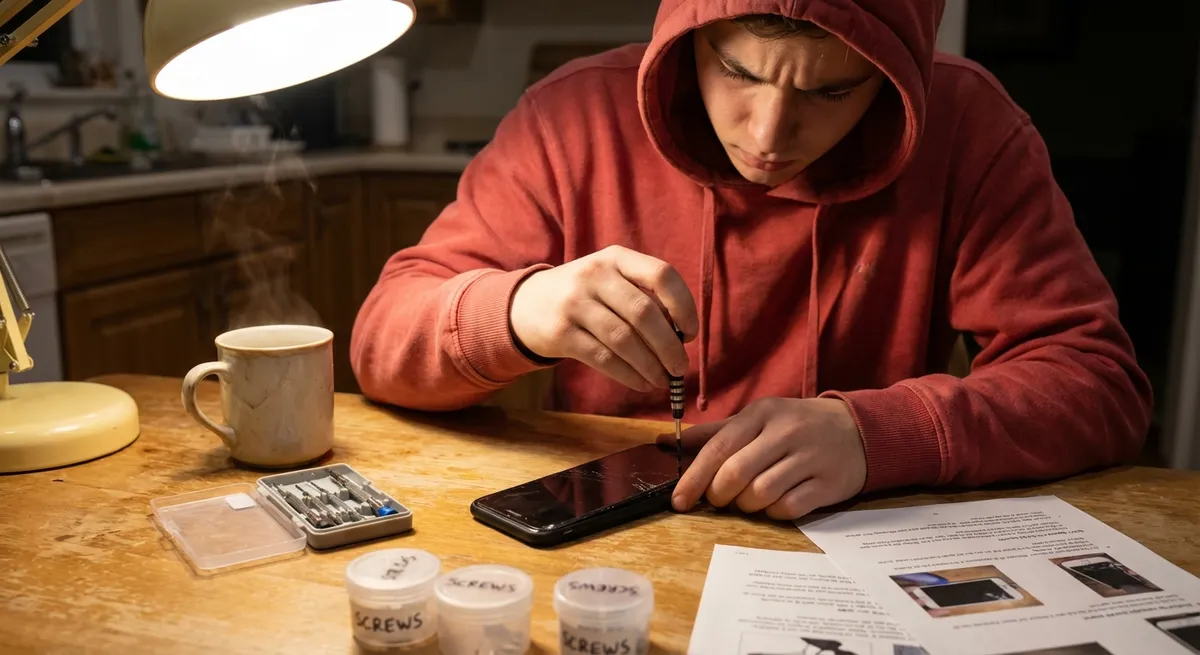
A basic electronics repair kit with small screwdrivers, tweezers, a plastic spudger, isopropyl alcohol (90%+), and a small brush covers most fixes. Avoid metal tools near live circuits.
Once you’ve done your safety check, you’re ready to tackle specific problems.
Tip 1: Revive a “Dead” Gadget With a Power and Connection Reset
Many electronics that look “dead” aren’t fried—they’re confused. Power delivery and firmware glitches can lock devices into a non-responsive state.
Typical symptoms:
- Device doesn’t turn on, no lights
- Won’t charge, but the charger and outlet seem fine
- Random shutdowns or boot loops
Step-by-step reset approach:
- Confirm the outlet and charger.
- Test the outlet with a known working device.
- Try a different cable and brick (especially for phones, tablets, and Bluetooth speakers). USB cables fail more often than the devices they charge.
- Remove all power sources.
- Unplug the device.
- Remove the battery if it’s user-accessible (laptops, cameras, some tools).
- For phones/tablets with built-in batteries, skip battery removal and go to the reset step.
- Perform a “hard reset” or “power reset.”
- Many devices support a forced restart by holding buttons:
- Laptops: Unplug, remove battery if possible, press and hold the power button for 15–30 seconds, then reconnect power.
- Phones/tablets: Common combo is Power + Volume Down held for 10–20 seconds (varies by brand—check the manufacturer’s site if unsure).
- This helps discharge residual charge and clear some firmware lockups.
- Inspect and clean power ports.
- Use a flashlight to look into charging ports (USB-C, Lightning, barrel jacks).
- Carefully remove lint or debris with a wooden toothpick or soft brush—never use metal tools.
- Gently re-test with a known-good cable.
- Reassemble and test gradually.
- Reinsert battery (if removable), plug in the charger, and look for small signs of life: charging LED, vibration, sound, or partial screen response.
- If you get any sign of power, leave it on charge for at least 20–30 minutes before assuming it failed.
This simple routine revives a surprising number of “dead” phones, tablets, routers, and laptops without opening a single screw.
Tip 2: Fix Overheating Laptops and Game Consoles With a Deep Clean
Fans and vents gradually clog with dust, making laptops, consoles, and mini PCs run hot, noisy, or randomly shut down to protect themselves. Cleaning the cooling system is one of the most effective—and overlooked—repairs.
Typical symptoms:
- Fans constantly running at high speed
- Device gets very hot, especially near vents
- Random shutdowns under load (gaming, video editing, streaming)
- Throttling: performance drops after a few minutes of use
Step-by-step cleaning process:
- Shut down and unplug.
Power off fully (no sleep mode), unplug, and remove batteries or detachable power packs if possible.
- Locate vents and fan inlets.
- Check the bottom, sides, or back for grills or slits.
- For game consoles, vents are usually at the rear and side edges.
- Surface dust removal.
- Use a soft brush or microfiber cloth to wipe visible dust off vents.
- Avoid blocking vents with your hand while brushing; let dust fall away.
- Use compressed air wisely.
- Short bursts only, from a distance of a few inches.
- Blow air across vents rather than directly in, to avoid forcing dust deeper into the device.
- For laptops, ideally hold the fan blades still with a toothpick or plastic tool so they don’t spin wildly and damage bearings.
- Deeper cleaning (if comfortable opening the case).
- Remove the bottom cover (laptops) or outer shell (consoles) using the right screwdriver bits.
- Photograph everything before disconnecting any cables.
- Use compressed air and a soft brush to clean heatsinks, fans, and surrounding areas gently.
- Do not scrape components or flex the motherboard.
- Optional: Replace thermal paste (advanced).
- Only attempt if you’re comfortable removing heatsinks.
- Clean old paste from the CPU/GPU and heatsink with isopropyl alcohol and a lint-free cloth, then apply a small amount of new paste according to the paste manufacturer’s guidelines.
- Reassemble and test under load.
- Reattach panels and screws securely.
- Run a game or video for 15–20 minutes and listen: the fan should still spin up, but the device should run cooler and more consistently.
This maintenance-style repair often restores stability and extends the life of systems that were on the edge of failing due to chronic overheating.
Tip 3: Bring Back Silent Speakers and Headphones With Basic Audio Checks
Audio issues often look like complex electronics failures but are frequently caused by dirt, damaged cables, or software settings.
Typical symptoms:
- Sound cuts in and out
- One ear of headphones not working
- Crackling when you move the cable
- Bluetooth speakers connecting but playing no sound
Step-by-step audio troubleshooting and repair:
- Rule out software settings.
- Check volume on both the device (phone, laptop, console) and the speaker/headphones.
- Make sure the correct output device is selected in your system’s sound settings.
- Test with multiple apps or sources (music player, browser, video) to confirm it’s not app-specific.
- Test with another device and another cable.
- Plug wired headphones into a different phone or laptop.
- Use a different audio cable for speakers providing line-in or AUX.
- If audio works fine elsewhere, the issue is likely in the original device’s jack or settings.
- Inspect plugs, jacks, and ports.
- Look for bent plugs, kinks, or crushed sections in cables.
- Check inside headphone jacks with a flashlight for lint or debris.
- Clean ports gently with a dry, soft brush or a wooden toothpick.
- Stabilize or repair suspect cables.
- If sound cuts in/out when you bend near the plug, the cable may have a broken conductor.
- For detachable cables (on studio headphones, some speakers, some gaming headsets), simply replace the cable.
- For fixed cables, you can:
- Add strain relief using heat-shrink tubing over the damaged area to prevent further breakage.
- If you’re comfortable soldering, cut out the bad section and re-solder or replace the plug, matching wire colors and insulation carefully.
- Check and clean speaker grills and headphone meshes.
- Dust, earwax, and dirt can block speaker openings.
- Use a soft, dry brush or a dry cloth to gently scrub grills—avoid liquids near drivers.
- For removable ear tips (in-ear buds), remove tips and wash them with mild soap and water, dry completely, then reinstall.
- Reset Bluetooth audio gear.
- Forget the device in your phone/computer’s Bluetooth settings.
- Reset the headphones/speaker according to the manufacturer’s instructions (usually a button combo).
- Re-pair and test again.
Often, simple cleaning plus cable and settings checks restore full functionality without replacing the electronics themselves.
Tip 4: Repair Sticky Buttons and Unresponsive Remotes With a Contact Clean
TV remotes, game controllers, and other button-heavy gadgets accumulate skin oils, dust, and drink spills that can eventually block button contacts.
Typical symptoms:
- Some buttons work; others don’t
- You have to press very hard for a response
- Random phantom button presses
Step-by-step button and remote repair:
- Remove batteries and any power source.
Never open or clean a remote or controller with batteries inside.
- External cleaning first.
- Wipe the surface with a slightly damp microfiber cloth and a bit of mild soap solution.
- Avoid letting liquid run into crevices.
- Open the case carefully.
- Look for screws under battery covers, labels, or rubber feet.
- Use a small Phillips or specialty bit as needed.
- After screws are removed, use a plastic spudger or guitar pick to gently separate the shell along the seams.
- Document the layout.
- Take photos of the board, rubber membrane, and button layout before removing anything.
- Clean the rubber membranes and buttons.
- Remove the rubber pad that sits between buttons and the circuit board.
- Wash it in warm water with a tiny amount of dish soap. Rinse thoroughly and let it dry completely.
- For sticky buttons, gently scrub the underside and the plastic keycaps.
- Clean the circuit board contacts.
- Dip a cotton swab in high-purity isopropyl alcohol (90%+) and gently wipe the small black or silver pads where each button makes contact.
- Do not soak the board; light, quick passes are enough.
- Inspect for corrosion.
- Check the battery compartment for white or blue-green crust (leaked battery alkaline or corrosion).
- Scrub gently with a cotton swab dipped in isopropyl alcohol or a baking soda solution (for alkaline residue), then dry thoroughly.
- Reassemble and test.
- Once everything is dry, put the rubber membrane and buttons back, reassemble the shell, and reinstall batteries.
- Test all buttons from different angles to confirm consistent response.
Cleaning button contacts often transforms “time to buy a new remote” into “works like new,” and the same approach applies to calculators, simple controllers, and some small appliances with rubber keypads.
Tip 5: Rescue USB Ports and Connectors That Don’t Fit or Randomly Disconnect
Loose USB ports and unreliable connections are common on laptops, desktops, hubs, and docking stations. Sometimes the port itself is failing, but often the culprit is physical wear, debris, or a cable issue.
Typical symptoms:
- Devices disconnect when you nudge the cable
- USB plug feels loose in one specific port but fine in others
- Storage devices (drives, flash sticks) randomly appear and disappear
Step-by-step connector and port troubleshooting:
- Test multiple ports and devices.
- Try the same cable and device in a different USB port.
- Then try a different cable and device in the suspect port.
- This helps narrow it down to the port, the cable, or the device itself.
- Visually inspect the port.
- Use a flashlight to look into the port.
- Check for bent pins, misaligned plastic tongues, or foreign objects (broken connector tips, dust, crumbs).
- Clean the port gently.
- Use a soft, dry brush or canned air in short, controlled bursts.
- For stubborn debris, a wooden toothpick can carefully dislodge particles.
- Avoid metal tools that can short pins or scratch the contacts.
- Check for mechanical looseness.
- With the device powered off and unplugged, plug in a cable and feel for excessive wobble.
- If the entire port moves noticeably relative to the case, the solder joints or mounting tabs may be cracked.
- Stabilize external connections.
- If the onboard port is fragile but still mostly works, use a short, high-quality USB extension cable or hub.
- Leave that permanently plugged into the weak port and connect/disconnect from the extension instead, reducing stress on the internal connector.
- Re-solder or replace the port (advanced).
- If you’re experienced with soldering:
- Disassemble the device enough to access the underside of the USB port.
- Inspect for cracked solder joints where the port meets the board.
- Reflow solder on those joints with an appropriate iron and lead-free or compatible solder.
- If the port’s plastic or pins are broken, consider a full port replacement, matching the exact footprint and orientation.
- Back up data if storage devices are disconnecting.
- Before experimenting with a flaky port that affects external drives, back up critical data using a stable port to avoid corruption during disconnects.
Thoughtful inspection plus small mechanical fixes can add years to laptops and hubs that might otherwise be retired just because of one unreliable USB port.
Conclusion
Most everyday electronics don’t fail in a dramatic flash of smoke—they slowly develop quirks: random shutdowns, sticky buttons, “dead” batteries that aren’t really dead, and cables that only work if you hold them just right. With some basic tools and a methodical approach, you can handle many of these problems yourself.
By resetting power properly, cleaning cooling systems, restoring audio connections, refreshing worn-out buttons, and stabilizing ports, you can keep your devices in service longer, spend less on replacements, and keep more electronics out of landfills. The more you practice these repair “first-aid” steps, the more confidence you’ll build for tackling bigger projects down the line.
Sources
- U.S. Environmental Protection Agency – Sustainable Management of Electronics - Overview of why extending the life of electronics through repair reduces e-waste and environmental impact
- Apple Support – If your iPhone or iPad won’t turn on or is frozen - Official guidance on forced restarts and power troubleshooting for mobile devices
- Microsoft Support – Troubleshoot blue screen errors - Useful reference for understanding failures related to overheating and hardware instability in Windows PCs
- iFixit – Electronics Repair Guides - Step-by-step disassembly and repair guides for a wide range of consumer electronics
- Harvard University – Laboratory Safety: Electrical Safety - Practical safety principles applicable to working around and inside electrical and electronic equipment
Key Takeaway
The most important thing to remember from this article is that this information can change how you think about Electronics.