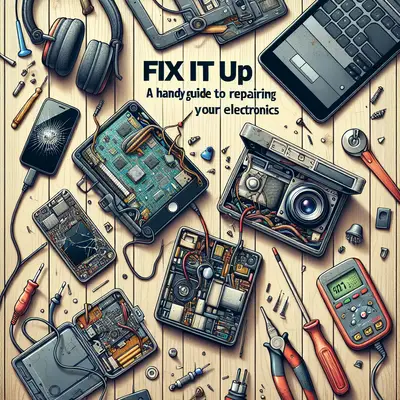
Electronics rarely fail all at once—they usually start with little annoyances: a laptop that overheats, a game console that keeps crashing, a TV that suddenly “forgets” Wi‑Fi. Knowing a few practical, low‑risk repair steps can save you money and keep your gear out of the recycling pile longer. This guide walks through five step‑by‑step “first‑aid” fixes you can safely try before heading to a repair shop or clicking “Buy Now” on a replacement.
Stabilizing an Overheating Laptop
Laptop running hot, fans screaming, or suddenly shutting down under light use? Overheating is one of the most common electronics issues—and one of the easiest to improve at home.
Step 1 – Check for obvious airflow blockages
Place the laptop on a hard, flat surface. Make sure vents on the sides, back, and bottom are not blocked by blankets, cushions, or your lap. Soft surfaces trap heat and choke airflow.
Step 2 – Blow out dust from vents
Turn the laptop off, unplug it, and hold the lid closed. Using a can of compressed air, give short bursts into each vent. Keep the can upright to avoid moisture spray and avoid spinning the fans excessively—brief bursts are enough. This often clears dust bunnies that act like insulation inside.
Step 3 – Clean the intake areas
Use a soft brush (a clean makeup brush or small paintbrush works) to gently sweep around vent openings and fan grills. Don’t push dust inward; sweep it away from openings and follow with more short compressed-air bursts.
Step 4 – Adjust power and performance settings
Boot up and go into your system’s power settings (Windows Power & Battery, macOS Energy Saver, or your Linux power manager). Switch from “High Performance” to “Balanced” or “Power Saver.” Slightly limiting CPU performance can reduce heat without a big impact on normal use.
Step 5 – Add passive cooling and monitor temps
Use a cooling pad or at least elevate the rear of the laptop an inch or two to let more air circulate. Install a temperature monitoring tool (like HWMonitor for Windows or Macs Fan Control for macOS). If temperatures remain extremely high or the laptop still shuts down, internal cleaning and fresh thermal paste may be needed—at that point, a pro repair or careful teardown guide is recommended.
Reviving a TV With No Signal or Random Black Screen
Modern TVs are basically large computers. When they lose picture (but still power on), the fix can be surprisingly simple.
Step 1 – Confirm the basics
Make sure the TV is actually turned on (standby light behavior can differ by brand). Check that the input/source matches the device you’re using (HDMI 1 vs HDMI 2, etc.). Use the TV remote’s “Input” or “Source” button to cycle through inputs slowly.
Step 2 – Check each cable connection
Turn the TV and connected devices off. Firmly reseat HDMI or component cables at both ends. If you see any bent HDMI plugs, frayed sections, or loose connectors, swap in a known-good cable. Faulty HDMI cables often cause flickering, random black screens, or “No signal” messages.
Step 3 – Test different ports and devices
Plug your streaming stick, game console, or Blu‑ray player into a different HDMI port on the TV. Then test with a completely different device (like a laptop via HDMI) to see if the problem follows a specific port or device. This helps you narrow down whether the issue is the TV input, the external device, or the cable.
Step 4 – Power-cycle the system
Unplug the TV from the wall. If it has an external power brick, unplug that end too. Wait at least 60 seconds. While it’s unplugged, press and hold the TV’s power button (on the TV itself, not just on the remote) for 10–15 seconds to discharge residual power. Plug it back in and power on again. This “hard reset” often clears firmware hiccups.
Step 5 – Update firmware and reset settings if needed
If the picture returns but still acts unstable, go into the TV’s Settings → System → Software Update (names vary by brand) and install any available updates. If issues persist, consider a “Reset picture settings” or even a full factory reset as a last resort. When even multiple devices and cables fail on every HDMI port after these steps, the internal main board or T‑Con board may be failing—this is where professional diagnosis or a board replacement guide becomes relevant.
Fixing a Phone That Won’t Charge Reliably
A phone that charges only at certain angles—or not at all—doesn’t necessarily need a new battery or a new device. Often, it’s the charging port or cable.
Step 1 – Rule out the easy culprits
Test with another original or high‑quality cable and charger. Cheap or damaged chargers can fail under load even if a phone “detects” them. Also try a different outlet or power strip to exclude a bad socket.
Step 2 – Inspect the charging port
Under good lighting, look straight into the charging port. If you see lint, dust, or tiny hairballs packed inside, that’s a common cause of poor contact. Do not use metal objects like paperclips that can short pins.
Step 3 – Gently clean the port
Turn the phone off. Use a wooden or plastic toothpick or a specialized port-cleaning tool. Gently scrape along the bottom of the port, lifting out debris in small amounts. Follow with a few controlled puffs of compressed air (held at a slight distance) to blow out remaining dust. Avoid spraying contact cleaner or liquids into the port.
Step 4 – Check cable fit and test again
After cleaning, plug the cable in and see if it fits more snugly. Move the cable gently while watching the charging icon—if the connection now stays stable, you’ve likely fixed the issue. If it’s still loose or intermittent with multiple known-good cables, the port itself may be physically worn or damaged.
Step 5 – Try alternate charging paths before replacing hardware
If your phone supports wireless charging, test with a known-good wireless charger. If that works flawlessly, you can use it as a workaround while planning a port replacement. When neither port nor wireless charging works, or when the phone overheats while charging, stop using it and seek professional service—battery or power management issues can be safety risks.
Bringing a Game Console Back From Frequent Crashes
Consoles that freeze, shut down, or show error messages under load often get dismissed as “dying hardware,” but many issues stem from heat, storage, or software problems you can address at home.
Step 1 – Improve ventilation and reduce dust
Place the console on an open shelf with at least a few inches of space on each side and behind. Avoid stacking it directly on top of other warm devices. With the console powered off and unplugged, use compressed air in short bursts along the vents to clear dust. Never run the fan directly with compressed air for long; spin it only briefly.
Step 2 – Check for system updates
Reboot, then navigate to the console’s system settings and look for “System Update” or “Software Update.” Install pending updates—manufacturers frequently patch crash issues, especially with newer game releases.
Step 3 – Clear cache and rebuild databases (where supported)
On many consoles, you can clear cached data or rebuild the game database/index. For example, some systems let you boot into a special mode (often by holding the power button for a set number of beeps) and select options like “Clear cache” or “Rebuild database.” This can resolve crashes caused by corrupted system or game data.
Step 4 – Free up storage space and check for failing drives
If your internal drive is nearly full (less than 10–15% free), delete old games or move them to external storage. Overfilled drives can slow load times and cause instability. Listen for clicking or grinding noises from the console—these may indicate a failing hard drive or SSD, which usually requires replacement.
Step 5 – Monitor temperature and consider internal cleaning
If crashes happen mainly during graphically intensive games and the unit feels very hot to the touch, overheating is likely. After improving external airflow and dust removal, if crashes continue, internal cleaning and fresh thermal paste may be needed. This involves opening the console, which can void warranties—check your warranty status and look up a reputable step-by-step guide for your specific model before proceeding.
Recovering a “Dead” Remote Control or Wireless Mouse
When remotes or wireless mice stop responding, people often blame the device they’re controlling. In reality, small input devices are notorious for simple, fixable failures.
Step 1 – Confirm the power source
Replace batteries with a fresh, known-good set—ideally from a different package than the previous ones. For rechargeable devices, connect them to a reliable charger and give them enough time to reach a full charge. Check for any battery leakage or corrosion.
Step 2 – Clean battery contacts
If you see white or greenish buildup on contacts, remove the batteries and gently scrub the terminals with a cotton swab lightly dipped in isopropyl alcohol (at least 70%). Let everything dry completely before inserting new batteries. Corroded contacts often create high resistance and intermittent operation.
Step 3 – Check power switches and pairing buttons
Some remotes and mice have tiny power or pairing switches that can get bumped. Toggle the power switch off and on slowly. For wireless mice with USB receivers, remove the receiver, plug it back in, then press the pairing button (if present) on both mouse and receiver.
Step 4 – Verify the signal path
For TV remotes, point the remote at a smartphone camera (most phone cameras can “see” infrared light). Press any button—if you see a flashing light on the phone screen, the remote is sending IR; the issue might be with the TV’s IR sensor or line-of-sight. Remove anything blocking the front of the device (soundbars, cabinet doors, decorations).
Step 5 – Reset or re‑pair the device
Many remotes and wireless mice support a reset – for example, holding specific buttons while inserting batteries, or holding the power button for 10–15 seconds. Check the manufacturer’s support page for your model’s reset or pairing instructions. If multiple fresh battery sets and re‑pairing attempts fail, internal switches or RF/IR components may be failing, and replacement is usually more practical than board-level repair for most DIYers.
Conclusion
Most everyday electronics problems aren’t instant death sentences for your gear. With a few simple tools—compressed air, a soft brush, fresh batteries, and a steady hand—you can solve a surprising number of issues at home: overheating laptops, uncooperative TVs, stubborn phone charging, flaky consoles, and “dead” remotes. Always start with the least invasive steps: check connections, clean, power-cycle, and update software. When those first-aid fixes don’t solve the problem—or when you’re dealing with swollen batteries, burning smells, or visible damage—that’s your signal to step back and bring in a professional. Learning where that line is gives you both confidence and safety as a DIY repairer.
Sources
- U.S. Department of Energy – Tips to Save Energy on Electronics – Covers general best practices for efficient and safe electronics use, including ventilation considerations
- Apple Support: If your Mac laptop gets too hot – Official guidance on ventilation, cleaning, and temperature management principles that apply broadly to laptops
- Samsung TV Support – No Signal Troubleshooting – Details step-by-step methods for diagnosing “No signal” and connectivity issues on modern TVs
- Sony PlayStation Support – System & Storage Troubleshooting – Explains safe mode, database rebuild, and update procedures relevant to console crash problems
- U.S. Consumer Product Safety Commission – Battery and Charger Safety – Provides safety guidance for handling batteries and charging issues in phones and other devices
Key Takeaway
The most important thing to remember from this article is that this information can change how you think about Electronics.