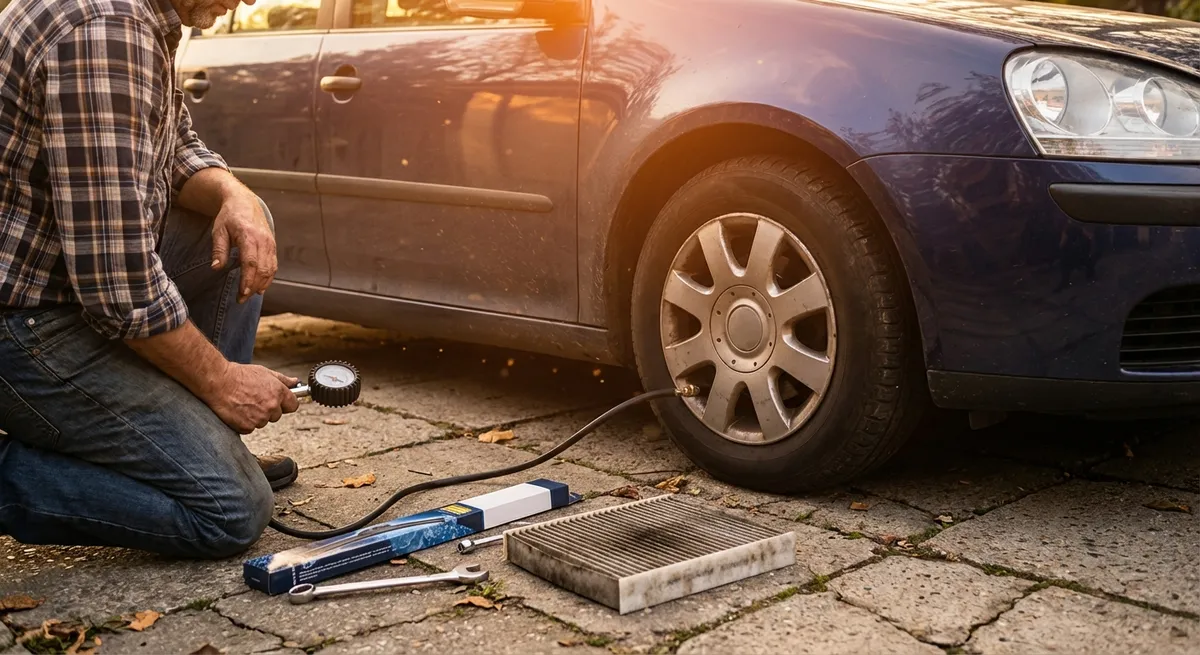
If you like turning your own wrenches but don’t want to tear an engine apart, there’s a sweet spot of repairs that are very doable at home and make a big difference in how your car feels and lasts. This guide walks through five practical, step‑by‑step repairs that most DIYers can handle with basic tools, a bit of patience, and a safe workspace. These are the kinds of fixes that quickly build confidence—and save real money over shop rates.
Safety and Prep: Before You Touch a Wrench
Any repair—no matter how “simple”—starts with safety and preparation. A quick checklist before you begin will keep a small job from turning into an expensive or dangerous one.
First, park on a flat surface, engage the parking brake, and use wheel chocks if you’re lifting the car. Never rely on a jack alone; always use jack stands rated for your vehicle’s weight and place them on solid, stable ground at proper lift points listed in your owner’s manual.
Disconnect the negative battery terminal for any work near electrical connectors, sensors, or rotating engine components. Wear safety glasses, especially when working under the car or dealing with fluids under pressure (brake cleaner, penetrating oils, coolant). Nitrile gloves help protect your skin from oil, fuel, and cleaners.
Gather tools beforehand: a basic socket set (metric and SAE), combination wrenches, a torque wrench, screwdrivers, pliers, a flashlight or work light, and a drain pan. Keep your owner’s manual or a trusted online repair guide handy for torque specs, fluid types, and component locations.
Finally, work methodically: take photos as you disassemble, label small parts, and don’t rush. If something feels forced, stop and reassess—DIY repairs go wrong more from impatience than lack of skill.
Step‑By‑Step Tip 1: Replace Worn Wiper Blades for Safer Visibility
Worn wipers are easy to ignore until the first heavy rain. Streaking, chattering, or missed spots are all signs it’s time to replace them, and the job usually takes under 10 minutes.
Confirm blade size and type
Check your owner’s manual or an in-store fitment guide for correct lengths for driver, passenger, and rear blades. Most cars use standard hook‑type arms, but some use different mounts—buy blades that match your arm style for a hassle‑free install.
Lift the wiper arm carefully
Gently lift the wiper arm away from the windshield until it locks in the raised position. Be cautious: if the arm snaps back, the metal can crack the glass.
Remove the old blade
On hook‑type arms, find the small tab on the connector. Press or pull the tab while sliding the blade assembly down toward the base of the arm to unhook it. Note exactly how it was oriented; a quick photo is helpful.
Attach the new blade
Align the new blade’s adapter with the hook on the arm, then slide it into place until you hear or feel a click. Gently tug to confirm it’s locked in and seated straight.
Lower and test
Carefully lower the arm back onto the glass. Repeat for other blades, then spray washer fluid and run the wipers to confirm smooth, streak‑free operation. If they chatter, clean the glass thoroughly with glass cleaner and a lint‑free cloth.
Even though this is simple, good visibility is a major safety factor. Fresh blades dramatically improve performance in rain and snow and help prevent eye strain while driving at night.
Step‑By‑Step Tip 2: Swap an Engine Air Filter to Restore Power and MPG
A dirty engine air filter restricts airflow, which can reduce fuel economy and throttle response. Most filters can be changed in under 20 minutes with zero special tools.
Find the air filter housing
Open the hood and look for a black plastic box near the front or side of the engine bay, often connected to a large intake tube. Your owner’s manual will show the exact location.
Release the housing
The lid is typically held by metal clips, plastic tabs, or a few screws. Release or unscrew them. If it resists, check carefully for hidden fasteners rather than prying too hard.
Remove the old filter
Lift the lid enough to pull the filter out. Note which side faces up and how it sits in the housing. Inspect the old filter: if it’s loaded with dirt, leaves, or insects, it’s overdue.
Clean the housing area
Wipe out loose debris inside the airbox with a clean, dry rag. Avoid letting dirt fall into the intake duct. Don’t use compressed air directly into the intake—loose dirt can be forced into places you don’t want it.
Install the new filter
Place the new filter in the same orientation as the old one, ensuring it sits flat and the sealing edge contacts the housing all the way around. An improperly seated filter lets dirt bypass straight into the engine.
Re‑secure the lid and test
Reinstall clips or screws and make sure the lid closes evenly. Start the engine and listen for any unusual hissing around the airbox, which could indicate a gap.
Regular air filter changes (often every 12,000–30,000 miles depending on driving conditions) protect the engine from abrasive dust and help maintain consistent performance.
Step‑By‑Step Tip 3: Replace a Blown Headlight Bulb for Better Night Driving
Driving with a burned‑out headlight is both unsafe and often illegal, but replacing a bulb is usually straightforward. The exact steps vary by vehicle, so always cross‑check with your manual.
Identify the failed bulb
Turn on your headlights and walk around the car. Determine which side and whether it’s low beam, high beam, or a combined bulb. Confirm with your dash indicators if present.
Access the bulb from under the hood
Open the hood and look behind the headlight assembly. You’ll usually see a round or rectangular dust cover, a socket, or a harness connected to the bulb. In some vehicles, you may need to move a reservoir or intake duct for access.
Unplug the electrical connector
Press the release tab and gently wiggle the connector off the bulb base. Do not pull on the wires directly. If stuck, apply a small amount of penetrating oil and let it sit briefly.
Remove the bulb
There may be a metal retaining clip or a twist‑lock mechanism. Unclip or twist counterclockwise and carefully pull the bulb straight out. Avoid hitting the glass on anything, as it can shatter.
Install the new bulb correctly
Match the part number and type (e.g., H11, 9005) specified in your manual. Handle halogen bulbs by the base only; oils from your skin on the glass can shorten bulb life or cause it to fail. If you accidentally touch it, clean with alcohol and a lint‑free cloth.
Align the bulb’s tabs with the socket, insert fully, and twist or clip into place until secure.
Reconnect and test
Plug the connector back onto the bulb, ensuring a firm fit. Turn on the headlights and verify brightness and beam pattern. Double‑check that the dust cover is reinstalled to keep moisture out.
For many cars, upgrading to modern, OEM‑approved bulbs maintains proper beam focus while improving illumination without blinding other drivers.
Step‑By‑Step Tip 4: Change Your Cabin Air Filter for Cleaner Air Inside
The cabin air filter traps dust, pollen, and debris before air reaches your vents. A clogged filter can cause weak airflow, odd smells, and extra strain on your HVAC blower motor.
Locate the cabin filter
Most are behind the glove box or under the cowl near the base of the windshield. Your owner’s manual will show location and access steps; some vehicles hide it behind a small interior panel.
Access the filter compartment
If it’s behind the glove box, open the box and empty it. Gently press in the side stops or remove a damper cord so the glove box can swing down and expose the filter cover.
Remove the old filter
Open the plastic cover (often held by small tabs or a couple of screws). Slide the filter out slowly to avoid dumping debris into the housing. Pay attention to airflow direction arrows printed on the filter frame.
Clean the area
Vacuum any leaves or loose dirt from the filter slot and surrounding area. This reduces the chance of noise and ensures the new filter seats properly.
Install the new filter with correct orientation
Align the airflow arrow on the new filter with the airflow direction indicated on the housing (typically arrow pointing down toward the blower). Slide it straight in so it sits flat, without bending or crumpling.
Reassemble and test airflow
Reinstall the cover, swing the glove box back up, and reattach any damper cords or stops. Turn on the fan and cycle through speeds and modes. You should notice smoother airflow and often a fresher smell, especially if using an activated‑carbon filter.
Replacing this filter once a year—or more often if you drive in dusty or polluted areas—keeps the interior more comfortable and reduces strain on your HVAC system.
Step‑By‑Step Tip 5: Rotate Your Tires to Promote Even Wear
Even tire wear improves traction, braking, ride comfort, and can significantly extend tire life. With a proper jack, jack stands, and a torque wrench, a home rotation is very achievable.
Confirm the correct rotation pattern
Check your owner’s manual or tire manufacturer’s guide. Most non‑directional tires on front‑wheel drive vehicles use a “forward‑cross” pattern, while directional or staggered setups may have restrictions. Never crisscross directional tires; they must stay on the same side of the car.
Loosen lug nuts on level ground
With the vehicle on the ground, use a lug wrench or breaker bar to slightly loosen (not remove) the lug nuts on all wheels you’ll rotate. This prevents the wheel from spinning while you break them free.
Lift and support the vehicle safely
Lift one end of the car at the recommended jack point and place jack stands under proper support points. Lower the car gently onto the stands and verify stability before removing any wheels. Repeat for the other end if needed.
Remove wheels and track their positions
Take off lug nuts and wheels, and mark their original positions with chalk or masking tape (e.g., “FL” for front‑left). This helps you follow the correct rotation pattern and track wear trends over time.
Inspect and rotate according to pattern
Before reinstalling, inspect tread depth, sidewalls, and check for nails, uneven wear, or cupping. Move each wheel to its new position per your pattern. Clean the hub surface with a wire brush if rusty to help prevent wheel vibration.
Reinstall wheels and torque properly
Hand‑thread lug nuts to avoid cross‑threading. Snug them in a star pattern with the wheel still off the ground. Lower the vehicle until the tire just contacts the ground, then torque the nuts to the manufacturer’s spec—again in a star pattern—to ensure even clamping.
Final check and test drive
Once all wheels are reinstalled, remove jack stands and fully lower the car. After a short drive, recheck torque, especially if you installed new wheels or studs. Pay attention to any vibrations or pulling, which can indicate a separate alignment or tire balance issue.
Rotating roughly every 5,000–7,500 miles (often aligned with oil changes) helps all four tires wear more evenly and can delay an expensive full set replacement.
Conclusion
Practical car maintenance doesn’t have to mean rebuilding engines or investing in a full shop’s worth of tools. Small, focused repairs—like fresh filters, working lights, good wipers, and properly rotated tires—deliver immediate payoffs in safety, comfort, and long‑term reliability. By following step‑by‑step processes and respecting safety basics, you can handle a surprising amount of upkeep yourself and understand your vehicle better in the process. Start with one of these projects, move at your own pace, and let each successful repair build your confidence for the next.
Sources
- NHTSA: Vehicle Maintenance Checklist - Official U.S. safety guidance on basic vehicle maintenance tasks
- Edmunds: How Often Should You Change Your Engine Air Filter? - Practical recommendations and intervals for air filter replacement
- Bridgestone Tires: Tire Rotation 101 - Detailed explanation of tire rotation patterns and benefits
- Penn State University: Cabin Air Filter Information - Background on cabin air filter purpose and maintenance
- Philips Automotive Lighting: Headlight Bulb Replacement Tips - Manufacturer guidance on safe and proper headlight bulb replacement
Key Takeaway
The most important thing to remember from this article is that this information can change how you think about Auto Repair.