If you drive regularly, you already know the big, obvious maintenance tasks: oil changes, tire rotations, maybe brake pads if you’re confident. But the repairs that quietly drain your wallet — and kill your car’s reliability — are often the small, annoying issues you keep ignoring. This guide walks through five practical, step‑by‑step fixes that most DIYers can handle with basic tools, a bit of patience, and a willingness to get your hands slightly dirty.
Before You Start: Safety, Tools, and When to Stop
Car repairs don’t have to be scary, but a little preparation goes a long way.
First, safety: always work on a cool engine when dealing with anything under the hood; hot coolant, oil, and metal parts can burn quickly. Park on a flat surface, engage the parking brake, and use wheel chocks if you’ll be lifting the car. Never rely only on a jack — always support the vehicle with rated jack stands before going underneath. Remove metal jewelry and tie back long hair to avoid getting caught in moving parts. Keep a basic fire extinguisher nearby if you’re working around fuel or electrical components.
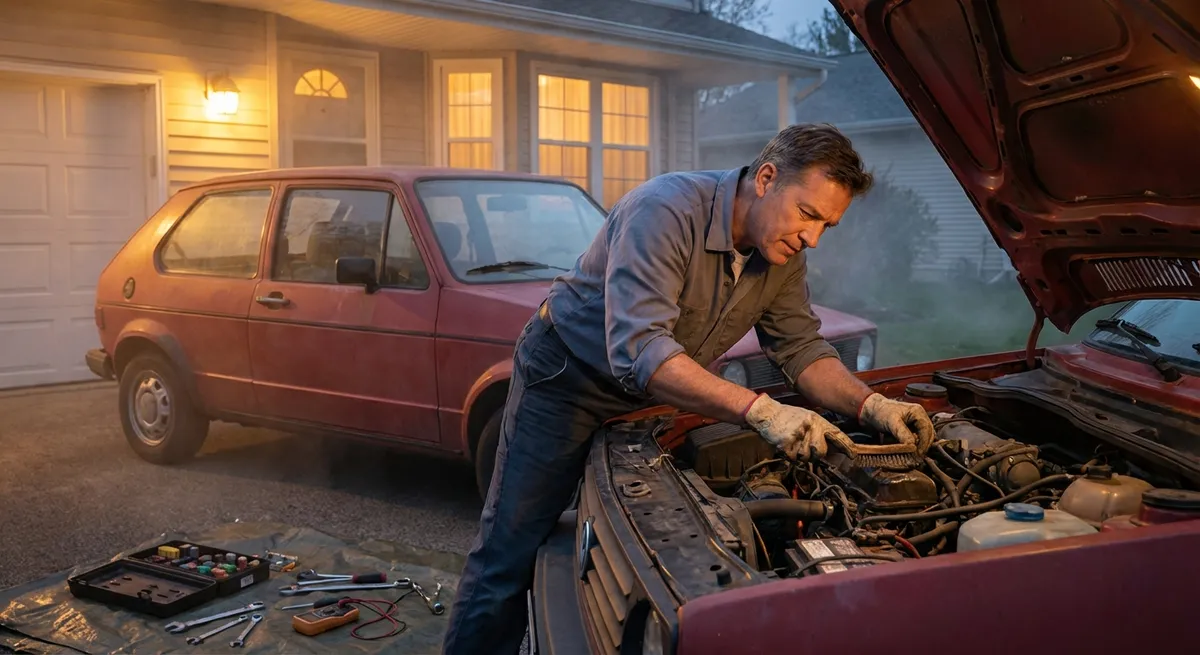
For tools, a starter kit goes far: a metric socket set, a couple of ratchets, screwdrivers, pliers, a torque wrench, a multimeter, and a good flashlight or headlamp. Add disposable gloves and shop towels for cleanup. Finally, know your limits: if a repair requires specialized tools you don’t have, or involves airbags, high‑pressure fuel lines, or structural components, it’s safer to consult a professional. You’re aiming for smart, confident DIY — not heroics.
Tip 1: Cure Dim or Flickering Headlights by Refreshing the Ground Connection
Flickering, dim, or “breathing” headlights aren’t always caused by bad bulbs. A weak ground connection is a common, fixable culprit.
What you’ll need: Basic socket set, wire brush or sandpaper, dielectric grease (optional), safety glasses.
Steps:
- Confirm the symptom. Turn on your headlights in a dark area and watch for flickering or uneven brightness. If both headlights are affected, you might have a wiring or ground issue rather than a single bad bulb.
- Disconnect the battery. Turn off the car and remove the key. Open the hood and disconnect the negative battery terminal first to prevent shorts while working on electrical connections.
- Locate the headlight ground point. Follow the wiring from the headlight assembly back toward the body or frame. You’re looking for a wire (often black or brown) bolted to bare metal on the fender, radiator support, or chassis.
- Remove and clean the connection. Use a socket to remove the ground bolt. Pull off the eyelet connector and examine it for corrosion or rust. Clean the metal on the eyelet and the body where it bolts on using a wire brush or fine sandpaper until shiny bare metal is visible.
- Reassemble with protection. Apply a light coat of dielectric grease to the contact area (if you have it) to slow future corrosion. Reinstall the eyelet and tighten the bolt snugly (do not overtighten and strip the threads). Reconnect the battery negative terminal.
- Test the repair. Turn on the headlights again. If the problem improves but doesn’t disappear, repeat the process for other visible grounds around the front of the car. Persistent issues might point toward a failing alternator or battery, which a mechanic or parts store can test.
This simple cleaning often restores brightness and consistency to aging headlights and can save you from unnecessary electrical parts replacement.
Tip 2: Stop That Squeaky Belt Before It Snaps
A high‑pitched squeal when you start the car or turn the steering wheel is often a worn or loose serpentine belt. Ignoring it can leave you stranded.
What you’ll need: Wrench or socket set, flashlight, gloves, phone camera (for routing reference).
Steps:
- Find the serpentine belt. With the engine off and cool, open the hood. The belt is a long, ribbed rubber belt that snakes around several pulleys on the front of the engine. Look for a routing diagram sticker under the hood; if there isn’t one, take a clear photo from several angles.
- Inspect the belt condition. Press the belt with your fingers and visually inspect it. Look for cracks, glazing (shiny spots), frayed edges, or missing chunks. If you see any of those, plan to replace the belt — squeal is often the first warning.
- Locate the tensioner. The belt tensioner is usually a spring‑loaded pulley that keeps the belt tight. Consult your owner’s manual or a repair guide for its location. It often has a square or hex boss where you can place a wrench or ratchet.
- Relieve belt tension. Place your wrench or ratchet on the tensioner and gently turn in the direction that loosens the belt. While holding tension off, slide the belt off one of the top pulleys. Slowly release the tensioner back to its rest position.
- Replace the belt (if worn). Route the new belt according to the diagram or your photo, leaving one easy‑to‑reach pulley for last. Once routed correctly, move the tensioner again and slip the belt onto the final pulley. Double‑check that the belt sits properly in each pulley groove.
- Check tension and alignment. Ensure the belt isn’t twisted and that it runs straight across all pulleys. Start the engine and listen: the squeal should be gone. If it persists, a worn tensioner or misaligned pulley might be the real issue and needs professional evaluation.
A fresh, correctly tensioned belt helps your alternator, power steering, and A/C function properly — and helps you avoid a roadside breakdown.
Tip 3: Restore a Sluggish Power Window Without Replacing the Motor
If your power window crawls up like it’s climbing a mountain, you don’t always need a new motor. Often, the tracks and seals just need cleaning and lubrication.
What you’ll need: Silicone spray lubricant (not WD‑40), clean rags, plastic trim tool (optional), safety glasses.
Steps:
- Check for mechanical vs. electrical issues. Turn the ignition to accessory mode and run the window up and down. If it moves but is slow or jerky, lubrication is a good bet. If it doesn’t move at all, clicks, or only works sometimes, you might have a switch, wiring, or motor problem.
- Clean the window channels. Lower the window halfway. Look at the rubber channels or felt guides on both sides of the glass. Wipe them gently with a clean rag to remove dust, debris, and old grime. Be careful not to tear old rubber seals.
- Apply silicone spray. Shake the can and use the straw attachment. Lightly spray the inside of the vertical window channels where the glass slides. Avoid overspraying onto the door panel and interior. Do not use petroleum‑based lubricants — they can swell or damage rubber.
- Cycle the window. Run the window up and down fully several times to work the lubricant into the channels. Listen and watch for smoother movement. If it’s still struggling, repeat a light application and test again.
- Inspect the window switch (optional). If the movement is still inconsistent, gently pry up the window switch panel (using a plastic trim tool helps avoid scratches) and inspect for obvious corrosion or loose connectors. Re-seating the electrical connector can sometimes restore solid performance, but avoid spraying liquids directly into the switch.
- Know when to stop. If you hear grinding, popping, or the window tilts or jams, the regulator or motor may be failing. At that point, replacing parts involves removing the door panel and working around glass — a job many DIYers can do, but only if you’re comfortable and have a detailed guide specific to your model.
Routine cleaning and silicone lubrication can extend the life of your window mechanisms and prevent expensive motor or regulator replacements.
Tip 4: Fix a Persistent Check Engine Light Caused by a Loose Gas Cap
A sometimes‑ignored but very real fix: a loose, damaged, or missing gas cap can trigger your Check Engine light and fail emissions tests.
What you’ll need: Replacement gas cap (if needed), OBD‑II scanner (optional but helpful).
Steps:
- Read the code if you can. Many auto parts stores will scan your Check Engine light for free. If you use an OBD‑II scanner, look for codes like P0440, P0442, P0455 — these often indicate an evaporative emissions (EVAP) system leak, and a gas cap is a common cause.
- Inspect the existing gas cap. Turn off the car, then remove the gas cap. Check the rubber seal for cracks, flattening, or damage. Look for broken or missing pieces in the cap and around the filler neck.
- Clean the sealing surfaces. Wipe the rubber seal on the cap and the filler neck surface with a clean cloth to remove dirt and fuel residue. Debris here can prevent a proper seal.
- Reinstall correctly. Reinstall the cap and tighten until you hear at least one or two distinct clicks. A cap that won’t click, spins freely, or doesn’t fit snugly should be replaced.
- Replace if necessary. If the cap is visibly worn or the code recurs after cleaning and tightening, buy a quality replacement that’s compatible with your vehicle (OEM or reputable aftermarket). Avoid very cheap, off‑brand caps — they may not seal properly or last.
- Reset and monitor. You can clear the code with an OBD‑II scanner, or simply drive normally. It can take several drive cycles for the system to retest and turn the light off automatically. If it stays on or returns quickly, you may have a more serious EVAP leak that requires smoke testing and a professional diagnosis.
This is one of the quickest, cheapest “repairs” you can do — and it saves you from chasing bigger problems that don’t exist.
Tip 5: Quiet Clunky Steering by Tightening Loose Sway Bar Links
If your car clunks or rattles over small bumps, especially at low speeds, worn or loose sway bar links are a likely suspect. Replacing them is one of the more approachable suspension jobs.
What you’ll need: Jack and jack stands, lug wrench, socket set, penetrating oil (like PB Blaster), torque wrench, safety glasses and gloves.
Steps:
- Confirm the noise source. Drive slowly over a rough surface or speed bump with the windows slightly down. A distinct clunk from the front (sometimes rear) end over small bumps points toward sway bar links or bushings, though other suspension parts can sound similar.
- Raise and secure the vehicle. Park on level ground, set the parking brake, and chock the rear wheels. Loosen (don’t remove) the lug nuts on the affected wheel(s). Jack up the front (or rear) of the car and support it securely with jack stands before removing the wheels completely.
- Locate the sway bar links. They are short rods connecting the sway bar (a thick, curved bar running left to right) to the control arm or strut. Each link has ball joints or bushings at both ends.
- Check for play. Grab each sway bar link and tug firmly. Excessive movement, visible torn rubber boots, or obvious looseness suggests it’s worn. Sometimes just tightening the retaining nuts can reduce play if they’ve worked loose, but worn joints usually need replacement.
- Remove the old links. Spray the nuts and exposed threads with penetrating oil and let it soak for several minutes. Use a wrench or socket to remove the nuts. Some sway bar links have an internal hex or Torx fitting to keep the stud from spinning; use the correct tool to hold it while loosening the nut.
- Install the new links. Position the new link in place, ensuring correct orientation. Hand‑thread the nuts first to avoid cross‑threading. Then tighten them with a wrench or ratchet and finish with a torque wrench to the specification in a repair manual or factory guide (over‑tightening can damage the joint or threads).
- Reassemble and test. Reinstall the wheels, hand‑tighten the lug nuts, then lower the vehicle and torque the lug nuts in a star pattern. Test‑drive over the same bumps. If the clunking is gone, you’ve likely found and fixed the issue. If not, other suspension components (ball joints, control arm bushings, strut mounts) may need inspection.
Replacing sway bar links can dramatically improve ride quality and steering feel, and it’s a confidence‑building first step into suspension work.
Conclusion
Most drivers underestimate how much they can safely fix themselves with patience, basic tools, and solid information. Cleaning a headlight ground, replacing a squeaky belt, lubricating window channels, tightening up your fuel system with a proper gas cap, and refreshing sway bar links are realistic weekend projects for a careful DIYer. Each one chips away at annoying symptoms, builds your repair skills, and keeps more money in your pocket — without diving into overwhelming, engine‑out jobs. Start small, follow step‑by‑step instructions, and always know when it’s time to call in a pro. The more familiar you become with your car, the easier it is to spot problems early and keep it running smoothly for years.
Sources
- National Highway Traffic Safety Administration (NHTSA) – Vehicle Maintenance Tips - General safety and maintenance guidance to support DIY work
- AAA – Car Care: Your Vehicle’s Serpentine Belt - Explains serpentine belt function, failure signs, and replacement basics
- Family Handyman – How to Fix Car Power Windows - Practical walkthrough for diagnosing and fixing slow or stuck power windows
- EPA – Evaporative Emissions (EVAP) Systems - Background on EVAP systems and why gas cap issues trigger check engine lights
- Haynes – What Is a Sway Bar and What Does It Do? - Clear explanation of sway bars, links, and their role in handling and noise
Key Takeaway
The most important thing to remember from this article is that following these steps can lead to great results.