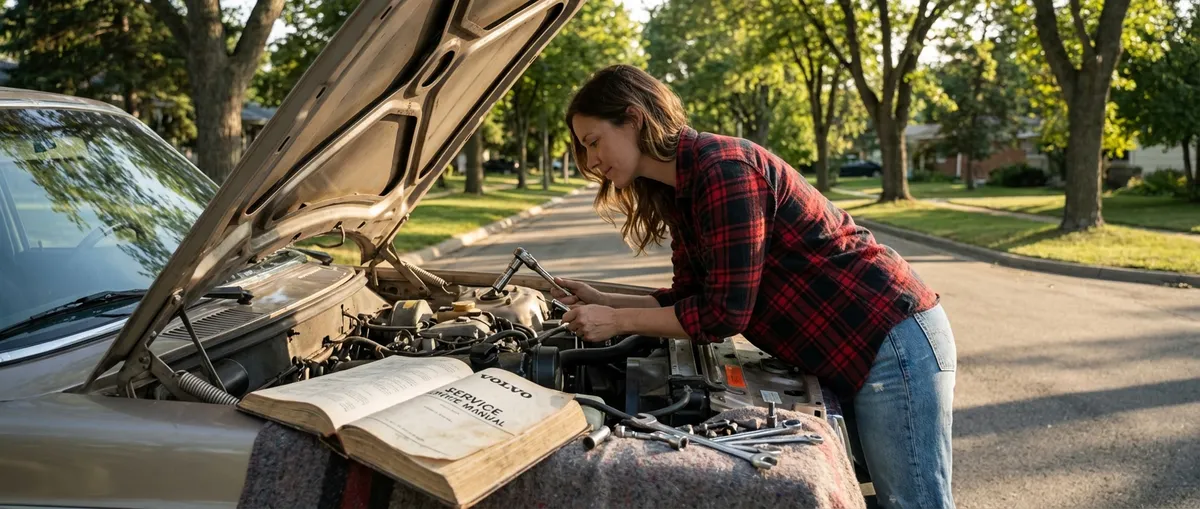
Modern cars feel complicated, but a surprising number of common issues can be handled at home with basic tools and patience. Learning a few key repairs saves money, prevents breakdowns, and helps you spot real problems before they become big bills at the shop.
Below are five practical, step‑by‑step auto repair tasks most DIY enthusiasts can safely tackle in their driveway.
Safety First: Prep Before Any Repair
Before picking up a wrench, set yourself up to work safely and efficiently.
- Park on level ground and engage the parking brake. If you’ll lift the car, use wheel chocks behind the wheels that stay on the ground.
- Let the engine cool before touching anything under the hood, especially coolant, belts, or engine components.
- Wear basic PPE: safety glasses, nitrile or mechanic’s gloves, and closed‑toe shoes.
- Use proper support: never rely only on a jack—use jack stands rated for your vehicle’s weight and position them under solid frame or pinch weld points.
- Disconnect the battery for jobs near electrical connectors, belts, or spinning parts (usually remove the negative/black terminal first).
- Keep a fire extinguisher (Class B/C or multipurpose ABC) nearby if you’re working around fuel.
A simple toolkit goes a long way: metric and SAE sockets, screwdrivers, pliers, a torque wrench, a multimeter, a trim removal tool, and a good LED work light.
Step‑By‑Step Tip #1: Replace Worn Brake Pads
If you hear squealing or grinding when you brake, your pads may be worn. Replacing them promptly protects your rotors and keeps stopping distances safe.
Tools & supplies: jack, jack stands, lug wrench, socket set, C‑clamp or brake caliper tool, new brake pads, brake cleaner, shop rags, torque wrench.
Steps:
Loosen lug nuts and lift the car
- Slightly loosen the lug nuts with the car on the ground. - Jack up the vehicle and secure it on jack stands. Remove the wheel fully.
Inspect the caliper and rotor
- Locate the brake caliper over the rotor. - Look at pad thickness: less than ~3 mm (about a credit card) means they’re due.
Remove the caliper
- Remove the caliper slide bolts (usually on the back side). - Gently slide the caliper off and support it with a wire or bungee—don’t let it hang from the brake hose.
Remove old pads and hardware
- Slide the old pads out of the bracket. - Remove any pad clips or shims if new ones are supplied with your pads. - Clean the bracket and rotor surfaces with brake cleaner (avoid breathing the dust).
Compress the caliper piston
- Use a C‑clamp or caliper tool to slowly push the piston back into the caliper. - Go slow to avoid damaging seals. Watch your brake fluid reservoir; fluid will rise.
Install new pads and reassemble
- Fit new hardware clips (if included), then slide in the new pads. - Reinstall the caliper over the pads and torque the slide bolts to specification. - Reinstall the wheel, hand‑tighten lugs, lower the car, and then torque the lug nuts in a star pattern.
Test before you drive
- Pump the brake pedal several times to seat the pads and restore pedal firmness. - Perform short, low‑speed test stops to confirm normal braking and no unusual noises.
Step‑By‑Step Tip #2: Track Down and Fix a Slow Tire Leak
A slowly dropping tire pressure light or a tire that’s always a few PSI low usually means a nail, small puncture, or a leaky valve stem. Finding and fixing it early helps avoid blowouts and uneven wear.
Tools & supplies: tire pressure gauge, spray bottle with soapy water, valve core tool (optional), plug kit for tubeless tires, air compressor or inflator.
Steps:
Confirm the leak
- Fill the tire to the manufacturer’s recommended PSI (check the driver’s door jamb sticker). - Check pressure after a few hours or the next day. A noticeable drop confirms a slow leak.
Visually inspect the tire
- Look for nails, screws, cuts, or bulges. - Check the valve stem for cracks or damage and inspect the bead area where tire meets rim.
Use soapy water to locate the leak
- Spray soapy water over the tread, sidewalls, valve stem, and around the bead. - Bubbles forming steadily indicate the leak location.
Decide if it’s a DIY‑safe puncture
- DIY plug repairs are generally only for small punctures (like a nail) in the tread area. - Sidewall or shoulder damage, large cuts, or bulges are not DIY—replace the tire or go to a shop.
Plug a tread puncture
- Remove the object with pliers. - Use the reamer tool from the plug kit to clean and roughen the hole. - Thread a plug into the insertion tool, coat with rubber cement if supplied, and push firmly into the hole, then pull out, leaving the plug in place. - Trim excess plug flush with the tread.
Reinflate and recheck
- Inflate the tire to spec and re‑spray with soapy water. - No more bubbles = successful repair. Monitor pressure over the next few days.
If you see any sidewall damage, exposed cords, or a bulge, skip repairs and replace the tire—those conditions can lead to sudden failure.
Step‑By‑Step Tip #3: Change Your Engine Air Filter
A clogged air filter can reduce fuel economy and cause sluggish acceleration. Replacement is one of the fastest and cheapest maintenance tasks.
Tools & supplies: new air filter (match by make/model/engine), screwdriver or socket (sometimes no tools required), shop vacuum (optional).
Steps:
Locate the air box
- Open the hood and find the plastic box with a large hose running to the engine (often near a fender or front center). - Your owner’s manual will show the exact location.
Open the housing
- Release metal clips or remove screws/bolts holding the cover. - Lift the cover enough to access the filter without stressing connected hoses.
Remove the old filter
- Note how it sits (orientation and which side faces up). - Pull it out carefully to avoid dumping debris into the air box.
Clean the housing
- Use a vacuum to remove leaves, dust, and debris from the bottom of the air box. - Wipe the sealing surfaces so the new filter seats properly.
Install the new filter
- Place the new filter in the exact orientation of the old one. - Ensure the rubber or foam seal sits flat all the way around the edge.
Reassemble and test
- Reinstall the cover and secure all clips or screws. - Start the engine to make sure there are no unusual intake noises or loose parts rattling.
Most manufacturers recommend replacing the engine air filter every 15,000–30,000 miles, or more often in dusty environments.
Step‑By‑Step Tip #4: Diagnose and Swap a Weak Car Battery
A failing battery often shows up as slow cranking, dim lights at startup, or intermittent electrical glitches. Replacing it before it dies saves you from being stranded.
Tools & supplies: wrench or socket set, battery terminal cleaner or wire brush, baking soda and water, protective gloves and glasses, memory saver (optional), new battery that matches specs (group size, CCA).
Steps:
Check for common symptoms
- Slow engine crank, clicking noise, or repeated jump‑starts. - Battery or charging system warning light illuminated on the dash.
Test the battery (basic check)
- With the engine off, a healthy battery should read around 12.4–12.7 volts on a multimeter. - Below ~12.2 volts after being fully charged suggests it’s weak or near end of life.
Prepare for removal
- Turn off the engine and all accessories. - Open the hood and locate the battery. - If you have a memory saver for radio presets or ECU settings, connect it per instructions.
Disconnect cables in the right order
- Remove the negative (black, “–”) terminal first to reduce short‑circuit risk. - Then remove the positive (red, “+”) terminal. - Remove any hold‑down bracket or strap securing the battery.
Remove and clean
- Lift the battery straight up (they’re heavy—use proper lifting technique). - Neutralize corrosion in the tray and on terminals with a baking soda/water mix; scrub with a brush, then dry thoroughly.
Install the new battery
- Place the new battery in the tray, ensuring the terminals are oriented the same way as the old one. - Reattach the hold‑down bracket so the battery cannot move. - Connect the positive (red) terminal first, then the negative (black). Tighten snugly but don’t over‑torque.
Verify operation
- Start the engine. It should crank strongly. - Check that all electrical systems work and that no new warning lights appear. - Dispose of the old battery at an auto parts store or recycling center—never in regular trash.
Step‑By‑Step Tip #5: Replace a Serpentine Belt Before It Fails
The serpentine belt drives key accessories like the alternator, power steering pump, and A/C compressor. Cracks, glazing, or squealing noises are signs it’s time to replace it.
Tools & supplies: new belt (correct length/rib count), serpentine belt tool or wrench, flashlight, camera/phone.
Steps:
Locate and inspect the belt
- With the engine off, pop the hood and locate the belt at the front of the engine. - Look for cracks, missing chunks, fraying, or shiny “glazed” areas. Any of these mean replacement is due.
Study the routing diagram
- Most vehicles have a belt routing diagram on a sticker under the hood. - If not, take a clear photo from above and from the side to capture how the belt weaves around pulleys.
Relieve tension
- Locate the belt tensioner (a spring‑loaded pulley). - Use a serpentine belt tool or appropriate wrench on the tensioner bolt to rotate it and relieve belt tension. - Slide the belt off one pulley while holding tension off, then slowly release the tensioner.
Remove the old belt
- Pull the belt out, noting its path. - Spin pulleys by hand; they should move quietly and smoothly with no wobble. Noisy or loose pulleys may need replacement.
Install the new belt
- Route the new belt according to the diagram, leaving the easiest‑access pulley for last. - Double‑check that each rib sits properly in the grooves of every pulley—misalignment will cause noise and premature wear.
Reapply tension and inspect
- Rotate the tensioner again, slip the belt over the final pulley, then slowly release the tensioner. - Visually verify correct alignment on all pulleys.
Start and listen
- Start the engine and watch the belt for a few moments. - Listen for squealing or slapping sounds. If you hear any, shut off the engine and recheck alignment and tensioner condition.
Conclusion
You don’t need a full shop or years of experience to handle many everyday car issues. Replacing brake pads, tracking down a slow tire leak, swapping an air filter, installing a new battery, and changing a serpentine belt are all within reach for a careful DIYer with basic tools.
Start with the task you feel most comfortable with, follow each step methodically, and never rush—especially when working on safety‑critical systems. Over time, these skills will save you money, reduce surprise breakdowns, and give you far more confidence every time you turn the key.
Sources
- National Highway Traffic Safety Administration (NHTSA) – Vehicle Maintenance Tips – General safety and maintenance guidance for vehicle owners
- Bridgestone Tire – How to Repair a Tire – Detailed explanation of when and how a tire can be safely repaired
- Advance Auto Parts – How to Replace Brake Pads – Step‑by‑step brake pad replacement walkthrough with photos
- Interstate Batteries – Car Battery Testing & Replacement Guide – Practical information on testing and replacing automotive batteries
- Gates Corporation – Serpentine Belt Inspection & Replacement – Professional guidelines on belt wear indicators and proper replacement practices
Key Takeaway
The most important thing to remember from this article is that this information can change how you think about Auto Repair.