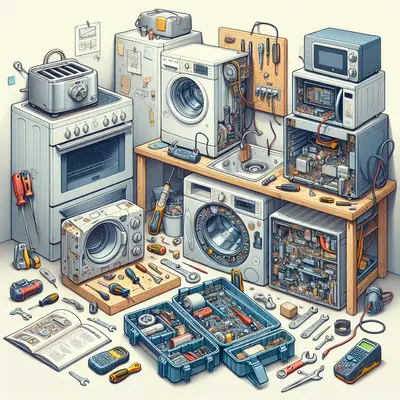
When an appliance starts beeping, leaking, or refusing to start, it’s easy to jump straight to “I need a new one.” Often, you don’t. Many breakdowns are caused by simple issues you can safely fix at home with basic tools and a bit of patience. This guide walks through five practical, step‑by‑step repair tips that DIY enthusiasts can use to bring common household appliances back to life—without guesswork or unsafe shortcuts.
Safety first: Always unplug (or switch off the breaker for hard‑wired units) before opening or working on any appliance.
1. When Your Fridge Stops Cooling: Airflow & Coil Clean‑Up
A warm fridge doesn’t automatically mean a dead compressor. Dust, blocked vents, or an iced‑over evaporator can seriously reduce cooling and make the unit run constantly.
Step‑by‑step:
Check the basics
Confirm the fridge is plugged in, the outlet works (test with a lamp), and the temperature controls weren’t accidentally bumped. Many fridges have separate controls for fridge and freezer—make sure both are set to “normal,” not “off” or “vacation.”
Inspect door seals (gaskets)
Open the door and run your hand along the edges. Feel any cold air leaking? Close the door on a strip of paper or a dollar bill—if it slides out easily, that section of the gasket isn’t sealing well. Clean the seals with warm soapy water and a soft cloth; built‑up grime can prevent proper sealing.
Clear interior airflow paths
Inside, look for vents on the back wall of the fridge and freezer. They should be open and not blocked by food containers or bags. Rearrange shelves so there’s space around vents and at least a couple of inches between food and interior walls.
Clean the condenser coils
Move the fridge out carefully and unplug it. Locate the condenser coils—either on the back or behind a lower front grille. Use a vacuum with a brush attachment and a soft coil brush to remove dust, hair, and debris. Clogged coils make the compressor work overtime and reduce cooling efficiency.
Check for heavy frost or ice build‑up
If your freezer back wall has a sheet of ice or thick frost, your defrost system may be struggling. Power off the fridge, leave doors open, and place towels to catch water. Let it fully defrost for several hours. Once thawed, restart and monitor: if frost returns quickly, you may need a professional to inspect the defrost heater, thermostat, or control board.
2. Washer Won’t Drain: Clearing the Filter and Hose Blockages
A washer full of water at the end of a cycle is frustrating—but often fixable without replacing the pump.
Step‑by‑step:
Kill the power and turn off water
Unplug the washer and turn off the hot and cold water supply valves. Never reach into a powered washer or disconnect hoses under pressure.
Locate the drain pump filter
On many front‑loaders, there’s a small access door at the front bottom. Behind it sits the drain filter. Place a shallow tray or pan and some towels under the area—water will come out.
Open the filter slowly
Twist the filter cap counterclockwise. Let water drain slowly into your tray. Once flow slows, remove the filter completely and inspect it. Clear coins, hair ties, lint, or debris that may be blocking water flow.
Check the drain hose and standpipe
At the back of the washer, inspect the drain hose for kinks or crush points. Detach it from the standpipe or sink (have a bucket ready). Run water through the hose with a garden hose or in the tub to ensure it’s clear. Also look inside the standpipe or sink connection for clogs or slow draining.
Test a short cycle
Reinstall the filter securely, reconnect the hose, turn water back on, and plug the washer in. Run a short drain/spin cycle with no clothes. Watch the discharge point (sink or standpipe) to confirm a strong, steady flow of water. If the pump hums but little water moves and hoses are clear, the drain pump itself may be worn and ready for replacement.
3. Dryer Runs But Won’t Heat: Vent and Thermal Safety Checks
A spinning but cold dryer often points to airflow or safety shutoff issues—not just a bad heating element.
Step‑by‑step:
Make sure it isn’t a simple setting
Confirm the dryer isn’t set to “Air Fluff,” “No Heat,” or “Cool” mode. Try a timed dry on a standard heat setting using a small load or a few towels.
Clean the lint filter thoroughly
Remove the lint screen and clean it. If you use dryer sheets, wash the screen with warm soapy water and a soft brush to remove invisible residue that can restrict airflow. Dry completely before reinstalling.
Inspect the vent hose
Pull the dryer away from the wall carefully. Check the vent hose for kinks, crushing, or separation. Detach it from the dryer and the wall and clear any clumps of lint. If the hose is damaged or excessively long and snaked around, consider replacing it with a shorter, rigid or semi‑rigid metal duct.
Check exterior vent flap
Go outside and find the vent exhaust. Make sure the flap opens freely when the dryer runs and isn’t blocked by lint, nests, or debris. Weak airflow here means heat and moisture are trapped, which can trigger internal safety devices to shut off the heater.
Test for heat again
Reconnect everything securely and run the dryer for 5–10 minutes on high heat. Open the door and feel inside—there should be noticeable warmth. If airflow is strong and it still doesn’t heat, the problem could be a blown thermal fuse, failed heating element, or faulty gas igniter (for gas dryers), which generally calls for more detailed electrical testing or a professional.
4. Dishwasher Leaves Grit on Dishes: Spray Arm & Filter Reset
When dishes come out dirty or sandy, the issue is often circulation and filtration—things you can usually fix without touching wiring.
Step‑by‑step:
Load pattern reality check
Make sure dishes aren’t blocking the spray arms from spinning. Large pans or cutting boards at the bottom can deflect water away from the top rack. Point heavily soiled surfaces toward the center and avoid nesting bowls.
Remove and clean the spray arms
Pull out the racks. Most spray arms twist off or release with a clip. Rinse them under running water and use a toothpick or small brush to clear food particles from each nozzle. Even a couple of blocked holes can reduce cleaning effectiveness.
Clean the filter and sump area
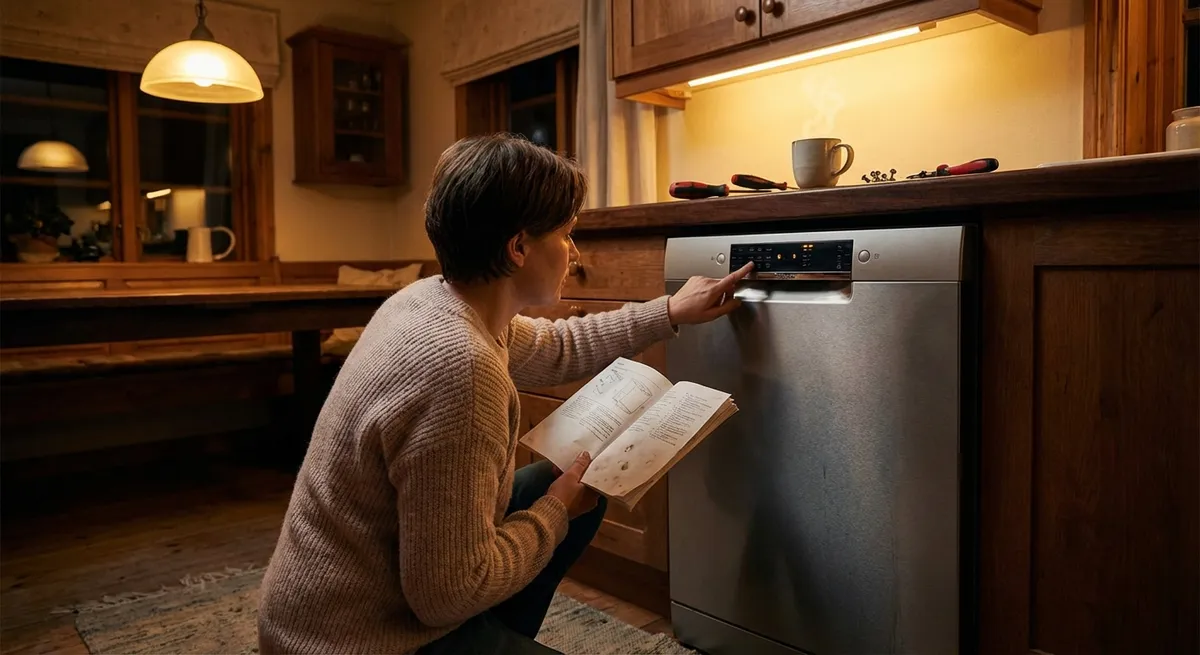
At the bottom of the tub, you’ll find a filter assembly (often circular). Remove it according to the manual’s instructions. Rinse thoroughly and scrub off any film. Check the sump area under the filter for food debris, glass shards, or foreign objects that could block the pump intake.
Check water inlet and temperature
Start a cycle and, after it fills, open the door briefly to check water level—it should cover the filter area but not overflow the door lip. Run the hot water at the kitchen sink first so the dishwasher starts with hot water. Ideally, water should be around 120°F (about 49°C) for effective cleaning.
Run a cleaning cycle
With the dishwasher empty, place a dishwasher‑safe cup of white vinegar on the top rack and run a hot cycle. This helps break down grease and mineral deposits. For hard water areas, consider using a dishwasher cleaner product once a month and a rinse aid to help with spotting.
5. Electric Oven Bakes Unevenly: Calibrating and Element Checks
If cookies burn at the back or roasts take forever, your oven may be out of calibration or losing heat through a damaged seal or failing element.
Step‑by‑step:
Verify actual oven temperature
Place an oven‑safe thermometer in the center of the middle rack. Preheat the oven to 350°F (about 175°C) and let it cycle for at least 20–30 minutes. Compare the thermometer reading to the set temperature. Note whether it’s consistently high or low.
Check for hot and cold zones
Move the thermometer to the front, back, and sides, giving it time to stabilize each time. Significant differences (more than 25°F) suggest a circulation issue, damaged element, or fan problem (for convection models).
Inspect heating elements visually
After turning the oven off and letting it cool, look closely at the bake and broil elements. They should be intact, without blisters, cracks, or breaks. During operation, an electric element should glow evenly along its length—dark sections can indicate a failing element.
Examine the door gasket
Open the door and carefully inspect the gasket seal around the frame. Look for gaps, tears, or flattened areas. Close the door on a strip of paper in different spots; if it pulls out easily, heat may be escaping. Replacing a worn gasket is usually a straightforward DIY job on many models.
Use built‑in calibration, if available
Many modern ovens allow you to adjust the temperature offset in the settings (often labeled “calibration” or “temp offset”). If your oven consistently runs 20°F low, you can set a +20°F offset so that when you choose 350°F, it actually heats to that temperature. Refer to your user manual for the specific button sequence to access and adjust this setting.
Conclusion
Appliance problems feel overwhelming until you break them down into checks you can actually do. By focusing on airflow, drainage, temperature, and basic mechanical parts, you can solve a surprising number of “major” issues yourself—and know with confidence when it’s time to call in a professional. Keep a basic toolkit, your owner’s manuals, and this guide handy, and you’ll be ready the next time a fridge warms up, a washer stalls, or a dryer goes cold.
If you found this useful, share it with a friend who’s one breakdown away from replacing an appliance they might easily rescue.
Sources
- U.S. Department of Energy – Refrigerator Maintenance Tips – Guidance on keeping refrigerators efficient, including coil cleaning and temperature settings
- Consumer Product Safety Commission – Safety Tips for Home Appliances – Essential safety practices when working around household appliances
- U.S. Fire Administration – Clothes Dryer Fire Safety Outreach Materials – Information on dryer vent cleaning and lint hazards
- Whirlpool Home Appliances – Dishwasher Cleaning & Maintenance – Manufacturer guidance on filters, spray arms, and interior cleaning
- GE Appliances – Oven Temperature Calibration Instructions – Official instructions for adjusting oven temperature calibration on many models
Key Takeaway
The most important thing to remember from this article is that this information can change how you think about Appliances.