When a key appliance quits on you, the stress level can spike fast. But many “big problems” are actually simple issues you can straighten out yourself with basic tools and a bit of patience. This guide walks through practical, step‑by‑step repair moves for common appliance troubles so you can decide when to DIY confidently—and when to call in backup.
Safety First: Set Up for a Successful DIY Repair
Before you touch a screw or panel, you need a safe workspace and a clear plan. Rushing in is how small annoyances become expensive damage or injuries.
Start by disconnecting power: unplug small appliances, and for hard‑wired or large units (like ovens or dishwashers), switch off the correct circuit breaker at the electrical panel. For gas appliances, close the gas shutoff valve if you’ll be working anywhere near the gas line, burner, or ignition system. Clear the area around the appliance so you’re not tripping over clutter, and make sure you have decent lighting.
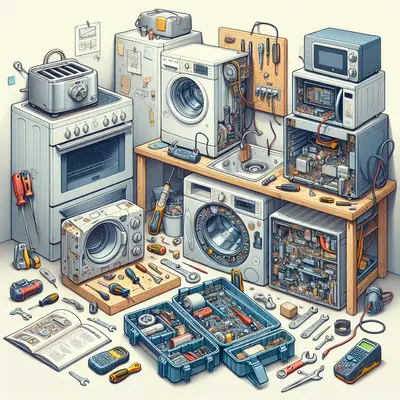
Keep a basic kit nearby: Phillips and flathead screwdrivers, a nut driver set, a multimeter (for electrical checks), work gloves, a flashlight, and your phone for taking reference photos. Take a picture every time you remove a panel or part; those pictures are gold when it’s time to reassemble.
Finally, check your owner’s manual or the manufacturer’s website for diagrams, part numbers, and any DIY‑safe troubleshooting steps. If you smell burning, see scorched wiring, or suspect a refrigerant or gas leak, stop and call a qualified technician—those are not DIY problems.
Step 1: Revive a “Dead” Washing Machine That Won’t Start
A washer that won’t do anything can feel like a disaster, but the root cause is often minor and fixable in minutes.
Confirm power and reset the machine
Unplug the washer, wait 60 seconds, plug it back in, and try again. Verify the outlet is live by plugging in a lamp or using a receptacle tester. If the outlet is dead, check your circuit breaker.
Inspect the lid or door switch
Most washers won’t run if the lid or door switch doesn’t register as closed. Open and close the lid firmly and listen for a distinct click. If there’s no click or it feels loose, the switch may be faulty. On many top‑loaders, you can access the switch by removing the control panel screws and tilting it back. Check for a broken lever or loose wiring.
Check the control lock or child lock
Many modern washers have a control lock feature that disables the start button. Look for a padlock icon or “CL” on the display. Consult your manual on how to turn it off (usually holding a specific button for 3–5 seconds).
Inspect the power cord and internal connections
With power disconnected, gently inspect the cord for cuts or burn marks. If you remove the rear or top panel, look for any obvious loose harness connectors at the main control board or at the lid switch. Reseat any loose plugs firmly.
Test the lid/door switch with a multimeter (if comfortable)
Remove the switch connector, set your multimeter to continuity mode, and test the switch while pressing it. You should see continuity when the switch is “closed.” No continuity means the switch likely needs replacement—a relatively inexpensive part that’s often held in by a couple of screws and one harness connector.
If, after these checks, the washer still shows no signs of life, the control board or motor may be at fault—those are better handled by a pro, especially on newer high‑efficiency models.
Step 2: Restore Cooling in a Fridge That’s Suddenly Too Warm
When your refrigerator isn’t cold enough or your freezer is thawing, act quickly to protect your food—and often you can fix the issue without touching the sealed refrigeration system.
Confirm temperature settings and airflow space
Make sure the temperature isn’t accidentally set too warm and that nothing is blocking interior vents. Check that there’s 2–3 inches of clearance behind and above the fridge so heat can escape from the condenser coils.
Inspect door seals (gaskets)
Close a thin piece of paper in the door and gently pull it. If it slides out easily all around the door, your gasket may be worn or warped. Clean the gasket with warm, soapy water and a soft cloth to remove grime that prevents a tight seal. If cracks or splits are visible, plan to replace the gasket—it’s usually a DIY‑friendly job where the new gasket presses into a channel around the door.
Clean the condenser coils
Dust‑clogged coils make the compressor work harder and cool less effectively. Unplug the fridge, pull it away from the wall, and locate the coils (on the back or behind a lower front grille). Use a coil brush or vacuum with a soft brush attachment to remove dust and pet hair. Work gently to avoid bending fins.
Check condenser fan and evaporator fan operation
With the fridge plugged back in and running, listen: a working unit cycles the compressor and fans on and off. If you hear the compressor but no fan, the condenser fan (usually near the compressor) may be jammed or faulty. Inside the freezer, listen for the evaporator fan; if you open the freezer door and press the door switch, you should hear it spin. Obstructions like ice buildup or packaging can stop blades from turning—clear any blockage with the power off.
Defrost if you see heavy ice buildup
If your freezer is frosted over the back panel or vents, turn the unit off, transfer food to coolers if possible, and let it defrost fully. Place towels to catch meltwater. A one‑time defrost can restore airflow. If frost returns quickly, your defrost system may have a failed thermostat, heater, or control board—usually not a beginner DIY, and a good time to call an appliance tech.
Often, thorough cleaning and restoring proper airflow bring a “warm” fridge back into line within 24 hours. Use a fridge thermometer to monitor progress.
Step 3: Fix an Electric Oven That Won’t Heat Evenly
Uneven baking or an oven that preheats endlessly can often be traced to a bad heating element or a simple calibration issue.
Verify the problem with a thermometer
Place an oven thermometer in the center of the middle rack, set the oven to 350°F (about 175°C), and wait at least 20–30 minutes. Compare the reading to the set temperature. A large mismatch (more than 25°F) confirms a problem.
Check for visible damage to elements
Turn off power at the breaker. Once the oven is cool, inspect the bake (bottom) and broil (top) elements. Look for blisters, breaks, or bright spots. A broken section or obvious burn mark indicates a failed element.
Test the bake element for continuity
With power still off, remove the mounting screws holding the element to the back wall. Carefully pull it forward to expose the terminal connections (don’t yank the wires). Disconnect the wires, set your multimeter to continuity or ohms, and test the element terminals. No continuity means the element is bad and should be replaced.
Replace a faulty element
Install the new element by connecting the wires firmly to the terminals and securing it with the mounting screws. Make sure the element sits evenly and isn’t touching the oven cavity walls. Restore power and run the oven briefly to burn off any manufacturing residue (follow the manufacturer’s guidance—sometimes 10–15 minutes at a medium temperature with good ventilation).
Consider calibration if elements test good
Many modern ovens allow temperature calibration in the settings menu. If your elements are sound but temperatures are consistently high or low by a similar amount, adjust the calibration by the recommended offset (often up to ±35°F). Double‑check with your oven thermometer after making changes.
If your oven still won’t heat or trips the breaker, stop and bring in a professional—control boards and high‑voltage wiring are not ideal for first‑time DIY work.
Step 4: Quiet a Dishwasher That Cleans Poorly or Leaves Grit
A dishwasher that runs but doesn’t actually clean is usually suffering from dirty filters, blocked spray arms, or water supply issues—most of which you can handle without special tools.
Clean the filter and sump area
Remove the bottom rack. At the base of the tub, you’ll find a filter assembly (often a twist‑lock cylinder and a flat mesh screen). Take them out and rinse under warm water, using a soft brush to remove trapped food and grease. Wipe around the sump area to clear any glass shards, labels, or debris.
Clear the spray arms
Most spray arms can be lifted off or unscrewed. Inspect the holes for clogs (seeds, food bits, mineral deposits). Use a toothpick or small brush to clear them, then rinse under running water. For mineral buildup, soak arms in warm vinegar for 20–30 minutes and rinse thoroughly.
Check water inlet and float switch
Make sure the float (a small dome or cylinder inside the tub) moves freely up and down; stuck floats can prevent proper filling. Inspect the water inlet hose connection under the sink to ensure it’s not kinked. Turn off the water supply, disconnect the hose, and check the inlet screen for debris. Clean gently if clogged.
Run a hot cleaning cycle
Reassemble everything and run the dishwasher empty on the hottest cycle with a dishwasher‑safe cleaner or a cup of white vinegar on the top rack (if your manual permits). This helps dissolve grease, soap film, and light mineral deposits inside the machine and on internal passages.
Use correct loading and detergent
Going forward, avoid blocking the spray arms with oversized dishes, don’t nest bowls tightly, and scrape large food scraps before loading. Use detergent recommended for your water hardness and avoid mixing pods with extra liquid or powder, which can over‑suds and leave residue.
If water isn’t entering the tub at all or you see leaks from underneath, stop using the dishwasher until you can inspect for hose leaks or have a technician examine the inlet valve and pump.
Step 5: Rescue a Clothes Dryer That Runs but Won’t Dry
A dryer that tumbles endlessly but leaves clothes damp is often struggling to move air correctly. That’s a repair most DIYers can handle safely—if you respect the fire risk and take the time to clean thoroughly.
Check the lint filter and housing
Remove the lint screen and clean it completely. If you use dryer sheets, wash the screen with warm, soapy water and a soft brush every few months to remove invisible film. Shine a flashlight into the lint filter housing and use a vacuum with a narrow attachment to pull out accumulated lint.
Inspect the exhaust vent and duct
Unplug the dryer. Pull it away from the wall and disconnect the vent duct. Check for crushed, kinked, or excessively long flexible ducting—smooth metal duct is strongly preferred over plastic or foil for safety and airflow. Vacuum lint from both the dryer outlet and the duct. If possible, step outside and confirm that the exterior vent flap opens freely and isn’t blocked by lint, nests, or debris.
Run a no‑load test
Reconnect the duct or temporarily run the dryer for a short test with the duct disconnected (only if venting into a safe, lint‑controllable area and for a brief period). With the dryer empty, run it on high heat for a few minutes and feel the air at the exhaust: it should be strong and hot. Weak airflow indicates a blockage in the internal ducting or blower area, which may require further disassembly.
Test heat cycling
With the dryer reconnected to the vent and power, run a load and periodically check the vent outside. The air should get hot, then cycle cooler as thermostats regulate temperature. If you never feel heat, or the dryer stops mid‑cycle and won’t restart until it cools, a thermal fuse, thermostat, or heating element may be faulty—common but more advanced DIY replacements that require safe handling of internal components.
Reduce future clogs and fire risk
Clean the entire vent path at least once a year—more often if you dry heavy loads or have long runs. Avoid overloading the dryer; packed drums trap moisture. Keep the area around the dryer free of flammable materials like cardboard and cleaning rags.
If you ever smell burning, see scorch marks, or find lint inside the dryer cabinet, stop immediately and have it inspected—dryer fires escalate very quickly.
Conclusion
Most appliance headaches start with small, fixable issues: clogged filters, blocked airflow, dirty sensors, or simple electrical faults. With basic tools, a multimeter, and a methodical approach, you can safely tackle a surprising number of problems on your own—and extend the life of the gear you depend on every day.
Use these step‑by‑step moves as a starting point: take photos as you go, consult your model’s manual, and don’t push beyond your comfort level when high voltage, gas, or sealed refrigeration systems are involved. Knowing where DIY ends and professional repair begins is just as important as tightening the right screw.
Sources
- [U.S. Consumer Product Safety Commission – Home Appliance Safety Tips](https://www.cpsc.gov/Safety-Education/Safety-Guides/home-appliances) - Guidance on safe use and maintenance of common home appliances, including fire and shock prevention
- [U.S. Department of Energy – Appliances & Electronics](https://www.energy.gov/energysaver/appliances-and-electronics) - Covers how proper maintenance and operation affect appliance performance and efficiency
- [Whirlpool Owner Center](https://producthelp.whirlpool.com/) - Official troubleshooting and maintenance information for washers, dryers, refrigerators, dishwashers, and ovens
- [LG USA Support – Product Help & Troubleshooting](https://www.lg.com/us/support) - Model‑specific guides and diagrams useful for identifying parts and safe DIY steps
- [Iowa State University Extension – Clothes Dryer Safety and Venting](https://www.extension.iastate.edu/smallfarms/clothes-dryer-venting-safety) - Explains dryer vent cleaning, airflow, and fire‑prevention best practices
Key Takeaway
The most important thing to remember from this article is that this information can change how you think about Appliances.