Car trouble never waits for a convenient moment. Whether you’re commuting, on a road trip, or just trying to get home, knowing a few basic repairs can save time, money, and stress. You don’t need a full toolbox or a mechanic’s training—just a clear process, some basic tools, and a bit of patience.
This guide walks through five step-by-step repair tasks that DIY-minded drivers can realistically handle, plus when to stop and call a pro.
Safety and Tools: Before You Turn a Wrench
Before you attempt any repair, a quick safety and prep check will make everything smoother and safer.
Park safely and secure the car
Always pull over to a flat, stable surface away from traffic. Turn on hazard lights, set the parking brake, and put the car in Park (automatic) or in gear (manual). Use wheel chocks or large rocks behind at least one tire if you’re lifting the vehicle.
Let hot components cool
Never open a radiator cap on a hot engine and avoid touching exhaust parts or the engine block right after driving. If you smell burning or see smoke, back off and call for help unless it’s obviously something minor (like a plastic bag melted to the exhaust).
Wear basic protection
Keep cheap work gloves and safety glasses in the trunk. Gloves protect against cuts and hot surfaces; glasses protect from debris, rust, or battery corrosion.
Build a simple car repair kit
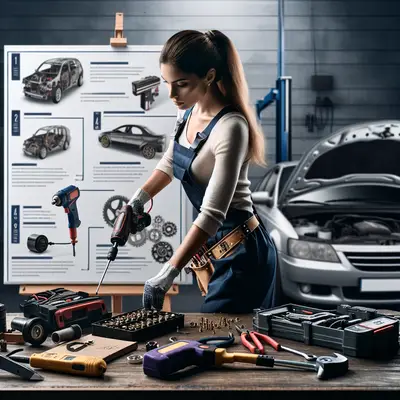
A realistic starter kit: - Lug wrench and jack (your car may already include these—confirm now, not later) - Tire pressure gauge - Portable air compressor or inflator - Basic socket set and screwdriver set - Jumper cables (or a small jump starter) - Flashlight or headlamp - Duct tape and zip ties for temporary fixes
Know your limits
If there’s heavy fluid leakage, strong fuel smell, major electrical damage, or the car behaves unpredictably (steering/brakes don’t feel right), don’t “wing it.” Stop, get to safety, and call roadside assistance or a tow.
Step‑By‑Step: Jump‑Starting a Dead Battery
A dead battery is one of the most common car problems—and one of the easiest to fix safely when you follow the right order.
1. Confirm it’s likely the battery
- Turn the key or press Start:
- If you hear rapid clicking and the engine doesn’t crank, it’s often a weak battery.
- If there are no lights, no sound, and no response, battery or electrical connection is likely.
- Check that the battery terminals aren’t obviously loose or covered in heavy corrosion.
2. Position the vehicles correctly
- Park the helper car nose-to-nose or side-by-side with yours, close enough for the jumper cables to reach but not touching.
- Both vehicles in Park/neutral, parking brakes on, engines off, hazard lights on.
3. Connect the jumper cables in the right order
Use this order to reduce the risk of sparks in the wrong place:
Red clamp to dead battery positive (+)
Red clamp to good battery positive (+)
Black clamp to good battery negative (–)
Black clamp to a clean, unpainted metal surface on the dead car (like a solid engine bracket or metal part of the frame—not the negative terminal)
Make sure clamps have solid contact and aren’t near moving parts.
4. Start the cars safely
- Start the helper car and let it run for 2–3 minutes.
- Try starting your car.
- If it starts, let both cars idle for another few minutes.
- If it doesn’t, wait another 3–5 minutes and try again.
- If still no luck after a few tries, stop—there may be a deeper issue (starter, alternator, or wiring).
5. Remove the cables in reverse order
Take them off carefully, without letting clamps touch each other:
Black clamp from your car’s metal ground
Black clamp from the good battery
Red clamp from the good battery
Red clamp from your battery
Let your car run for at least 20 minutes or drive normally so the alternator can recharge the battery. If the car dies again quickly, the battery or alternator likely needs professional testing.
Step‑By‑Step: Swapping a Flat Tire for the Spare
Changing a tire sounds intimidating until you’ve done it once. The key is doing everything in the correct order and keeping the car stable.
1. Prepare the car and tools
- Pull as far from traffic as possible; avoid soft ground or steep slopes.
- Turn on hazards; set the parking brake.
- Get out:
- Spare tire
- Jack
- Lug wrench
- Wheel chocks (or rocks/bricks)
Place chocks in front of and behind a wheel that will stay on the ground (usually the opposite end of the flat).
2. Loosen the lug nuts before lifting
- Remove the hubcap if there is one.
- Place the lug wrench on a lug nut and turn counterclockwise to loosen.
- They’ll be tight; you may need to push with your foot or use your body weight.
- Loosen each nut a half-turn to one full turn, but do not remove them yet.
3. Position and raise the jack
- Consult your owner’s manual for the jack point near the flat tire (usually a reinforced seam under the car).
- Place the jack securely; make sure it’s vertical and on solid ground.
- Raise the car until the flat tire is about an inch off the ground.
4. Remove the tire and install the spare
- Finish unscrewing the lug nuts and set them in a small pile where they won’t roll away.
- Pull the flat tire straight toward you.
- Align the spare with the wheel studs and push it into place.
- Hand‑tighten the lug nuts in a star pattern (across from each other) to seat the wheel evenly.
5. Lower and tighten properly
- Lower the car until the tire just touches the ground and doesn’t spin freely.
- Use the lug wrench to fully tighten in the same star pattern, pulling firmly but smoothly.
- Lower the car completely and remove the jack.
- Put the flat tire and tools back in the trunk.
- If it’s a “donut” spare, obey any speed and distance limitations printed on the tire—these are temporary, not long‑term solutions.
Step‑By‑Step: Fixing a Slow Tire Leak with a Plug Kit
For small punctures in the tread (like a nail), a plug kit can get you back on the road until you can reach a tire shop. This should not be used for sidewall damage or large cuts.
1. Identify and mark the puncture
- Inflate the tire to the recommended pressure (check driver’s door jamb sticker).
- Listen for hissing or spray soapy water on the tread; bubbles will form at the puncture.
- Mark the spot with a marker or piece of tape.
2. Prepare the hole
- Remove the object causing the leak with pliers.
- Use the reaming tool from the plug kit: push it into the hole and twist to roughen the inside.
- This step takes a bit of force—keep the tool straight to avoid enlarging the hole too much.
3. Load the plug tool
- Thread a rubber plug strip halfway through the plug insertion tool (it will look like a big needle).
- Center the plug so equal lengths hang on each side of the tool.
4. Insert the plug
- Push the loaded tool into the hole until about two-thirds of the plug is inside the tire.
- Pull the tool straight out quickly; the plug should stay in, folded inside the tread.
- Trim any excess plug material sticking out with a knife or cutting tool, leaving a small stub.
5. Reinflate and recheck
- Inflate the tire again to the correct pressure.
- Check with soapy water to confirm the leak is sealed.
- Drive a short distance and recheck pressure.
- Treat this as a short to medium-term fix; have the tire inspected and professionally repaired or replaced soon.
Step‑By‑Step: Replacing a Burned‑Out Headlight Bulb
Many modern cars use simple “plug-in” headlight bulbs that you can change without removing the entire headlight assembly. The process varies by model, so keep your owner’s manual handy.
1. Confirm the failed bulb
- Turn on headlights and walk around the car.
- If one side is out, it’s likely just the bulb.
- If both sides are out or other lights fail too, you may have a fuse or wiring issue—check the fuse box or see a technician.
2. Access the bulb from under the hood
- Open the hood and locate the rear of the headlight housing.
- You’ll usually see a wiring connector plugged into a round or rectangular dust cover.
- On some cars, you may need to move an air intake duct or washer fluid reservoir aside (often held by simple clips or bolts).
3. Disconnect and remove the old bulb
- Unplug the wiring connector by pressing the tab or sliding the clip.
- Remove the bulb by:
- Twisting it counterclockwise, or
- Releasing a wire spring clip (common on older vehicles)
- Do not pry aggressively; if it doesn’t move, double-check how your specific model releases the bulb.
4. Install the new bulb correctly
- Avoid touching the glass part of halogen bulbs with bare fingers—oil from skin can shorten bulb life. Use gloves or hold by the base.
- Align the new bulb’s tabs with the slots and insert gently.
- Twist or secure the clip so it’s firmly seated.
- Reconnect the wiring connector until it clicks.
5. Test and realign if needed
- Turn on the headlights to confirm the new bulb works.
- Step back and verify both beams are similar in brightness and height.
- If one beam is much higher or lower, your headlight aim might be off; some housings have adjustment screws, but if you’re unsure, have a shop align them for safe nighttime visibility.
Step‑By‑Step: Replacing Worn Wiper Blades
Good wipers are critical for visibility, yet they’re often overlooked. Replacing them is quick, inexpensive, and doesn’t require tools.
1. Confirm you need new blades
Replace blades if you notice:
- Streaking or smearing across the windshield
- Skipping or chattering as they move
- Cracked or brittle rubber edges
Most drivers should replace them about every 6–12 months, depending on climate.
2. Find the right size
- Check your owner’s manual or use the size guide at an auto parts store.
- Driver and passenger sides are often different lengths; some cars have a third rear wiper.
3. Remove the old wiper blade
- Lift the wiper arm away from the windshield gently until it stays up.
- Find the small release tab or button where the blade attaches to the arm.
- Press the tab and slide the old blade down and off the hook (or follow the specific instructions on your car or new blade packaging).
Be careful not to let the bare wiper arm snap back onto the glass; it can crack the windshield.
4. Attach the new blade securely
- Align the new blade’s adapter with the arm’s hook.
- Slide it into place until you hear or feel a click.
- Very gently lower the wiper back onto the glass.
5. Test under real conditions
- Spray windshield washer fluid and run the wipers.
- Check for smooth, quiet operation and a clean sweep.
- If a new blade leaves lines, make sure it’s properly seated and the adapter is the correct type for your arm.
Conclusion
You don’t need a full garage or advanced tools to handle many everyday car problems. Being comfortable with a few step-by-step repairs—jump-starting a dead battery, changing a tire, plugging a slow leak, swapping a headlight bulb, and installing wiper blades—can keep you moving and cut down on emergency calls.
Use these skills as a starting point, not a limit. Combine them with regular maintenance and a realistic sense of when to call a professional, and you’ll be far better prepared for the unexpected—on the highway, in a parking lot, or in your own driveway.
Sources
- National Highway Traffic Safety Administration (NHTSA) – Vehicle Maintenance Tips – Federal safety guidance on basic vehicle upkeep and roadside readiness
- AAA – How to Jump Start a Car Battery – Step-by-step instructions and safety notes from a major roadside assistance provider
- Bridgestone Tire – How to Change a Flat Tire – Illustrated guide on safely jacking up a car and installing a spare
- Consumer Reports – How to Replace Headlight Bulbs – Practical advice and cautions for DIY headlight bulb replacement
- Penn State University – Windshield Wiper Blade Maintenance – Overview of why wiper condition matters for safety and visibility
Key Takeaway
The most important thing to remember from this article is that this information can change how you think about Auto Repair.