When an appliance starts acting up, it’s rarely convenient—and it’s always a little stressful. But many “uh-oh” moments are caused by simple issues you can safely fix yourself in under an hour. This guide walks through five practical, step‑by‑step repair tips that DIY enthusiasts can handle with basic tools, a bit of patience, and the right safety mindset.
Before You Start: Safety and Smart Prep
Before touching any appliance, slow down and prep—this is where you avoid shocks, leaks, and broken parts.
- Kill the power (always).
For anything electrical, unplug the appliance. For hard‑wired units (like some dishwashers), switch off the correct breaker at your panel and test that it’s truly off.
- Shut off water or gas if needed.
For washers, dishwashers, and refrigerators with ice makers: locate the nearby shutoff valve and turn it clockwise. For gas ranges or dryers, close the gas shutoff valve before working.
- Take photos before you disconnect anything.
Use your phone to document hose routing, wire connections, and panel orientation. These photos are your “undo” button during reassembly.
- Work with the right tools.
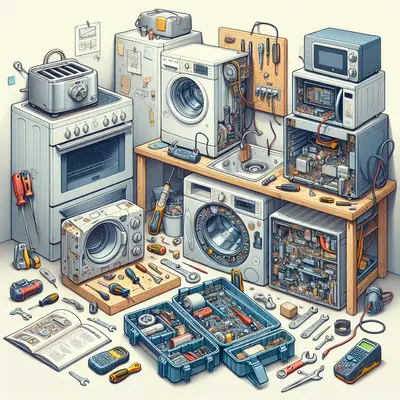
A DIY‑friendly appliance toolkit usually includes:
- #2 Phillips and flathead screwdrivers
- Nut driver set (1/4", 5/16", 3/8")
- Adjustable wrench or small socket set
- Needle‑nose pliers
- Flashlight or headlamp
- Towels and a shallow pan for water drips
- Know when to stop.
If you smell gas, see scorched wiring, or face complex sealed systems (like refrigerant lines), back off and call a pro. DIY is about smart savings, not unnecessary risks.
Step‑By‑Step Fix #1: Refrigerator That’s Running but Not Cooling Well
A warm fridge with a running compressor often points to airflow and cleanliness—things you can handle.
What you’ll usually need
Screwdriver, vacuum with brush attachment, soft brush, and a towel.
Steps
- Unplug the refrigerator.
Move it away from the wall carefully so you can access the back or bottom front panel.
- Clean the condenser coils.
- Remove the lower back panel or front toe‑kick grille (usually held by clips or a few screws).
- Use a brush and vacuum to remove dust and lint from the coils.
- Work gently; bent fins reduce cooling efficiency.
- Check the condenser fan (if equipped).
- Spin the fan blade by hand—does it move freely?
- If it’s stiff, noisy, or jammed with debris, clean around it.
- A fan that still won’t spin freely after cleaning may need replacement (usually a plug‑in part with a couple of screws).
- Inspect the door gaskets.
- Run a dollar bill or sheet of paper between the door and gasket—close the door; you should feel resistance when you pull it out.
- If it slides out with no resistance at multiple spots, the gasket might be dirty, out of alignment, or worn.
- Clean the gasket with warm, soapy water, then dry thoroughly. Misaligned corners can sometimes be softened with a hair dryer and gently coaxed back into shape.
- Clear interior airflow.
Inside the fridge and freezer, make sure food isn’t blocking air vents (often found along the back wall). Over‑packing can starve the unit of airflow.
- Restore power and monitor.
Plug the fridge back in, push it gently into place without kinking water lines, and give it 12–24 hours to fully stabilize. Use a fridge thermometer: you’re aiming for about 37–40°F (3–4°C) in the fresh‑food section.
Step‑By‑Step Fix #2: Front‑Load Washer That Smells Musty or Leaves Residue
When a front‑load washer smells bad or leaves clothes less than fresh, the problem is usually buildup and trapped moisture, not a failed part.
What you’ll usually need
White vinegar, baking soda, old toothbrush, microfiber cloth, and a small bucket.
Steps
- Run a “hot clean” cycle.
- Add 2 cups of white vinegar directly to the drum (no clothes).
- Sprinkle 1/4 cup of baking soda into the drum.
- Run the hottest, longest cycle available. This helps dissolve soap scum, mildew, and residue.
- Clean the door gasket (boot).
- Open the door and gently pull back the rubber gasket.
- Wipe out any visible debris, coins, or hair.
- Mix warm water with a little mild detergent or vinegar.
- Scrub the folds of the gasket using a cloth or old toothbrush.
- Dry it completely with a towel—moisture here is a top source of odor.
- Clear the drain pump filter (if accessible).
- Locate the small access door at the front bottom of many front‑load washers.
- Place a shallow pan or towel under it.
- Unscrew the filter cap slowly; let water drain into the pan.
- Remove and clean the filter—clear out lint, buttons, and debris.
- Reinstall firmly and wipe up any spills.
- Clean the detergent drawer and housing.
- Pull out the drawer; many have a release tab for full removal.
- Soak and scrub off caked detergent and softener.
- Wipe inside the drawer cavity as well, where residue often builds up.
- Adjust your regular habits to prevent recurrence.
- Use HE detergent and avoid over‑dosing; too much soap equals more residue.
- Leave the door and detergent drawer cracked open between loads to let moisture escape.
- Run a hot “tub clean” or “maintenance” cycle about once per month.
Step‑By‑Step Fix #3: Dishwasher That Runs but Dishes Come Out Dirty
If your dishwasher finishes a cycle but dishes are still gritty or greasy, you may have partial clogs or poor spray action.
What you’ll usually need
Toothpick or small brush, white vinegar, sponge, and screwdriver (optional).
Steps
- Clean the filter system.
- Remove the bottom rack.
- Twist and lift out the cylindrical or flat filter assembly at the base (check markings or arrows for direction).
- Rinse under warm water, scrubbing off greasy film and food bits with a soft brush.
- Check for small glass shards carefully and remove them.
- Check and clear spray arms.
- Most spray arms twist or pull off with gentle pressure.
- Inspect each nozzle hole for blockage—use a toothpick or thin wire to poke out debris.
- Rinse under running water, then reinstall, making sure they spin freely.
- Inspect the sump area and drain.
- With the filter removed, look for foreign objects in the sump (seeds, bones, broken plastic).
- Remove any visible debris with gloved hands or tweezers.
- Avoid forcing anything deeper into the drain channel.
- Run a hot cleaning cycle.
- Place a dishwasher‑safe cup with 1–2 cups white vinegar on the top rack.
- Run the hottest wash cycle with the dishwasher empty (no detergent).
- This helps dissolve grease and mineral buildup in spray paths.
- Use best‑practice loading and detergents going forward.
- Don’t nest bowls or stack items so they block spray arms.
- Make sure nothing tall (like baking sheets) blocks the detergent cup from fully opening.
- If you have hard water, consider a rinse aid or detergent formulated for hard water to reduce filming.
Step‑By‑Step Fix #4: Electric Dryer That Spins But Won’t Heat Properly
A dryer that tumbles but leaves clothes damp often has a restricted vent or a failed safety device—both are common, and vent issues are very DIY‑friendly.
What you’ll usually need
Vacuum, vent brush or long flexible brush, screwdriver, and a multimeter (optional for testing parts).
Steps
- Unplug the dryer and pull it away from the wall.
You need clear access to the rear vent connection.
- Inspect and clean the exhaust vent path.
- Disconnect the flexible vent hose from the back of the dryer.
- Check the hose for lint clumps, crushed sections, or excessive bends; replace if torn or overly kinked.
- Use a vent brush to clean inside the hose and the wall vent run as far as you can reach.
- Go outside and inspect the exterior vent hood—clear away lint, dirt, or nests, and ensure the flap opens freely.
- Clean the internal lint path (if accessible).
- Remove the lint screen and clean it with warm, soapy water if it feels “waxy” (fabric softener residue can block airflow).
- Vacuum inside the lint trap housing with a narrow attachment.
- On some models, removing a top or front panel allows access to additional lint buildup areas.
- Test the dryer with a short vent.
- Temporarily connect a short, straight piece of vent hose to verify airflow improvement.
- Run a timed dry on high heat for 10–15 minutes with a few damp towels.
- If heat is now strong and consistent with a short, clear vent but not with the house vent connected, the house vent needs more thorough cleaning or professional service.
- If no heat at all, suspect thermal fuse or heating element.
- With the unit still unplugged, access the rear panel to locate the thermal fuse and heating element housing (consult your model’s manual).
- Using a multimeter set to continuity, test the thermal fuse and element terminals.
- No continuity usually means a failed part; replacement often involves unscrewing the old component, swapping in a new one, and reconnecting wires as documented in your photos.
- If a thermal fuse blew due to extreme lint buildup, address airflow before reassembling.
Step‑By‑Step Fix #5: Range or Cooktop Burner That Won’t Light (Gas or Electric)
A single non‑working burner is usually a localized problem you can address without opening the entire appliance.
What you’ll usually need
Non‑scratch scrub pad, paperclip or toothpick, mild cleaner, and screwdriver (for some models).
For gas burners (won’t ignite or weak flame)
- Cut power and gas if you’ll be disassembling.
For basic cleaning, you can usually leave gas on—but if you’re removing more than the grates and caps, shut off the gas and unplug the range.
- Remove grates and burner caps.
- Lift off grates and burner caps; soak them in warm, soapy water.
- Scrub off grease and dried spills with a non‑scratch pad; rinse and dry thoroughly.
- Clean burner heads and ports.
- With the cap removed, inspect the metal burner head.
- Use a toothpick or unfolded paperclip to clear each small hole (port). Avoid enlarging them.
- Wipe surrounding surfaces with a mild cleaner; avoid soaking electrical components.
- Inspect and clean the igniter.
- Look for the small ceramic “spark” tip near the burner.
- Gently wipe off food residue with a damp cloth; don’t apply heavy pressure or abrasive cleaners.
- Make sure the burner cap is properly seated when you reassemble—misalignment can block ignition.
- Test the burner.
Turn the knob to “light” and listen for a steady clicking and look for a clear, even blue flame. Yellow tips can indicate dirty ports or combustion issues—clean again or consult a pro if it persists.
For electric coil burners (won’t heat)
- Unplug the range or switch off the breaker.
- Swap the suspect burner with a known working one.
- Lift and pull out the coil from its receptacle.
- Plug a working coil into the same socket.
- If the replacement coil doesn’t work there, you likely have a bad receptacle or control; if it does, the original coil is faulty and should be replaced.
- Inspect receptacles and contacts.
- Look for discoloration, burnt spots, or loose prongs at the plug‑in point.
- Burnt receptacles are relatively inexpensive and are usually held in place with a bracket and a couple of screws.
- Reassemble and restore power.
Replace parts in the reverse order, ensuring coils sit flat and firmly in place before turning power back on.
Conclusion
Many frustrating appliance problems come down to airflow, cleanliness, and small, replaceable parts—not catastrophic failures. With a basic toolkit and a methodical, safety‑first approach, you can handle issues like weak cooling, musty washes, poor dishwashing, slow drying, and stubborn burners without jumping straight to a service call.
Start with the simplest checks: power, filters, vents, and visible debris. Document what you do, keep your model number handy, and don’t hesitate to stop and call a professional when you hit wiring you don’t understand, sealed systems, or anything involving gas leaks or burning smells. Well‑targeted DIY fixes can save money, extend the life of your appliances, and give you the confidence to tackle the next repair on your own terms.
Sources
- [U.S. Department of Energy – Appliances and Equipment](https://www.energy.gov/energysaver/appliances-and-electronics) - General guidance on efficient appliance operation and maintenance
- [Consumer Reports – How to Fix a Refrigerator: Common Problems & Solutions](https://www.consumerreports.org/appliances/refrigerators/how-to-fix-a-refrigerator-a4894031709/) - Practical troubleshooting tips for non‑cooling fridges
- [CDC – Cleaning and Maintenance Recommendations for Front‑Load Washers](https://www.cdc.gov/niosh/topics/laundry/) - Guidance on cleaning and reducing mold/mildew in laundry equipment
- [U.S. Fire Administration – Clothes Dryer Fire Safety](https://www.usfa.fema.gov/prevention/outreach/clothes_dryers.html) - Official advice on dryer vent cleaning and lint‑related fire prevention
- [GE Appliances Support – Dishwasher Not Cleaning Dishes](https://www.geappliances.com/ge/appliance-service-and-support/dishwasher-support.htm) - Manufacturer troubleshooting steps for poor dishwasher cleaning performance
Key Takeaway
The most important thing to remember from this article is that this information can change how you think about Appliances.