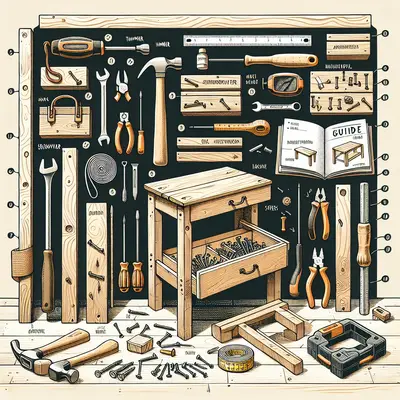
A lot of “home repair” advice jumps straight to big, expensive projects. But the repairs that actually improve your day are usually small: the door that won’t latch, the faucet that won’t stop dripping, the cabinet that slams like a car crash. This guide walks you through five practical, step‑by‑step fixes that make your home feel calmer, quieter, and easier to live in—without needing a full toolbox or a contractor.
1. Silencing a Dripping Faucet (Without Replacing the Whole Thing)
A steady drip is more than annoying—it can waste gallons of water every day. In many cases, you can fix it by replacing a simple internal part instead of the whole faucet.
What you’ll need:
Adjustable wrench, screwdriver, replacement cartridge or washers/O-rings (check your faucet brand/model), plumber’s grease, towel or rag.
Step‑by‑step:
- Shut off the water.
Look under the sink for two shutoff valves (hot and cold). Turn them clockwise until they stop. Open the faucet to relieve pressure and confirm the water is off.
- Plug the drain.
Use a drain plug or stuff in a rag. This prevents tiny screws or parts from disappearing down the drain.
- Remove the handle.
Pop off any decorative cap with a flat screwdriver. Unscrew the handle screw and pull the handle off. Take pictures as you go so you know how everything fits back together.
- Access the cartridge or stem.
Depending on your faucet type:
- Cartridge faucet: Remove any retaining nut or clip and pull the cartridge straight up.
- Compression faucet (older style): Unscrew the packing nut and remove the stem.
- Inspect and replace worn parts.
- For cartridges: Replace with the exact same model (bring the old one to the store if needed).
- For compression faucets: Replace the rubber washer at the bottom and any cracked O‑rings.
- Lubricate and reassemble.
Apply a thin layer of plumber’s grease to O‑rings and threads. Reinstall the cartridge or stem, then the handle in reverse order. Don’t overtighten metal parts—snug is enough.
- Turn water back on gradually.
Slowly open the shutoff valves and test the faucet. Check for leaks around the base and under the sink.
If the faucet still drips after a proper cartridge/washer replacement, the valve seat may be damaged, which is a good time to consider a full faucet replacement or calling a pro.
2. Fixing a Door That Won’t Latch (No More Shoulder Slams)
A door that won’t stay shut isn’t just irritating—it can be a security and privacy issue. The usual culprit is misalignment between the latch and the strike plate, often from the house settling or loose hinges.
What you’ll need:
Phillips screwdriver, wood toothpicks or wooden matchsticks, wood glue (optional), chisel or utility knife, hammer, pencil.
Step‑by‑step:
- Check the hinges first.
Open the door and tighten all hinge screws on both the door and the frame. If any screw spins without tightening, you likely have a stripped hole.
- Repair stripped screw holes.
- Remove the loose screw.
- Dip wooden toothpicks or matchsticks in wood glue (optional) and pack them tightly into the hole.
- Snap them off flush with the surface, then drive the screw back in.
This gives the screw fresh wood to bite into and can pull a sagging door back into alignment.
- Test the latch alignment.
Close the door slowly and watch where the latch hits the strike plate. You may see scuff marks above or below the plate, showing whether the latch is hitting high or low.
- Mark the correct position.
Use a pencil to trace where the latch naturally wants to meet the strike plate opening. Compare this with the current opening to see how far off it is.
- Adjust the strike plate (small tweaks).
For minor misalignment:
- Slightly loosen the strike plate screws.
- Tap the plate up, down, or sideways with a hammer until the latch lines up.
- Retighten screws and test the door.
- Move the strike plate (bigger fixes).
- Remove the strike plate completely.
- Chisel or cut a small amount of wood from the frame where the plate needs to move.
- Pre‑drill new small pilot holes if necessary.
- Reinstall the plate in its new position and fill the old screw holes with glued toothpicks.
- Fine‑tune for smooth closing.
If the latch is clearly too high/low or too far to one side:
If the latch catches but feels rough, lightly file or chisel the inside of the strike plate opening so the latch can slip in without force.
Once the door latches cleanly without pushing or lifting, you’ve fixed the core problem. Bonus: this same method works on interior doors that rattle in their frames—just tighten hinges and adjust the strike.
3. Stabilizing a Wobbly Toilet (Stop the Rocking Before It Leaks)
A rocking toilet isn’t just annoying; it can crack the wax seal under the base and lead to hidden leaks and subfloor damage. If you catch it early, you can stabilize it without a full removal.
What you’ll need:
Plastic toilet shims, utility knife, adjustable wrench, towel, latex or silicone caulk (preferably matching your floor color).
Step‑by‑step:
- Confirm the wobble source.
Gently sit and shift your weight. If the bowl rocks but the tank stays stable against the wall, the base is the issue. If the whole toilet moves, you may have loose flange bolts as well.
- Tighten the closet bolts (carefully).
- Remove the plastic caps at the base of the toilet.
- Use an adjustable wrench to snug the nuts on the bolts—alternate sides and tighten in small increments.
- Do NOT overtighten; porcelain can crack. Stop as soon as the wobble lessens.
- Shim the base to eliminate movement.
If it still rocks:
- Trim the shims.
Once the toilet feels stable, use a utility knife to cut off the exposed shim ends so they’re flush with the base.
- Seal the base (optional but recommended).
- Run a bead of caulk around the base, leaving a small gap at the back unsealed so any future leak can show.
- Smooth the bead with a wet finger or tool.
Caulk helps hold the shims in place, supports the base, and keeps mop water from seeping underneath.
- Monitor for hidden issues.
Over the next week, check for:
- Any new rocking movement
- Dampness or discoloration around the base
If you see moisture or the wobble returns, the wax ring or flange may already be damaged, and you’ll need a full toilet reset (or a plumber).
This quick stabilization can extend the life of your existing seal and keep minor movement from turning into a major repair.
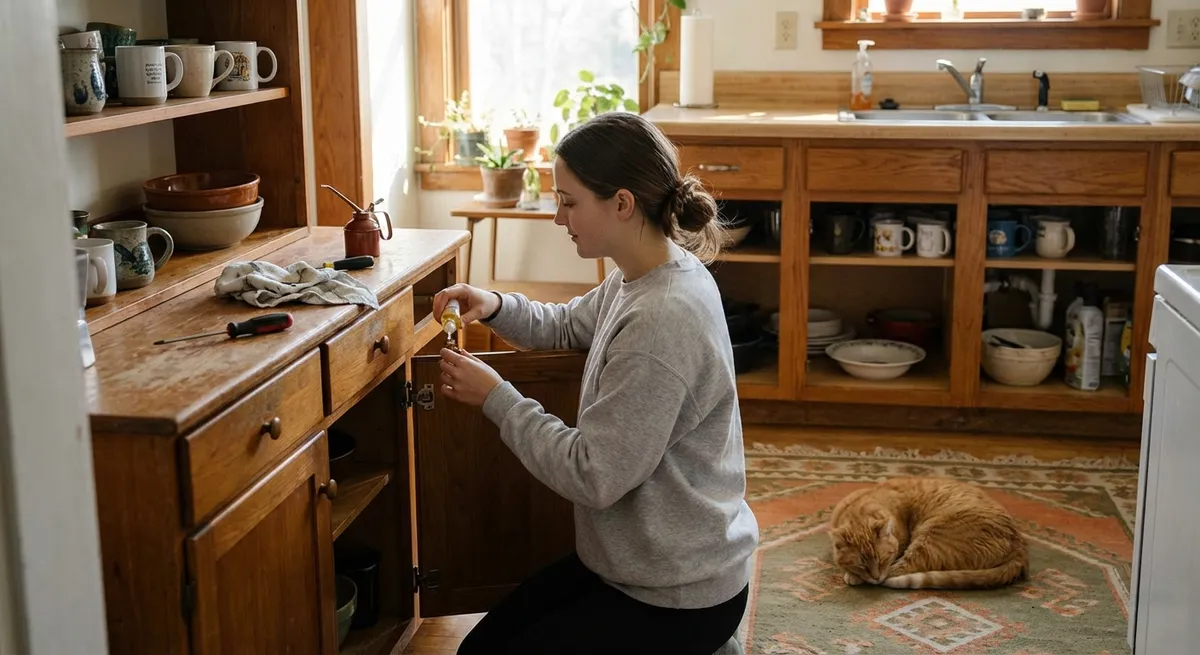
4. Quieting Slamming Kitchen Cabinets (Simple Hardware Upgrade)
Cabinet doors that slam shut are hard on both the hinges and your nerves. Softeners and minor hinge adjustments can make your kitchen noticeably calmer with very little effort.
What you’ll need:
Self‑adhesive soft‑close bumpers or clip‑on soft‑close adapters, Phillips screwdriver, microfiber cloth, mild cleaner.
Step‑by‑step:
- Clean the contact points.
Open the cabinet and clean where the door meets the frame with a mild cleaner. Let it dry completely so adhesives will stick properly.
- Try basic felt or rubber bumpers.
For a quick improvement:
- Stick one bumper near each upper corner on the inside of the cabinet door.
- Add a third in the center top if the door is wide.
These won’t create a full soft‑close effect but will instantly reduce noise and vibration.
- Install soft‑close adapters (for a smoother close).
If you want the “luxury cabinet” feel:
- Purchase clip‑on soft‑close adapters that fit your hinge style (European/mortise hinges are common in modern kitchens).
- Clip them onto the hinge arm or mount them inside the cabinet per the manufacturer’s instructions.
Most require only a screwdriver and no drilling.
- Adjust hinge tension and door alignment.
If the door still slams or doesn’t latch properly:
- Use the small screws on the hinge to adjust angle and depth.
- Make small adjustments and test each time; the goal is a tight but not forced close.
- Test and fine‑tune.
- If it stops short of closing fully, slightly reduce the soft‑close tension (if adjustable) or move the adapter closer to the hinge.
- If it still slams near the end, confirm the adapter is positioned correctly and not obstructed.
- Repeat for high‑use doors first.
Open the door fully and let it close on its own:
Start with your most used cabinets (trash, dishes, pantry). You may not need soft‑close hardware on every single door to get a major improvement in everyday noise.
This small hardware upgrade can be done incrementally and makes your kitchen feel newer and more refined without a remodel.
5. Stopping a Running Toilet (Simple Internal Part Swap)
A toilet that runs long after flushing wastes water and money. The usual suspects are the flapper, fill valve, or float height. These parts are inexpensive and designed to be homeowner-replaceable.
What you’ll need:
Replacement flapper (and possibly fill valve), sponge or towel, small bucket, adjustable wrench (if replacing fill valve).
Step‑by‑step:
- Diagnose with a quick listen and look.
Remove the tank lid and flush:
- If water keeps trickling into the bowl, the flapper often isn’t sealing.
- If water rises too high and spills into the overflow tube, the float/fill valve is set too high.
- Check the flapper first (most common).
- Turn off the water at the shutoff valve behind the toilet.
- Flush to empty most of the tank. Sponge out remaining water around the flapper area.
- Inspect the flapper: if it’s warped, brittle, or slimy with mineral buildup, replace it.
- Replace the flapper.
- Unhook the flapper from the overflow tube and unclip it from the chain.
- Install the new flapper per instructions, ensuring the ears or ring fit securely.
- Adjust the chain so there’s just a bit of slack—too tight prevents sealing, too loose prevents full opening.
- Adjust water level if needed.
- The water level should stop about 1 inch below the top of the overflow tube.
- For float‑cup valves, squeeze the clip on the float rod and slide the float down to lower the water level.
- For older float‑ball valves, gently bend the arm downward.
- Replace the fill valve (if it won’t shut off reliably).
- Turn off water, flush, and sponge out water.
- Disconnect the water supply line under the tank.
- Unscrew the nut holding the fill valve and lift it out.
- Install the new fill valve at the correct height and reconnect everything per manufacturer directions.
- Final leak and function check.
- Let the toilet sit for 10–15 minutes with the tank full and the water on.
- Listen for continued hissing or trickling.
- Add a few drops of food coloring to the tank; if color appears in the bowl within 20–30 minutes without flushing, the flapper still isn’t sealing and may need readjusting.
Turn the water back on and watch the fill:
If the valve keeps hissing or refilling:
Fixing a running toilet quickly pays for itself in reduced water usage, especially in homes with older fixtures or multiple bathrooms.
Conclusion
You don’t need a workshop full of tools or specialized training to make your home feel more solid, quiet, and efficient. By handling small but high‑impact repairs—like stabilizing a toilet, stopping a drip, or getting doors and cabinets working smoothly—you prevent bigger problems and make daily life noticeably better.
If you’re ever unsure, take photos before disassembly, work slowly, and know where your shutoff valves are. Start with one of these five repairs, build your confidence, and you’ll be surprised how much of your home you can keep in top shape with your own hands.
Sources
- U.S. Environmental Protection Agency – Fix a Leak - Explains how small leaks, especially in toilets and faucets, waste water and offers basic diagnostic tips
- Family Handyman – How to Fix a Leaking Faucet - Step‑by‑step guidance and diagrams for different faucet types and cartridge/washer replacement
- Lowe’s – How to Fix a Running Toilet - Visual walkthrough for diagnosing and replacing common internal toilet components
- This Old House – How to Fix a Sticking Door - Detailed explanation of door alignment issues and hinge/strike plate adjustments
- University of Georgia Extension – Home Water Conservation - Overview of household water use, the impact of leaks, and conservation strategies
Key Takeaway
The most important thing to remember from this article is that this information can change how you think about Home Repairs.