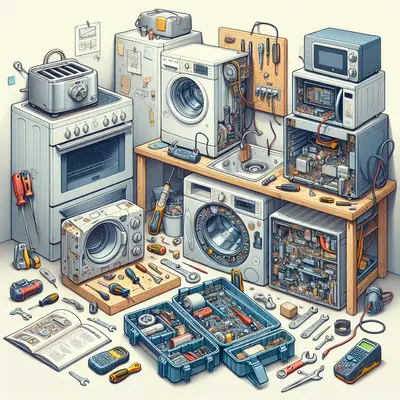
Most home appliances don’t fail suddenly—they get louder, slower, or less effective first. Catching those early warning signs and doing a few simple repairs can add years to their life and save you from surprise breakdowns. You don’t need a workshop full of tools or advanced skills—just some basic safety habits and a methodical approach.
This guide walks through five practical, step‑by‑step repair tips for common appliance issues that many DIYers can handle with a screwdriver, a flashlight, and a little patience.
Safety First: Prep Before Any Appliance Repair
Before touching a screw or panel, treat every appliance as if it can bite back. Electrical shock, moving parts, and sharp edges are real risks—but easy to avoid with a simple routine.
Cut the power properly
- For plug‑in appliances (microwaves, refrigerators, dishwashers with visible plugs), unplug them from the wall. - For hardwired appliances (some dishwashers, built‑in ovens), switch off the appropriate circuit breaker in your electrical panel and label it “OFF” with tape for the duration of the job. - Double‑check by trying to turn the appliance on—nothing should respond.
Shut off water and gas when relevant
- For washers, dishwashers, and fridges with ice makers, turn off the water supply valves. - For gas dryers or ranges, close the gas shutoff valve if you’ll be disconnecting or moving lines. If you smell gas, stop immediately and call a pro or your gas company.
Use basic personal protection
- Wear cut‑resistant or work gloves when reaching into tight spaces or near sheet metal. - Use safety glasses when working under an appliance or when removing panels that may be under slight tension.
Take photos as you go
- Before removing any panel, wire, or hose, snap a clear photo. - This becomes your “map” when you’re putting everything back together.
Know when to stop
- If you see burned wiring, smell strong electrical odors, or find signs of major leaks inside a wall or floor, button the appliance back up and call a professional. DIY is about smart savings, not gambling with safety or structural damage.
Step‑by‑Step Tip #1: Restore Cooling in a Warm Refrigerator
A fridge that’s running but not cold enough is often suffering from poor airflow or dirty coils—not a dead compressor. Fixing these is very DIY‑friendly.
Symptoms: Food feels soft, drinks not cold, freezer still partly OK, compressor seems to run a lot.
What you’ll need
- Vacuum with brush attachment
- Soft brush or coil cleaning brush
- Mild dish soap, warm water, and cloth
- A thermometer (optional but helpful)
Steps
Check temperature settings first
- Make sure the fridge is set to around 37–40°F (3–4°C) and the freezer to 0°F (-18°C). - Avoid “Max” or “Coldest” unless recommended; this can cause other issues like icing.
Clear air vents inside the fridge and freezer
- Look for vents at the back or sides of each compartment. - Move food away from vents—no containers pressed directly against them. Blocked vents mean cold air can’t circulate.
Inspect the door gaskets (seals)
- Close a sheet of paper or dollar bill in the door and gently pull it out. - If it slides out easily with no resistance in multiple spots, the gasket may be dirty, warped, or worn. - Clean the gasket with warm soapy water and a cloth, making sure to get into the folds. - If it’s cracked or torn, note the model number and consider ordering a replacement.
Clean the condenser coils
- Unplug the fridge. - Access coils either: - Behind a lower front grille, or - On the back of the unit. - Use a brush or coil cleaning brush to loosen dust and debris, then vacuum carefully. - Clogged coils force the compressor to work harder and cool less effectively.
Give it time to stabilize
- Plug the fridge back in. - Avoid opening doors frequently for the next 12–24 hours. - Recheck temperatures with a thermometer if possible.
When to call a pro:
Ice building up on the back of the freezer, loud clicking or buzzing from the compressor area, or the fridge repeatedly turning on and off in short bursts may point to electrical or sealed‑system issues better left to technicians.
Step‑by‑Step Tip #2: Stop a Washing Machine from Shaking the House
A washer that walks across the floor or vibrates violently doesn’t always need replacement. Often it just needs to be leveled or loaded more thoughtfully.
Symptoms: Loud banging during spin, machine moves, or tub hits the cabinet.
What you’ll need
- Adjustable wrench or pliers
- Bubble level (or a leveling app on your phone)
- Old towel or cardboard (to protect the floor as you adjust)
Steps
Pause and redistribute the load
- If the washer starts pounding, pause or stop the cycle. - Open the lid/door and manually redistribute clothes so they’re more evenly spread around the drum. Overloading or washing one heavy item (like a blanket) can throw off balance.
Check for shipping bolts (new machines)
- If the washer is recently installed, check the user manual for shipping bolt locations on the back. - These bolts lock the drum for transport and must be removed before use. - If they’re still in place, remove them per the manual; keep them somewhere safe for future moves.
Level the washer front‑to‑back and side‑to‑side
- Unplug the washer before moving it. - Place a level on top, front‑to‑back and side‑to‑side. - Adjust the front legs by turning them with your hand or wrench until the bubble is centered. Many machines let you lock the legs with a locknut once adjusted. - For rear legs, some are self‑leveling—tilt the washer slightly forward and set it back down to let them adjust.
Check the floor under the washer
- Ensure the floor is solid and not flexing; loose boards or cracked tiles can worsen vibration. - If needed, consider adding anti‑vibration pads under each leg to improve grip and reduce noise.
Test with a medium load
- Run a spin cycle with a normal, balanced load—no single heavy items. - Watch the washer at top speed spin; it should stay in place with minimal shaking.
When to call a pro:
If you hear grinding, metal scraping, or see the tub sagging, internal suspension parts, bearings, or mounts may be failing. Those are typically advanced repairs.
Step‑by‑Step Tip #3: Bring a Slow or No‑Heat Dryer Back to Life
A dryer that runs but doesn’t dry well is often suffocating from poor airflow. Fixing that not only improves performance—clearing lint paths also reduces fire risk.
Symptoms: Clothes take much longer to dry, dryer feels very hot on the outside, or you notice a burning smell.
What you’ll need
- Vacuum with hose attachment
- Dryer vent brush or flexible cleaning kit
- Screwdriver (if needed to remove vent clamps)
- Flashlight
Steps
Clean the lint filter and housing
- Remove the lint screen and clean it thoroughly by hand. - If you use dryer sheets, occasionally wash the screen with warm soapy water and a soft brush—residue can block airflow. Let it dry completely. - Use a vacuum crevice tool to clean lint buildup in the filter housing.
Inspect and detach the vent hose
- Unplug the dryer. For gas dryers, also close the gas valve if you’ll move the unit. - Gently pull the dryer away from the wall, giving slack to the vent hose. - Loosen the clamp(s) securing the vent hose to the dryer and wall or floor outlet.
Clear the entire vent path
- Use a vent cleaning brush or flexible kit to push through the vent pipe toward the exterior. - Pull back the brush and remove lint; repeat until relatively clean. - Go outside and clear the vent hood; make sure the flap opens freely and isn’t blocked by lint or nests.
Check hose condition and routing
- Look for crushed, kinked, or excessively long vent hoses. - Replace plastic or flimsy foil ducts with rigid or semi‑rigid metal ducting where possible—these are safer and improve airflow. - Keep the vent run as short and straight as you can.
Reassemble and test a timed dry cycle
- Reconnect and clamp the vent hose securely. - Push the dryer back, ensuring you don’t crush the hose. - Plug in (and reopen gas valve if applicable). - Run the dryer on a timed drying cycle for 15–20 minutes with a small load; the exhaust outside should be warm and steady.
When to call a pro:
If the dryer tumbles but never warms up even with good airflow, heating elements, thermostats, or gas ignition parts might be faulty. That’s typically a job for someone with electrical/gas experience.
Step‑by‑Step Tip #4: Fix a Dishwasher That Leaves Dishes Gritty or Cloudy
When your dishwasher stops cleaning effectively, it usually isn’t “worn out.” Mineral scale, clogged spray arms, and filter issues are common and fixable in under an hour.
Symptoms: Food stuck on dishes, cloudy glasses, gritty residue at the bottom of cups or bowls.
What you’ll need
- Soft brush or old toothbrush
- Toothpick or small piece of wire
- White vinegar
- Mild dish soap
- Microfiber cloth
Steps
Clean the filter system
- Unplug the dishwasher or switch off the breaker. - Remove the lower rack. - Look for the filter assembly on the bottom—usually a cylindrical or flat screen that twists out. - Rinse the filter under warm water and scrub with mild dish soap and a brush. - Make sure no large food particles are stuck in the mesh; these restrict water flow.
Inspect and clear the spray arms
- Remove lower and upper spray arms if possible (typically a clip or a center screw). - Rinse them under water. - Use a toothpick or fine wire to carefully clear each jet hole—don’t enlarge them, just remove debris. - Rinse again to flush out loosened particles.
Check the detergent dispenser and door seal
- Clean any caked detergent from the dispenser and surrounding area. - Wipe the door gasket with warm soapy water; food and residue here can affect sealing and washing performance.
Run a vinegar wash cycle
- Place a dishwasher‑safe cup filled with white vinegar on the top rack. - Run a hot water cycle with the dishwasher empty (aside from the vinegar). - This helps dissolve grease and mineral deposits inside the tub and spray system.
Load smarter going forward
- Don’t overlap dishes so water can’t reach surfaces. - Point the dirtiest side of dishes toward the spray arms. - Avoid blocking the detergent dispenser with large pans or cutting boards.
When to call a pro:
Persistent standing water after cycles, grinding noises during wash, or visible leaks from under the machine suggest drain pump or seal issues that may need professional service.
Step‑by‑Step Tip #5: Quiet a Noisy Range Hood or Over‑the‑Range Microwave Fan
A loud, rattling, or weak vent fan above your stove can often be improved with simple cleaning and a few checks—no need to replace the whole unit.
Symptoms: Fan makes rattling or buzzing sounds, airflow seems weak, or grease drips from filters.
What you’ll need
- Warm water and degreasing dish soap
- Non‑scratch scrub pad or brush
- Screwdriver (for some filter or cover types)
- Vacuum with brush attachment
Steps
Remove and clean the filters
- Unplug the hood or microwave, or switch off its dedicated breaker. - Take out the metal mesh or baffle filters; many simply slide or pop out. - Soak them in hot, soapy water with a degreasing dish soap. - Scrub gently and rinse until water runs clear; let them dry fully.
Clean around the fan intake
- With filters removed, look into the fan area. - Use a damp cloth with mild degreaser to wipe accessible surfaces and remove grease buildup. - Avoid saturating any electrical components.
Check the fan blade or blower wheel
- If accessible, visually inspect the fan blade for heavy grease or foreign objects (like loose screws or foil bits). - Carefully remove any debris; do not bend blades. Grease buildup can push the fan off balance and cause noise.
Inspect exterior vent and duct (if vented)
- Go outside and check the vent hood. Ensure the flap opens freely and isn’t blocked by grease, paint, or nests. - If safe to access, vacuum or gently brush away dust and debris from around the vent opening.
Reassemble and test at each speed
- Reinstall completely dry filters. - Restore power and test the fan on all speeds. - Listen for remaining rattles; if the noise persists and seems internal (like a failing motor bearing), consider a replacement motor or unit.
When to call a pro:
If you smell burning, see sparking, or the fan won’t run at all even though it has power, internal electronic or motor failures are likely—best handled by qualified technicians, especially for over‑the‑range microwaves.
Conclusion
Most appliance problems start small: a bit of lint in a vent, dust on coils, an unbalanced load, or mineral buildup in spray arms. By learning a few methodical, step‑by‑step checks, you can often restore performance without a service call—and extend the life of the machines you already own.
Work safely, keep notes and photos as you go, and don’t hesitate to draw the line when a repair looks bigger than your comfort zone. Used wisely, these five repair routines can keep your kitchen and laundry running smoothly while you build real DIY confidence over time.
Sources
- [U.S. Department of Energy – Appliance Energy-Saving Tips](https://www.energy.gov/energysaver/appliances-and-electronics) - Explains how maintenance like coil cleaning and vent clearing improves efficiency and performance
- [Consumer Product Safety Commission – Clothes Dryer Fire Safety](https://www.cpsc.gov/ClothesDryerSafety) - Details risks of lint buildup and best practices for safe dryer operation
- [Energy Star – Refrigerator & Freezer Use](https://www.energystar.gov/products/appliances/refrigerators/usage_tips) - Provides guidance on optimal temperatures and placement for better cooling
- [University of California Agriculture & Natural Resources – Dishwasher Use & Care](https://anrcatalog.ucanr.edu/pdf/8263.pdf) - Covers loading practices, detergents, and basic maintenance for dishwashers
- [Centers for Disease Control and Prevention – Laundry and Cleaning Safety](https://www.cdc.gov/healthywater/hygiene/laundry/index.html) - Offers safety and hygiene recommendations related to washers, dryers, and detergents
Key Takeaway
The most important thing to remember from this article is that this information can change how you think about Appliances.