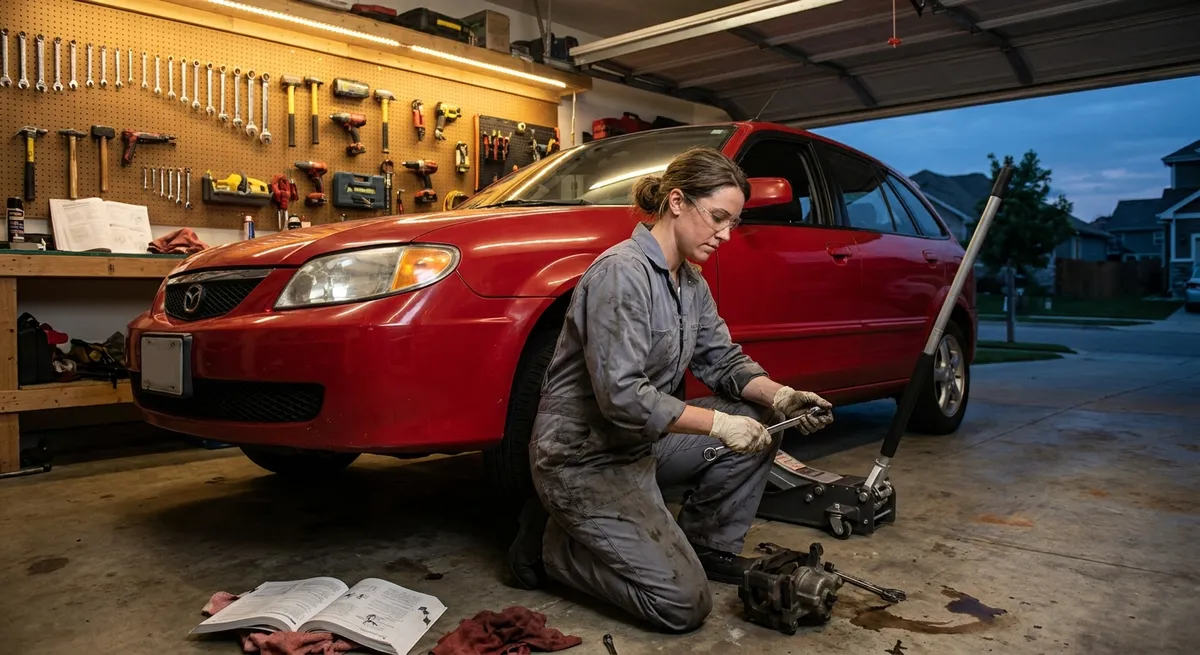
If you own a car long enough, something is going to squeak, leak, or flash a warning light at the worst possible time. You don’t need a full shop, a lift, or a mechanic’s certification to handle a surprising number of those problems yourself—you just need the right steps, basic tools, and a realistic understanding of what’s safe to tackle at home.
This guide walks through five practical, step‑by‑step repairs that DIY enthusiasts can learn, safely perform, and actually feel in everyday driving. No dealer visit, no mystery fees—just clear actions that help your car run better and last longer.
Before You Start: Safety, Tools, and When to Stop
Before turning a single bolt, get your setup right. A small amount of prep prevents expensive (and painful) mistakes.
- Work on a level, stable surface. Driveway or garage floor is ideal. Avoid soft ground where jacks can sink.
- Use the parking brake and wheel chocks. Even for basic jobs, prevent any chance of the car rolling.
- Invest in basic safety gear. Safety glasses, gloves, and a decent LED work light go a long way.
- Own the right basic tools. A metric socket set, combination wrenches, screwdrivers, torque wrench, jack stands, and a funnel cover most basic repairs.
- Look up your car’s service information. Your owner’s manual plus a reputable repair guide (like Haynes, Chilton, or manufacturer documentation) will give torque specs and fluid types.
Know when to stop: Anything involving airbags, pressurized fuel lines, major suspension alignment, or high‑voltage EV/hybrid components is usually best left to a pro unless you have specific training.
Step‑By‑Step Tip #1: Change Engine Oil Without the Mess
Oil changes are the foundation of basic car care—and one of the most approachable repairs if you follow a clear process.
What you’ll need:
New oil (correct type/viscosity), new oil filter, drain pan, wrench/socket for drain plug, oil filter wrench (if needed), funnel, rags, gloves, jack and jack stands or ramps.
Steps:
- Confirm the correct oil and amount.
Check your owner’s manual for viscosity (e.g., 5W‑30) and capacity with filter (e.g., 4.4 qt). Don’t guess.
- Warm the engine slightly.
Run the car for 3–5 minutes so the oil flows easily, then shut it off. Don’t work on a fully hot engine.
- Lift and secure the vehicle (if needed).
Use a jack at approved lift points and support the car with jack stands. Never rely on a jack alone.
- Remove the drain plug.
Place the drain pan under the oil pan’s drain bolt. Loosen the bolt carefully; oil will flow out quickly. Let it drain completely (5–10 minutes).
- Replace the crush washer and reinstall the plug.
Many vehicles use a small crush washer on the drain plug. Replace it if recommended, then torque the plug to spec—don’t over‑tighten.
- Remove and replace the oil filter.
Use the filter wrench if needed. Make sure the old rubber gasket comes off with the filter. Lightly oil the new filter’s gasket with fresh oil and spin it on hand‑tight plus about ¾ turn (or per manufacturer’s instructions).
- Refill with fresh oil.
Remove the oil fill cap on top of the engine, insert a funnel, and pour in most (but not all) of the specified amount.
- Check level and leaks.
Start the engine and let it run for 30–60 seconds while you look underneath for drips. Shut it off, wait 2–3 minutes, then check the dipstick. Top up slowly until the level is between the “LOW” and “FULL” marks (ideally near full, not above it).
- Dispose of used oil properly.
Pour used oil into a sealable container and take it to an auto parts store or recycling center—never dump it.
Payoff: Smoother operation, longer engine life, and a job you can repeat with confidence every service interval.
Step‑By‑Step Tip #2: Replace Worn Brake Pads Before They Squeal Through
If your brakes squeak, pulse, or feel weak, new pads can restore stopping power. Pad replacement is manageable for careful DIYers, as long as rotors are in decent shape and you respect safety.
What you’ll need:
Jack, jack stands, lug wrench, basic socket set, C‑clamp or brake caliper tool, new brake pads, brake cleaner, wire brush, bungee cord or wire, torque wrench.
Steps (front brake pads, typical disc setup):
- Loosen lug nuts slightly.
With the car on the ground, crack each lug nut loose (¼ turn) but don’t remove them yet.
- Lift and secure the vehicle.
Jack up the front at a proper lift point and support with jack stands. Remove the wheel.
- Inspect the brake assembly.
Identify the caliper, bracket, rotor, and pads. Take a quick photo with your phone so you know how everything goes back.
- Remove the caliper.
Locate and remove the caliper slide bolts (usually on the back). Hang the caliper from the spring/strut with a bungee or wire—never let it dangle from the brake hose.
- Remove the old pads and hardware.
Slide out the old pads; remove any clips or shims. Inspect the rotor surface for deep grooves or cracks—if it’s badly worn, consider professional resurfacing or replacement.
- Compress the caliper piston.
Place an old pad against the piston and use a C‑clamp or piston tool to slowly push the piston back flush with the caliper body. Check your brake fluid reservoir—if it’s full, remove a bit of fluid so it doesn’t overflow.
- Clean and prep the bracket.
Use brake cleaner and a wire brush on the pad support areas. Install new hardware clips if provided with your pads.
- Install new pads.
Snap or slide the new pads into place, ensuring the friction material faces the rotor. Apply a tiny amount of high‑temp brake grease to pad ears/contact points if recommended (never on the pad surface).
- Reinstall the caliper and wheel.
Swing the caliper back over the new pads and torque the caliper bolts to spec. Reinstall the wheel, hand‑tighten lug nuts, then lower the car and torque lugs in a star pattern.
- Pump the brake pedal.
Before driving, pump the brakes until the pedal feels firm. This seats the pads against the rotors.
Payoff: Shorter stopping distances, quieter braking, and a deep understanding of how your brakes actually work.
Step‑By‑Step Tip #3: Diagnose and Swap a Weak Car Battery
A tired battery is one of the most common reasons cars refuse to start. Learning to test and replace it yourself can save towing charges and a wasted day.
What you’ll need:
Multimeter (or battery tester), wrench set, battery terminal brush, baking soda and water (for corrosion), replacement battery that matches your vehicle’s specs, memory saver (optional).
Steps:
- Check for obvious signs of failure.
Dim lights, slow cranking, clicking noises, or an intermittent “no start” are early warnings. Look under the hood for swelling, cracks, or heavy corrosion on terminals.
- Test battery voltage.
With engine off, use a multimeter on DC volts: red lead to positive (+), black to negative (−).
- Around 12.6V = fully charged
- 12.4V–12.5V = partially charged
- Below ~12.0V = likely discharged or failing
If it won’t hold charge after driving or charging, it’s probably done.
- Record radio presets if needed.
Some vehicles lose settings when battery is disconnected. A memory saver plugged into the OBD port or 12V socket can help, but isn’t strictly necessary for all cars.
- Disconnect the old battery safely.
Engine off and keys removed. Loosen and remove the negative (−) terminal first, then the positive (+). This reduces the chance of shorting the battery with tools.
- Remove hold‑down hardware and the battery.
Take off any clamp or bracket securing the battery. Lift it straight up—batteries are heavy, so use both hands and good posture.
- Clean the tray and terminals.
Neutralize corrosion with a mix of baking soda and water. Dry thoroughly. Use a terminal brush on cable ends until clean and shiny.
- Install the new battery.
Place it in the tray with terminals oriented correctly. Reinstall the hold‑down clamp snugly—batteries should not move, but don’t overtighten and crack the case.
- Reconnect terminals in the correct order.
Attach positive (+) first, then negative (−). Tighten until they’re secure but not crushing the post. Apply a light coat of dielectric grease or terminal protectant if available.
- Start the vehicle and verify.
Make sure the engine starts easily and warning lights behave normally. Reset clock and presets if needed.
Payoff: Reliable starts, fewer “stranded” moments, and no more paying shop labor for a straightforward swap.
Step‑By‑Step Tip #4: Replace Cabin and Engine Air Filters for Better Breathing
Air filters are often neglected because they’re out of sight—but changing them is one of the fastest “wins” you can get in maintenance: a few minutes, minimal tools, and real benefits for both you and the engine.
Cabin Air Filter (for the air you breathe)
What you’ll need:
New cabin air filter, screwdriver (sometimes), owner’s manual.
Steps:
- Locate the filter.
Most are behind the glove box or under the hood near the base of the windshield. Confirm the location in your manual.
- Access the housing.
If it’s behind the glove box, empty the box, then unhook or unclip the side dampener and squeeze the glove box sides to drop it down. Remove any cover panel.
- Remove the old filter.
Note the airflow direction arrow before pulling it out—this matters for installation.
- Clean the area.
Wipe out dirt and leaves from the housing. A small vacuum works well here.
- Install the new filter.
Slide it in with the arrow aligned with airflow direction (usually pointing down into the cabin). Reinstall cover and glove box.
Engine Air Filter (for the air your engine breathes)
What you’ll need:
New engine air filter, possibly a screwdriver.
Steps:
- Find the air filter box.
Usually a black plastic box connected to a large intake tube.
- Open the housing.
Release metal clips or remove screws around the cover. Lift it enough to access the filter.
- Remove and inspect the old filter.
If it’s visibly dirty, clogged, or darkened, replacement is due.
- Clean the housing.
Wipe or vacuum debris from the bottom of the box—avoid knocking dirt into the intake.
- Install the new filter.
Place it in the same orientation as the old one, making sure it sits flat and seals properly. Re‑secure the cover.
Payoff: Fresher air inside the cabin, potentially better fuel economy and throttle response, and less strain on your HVAC and engine.
Step‑By‑Step Tip #5: Stop Wiper Streaks with a Quick Blade Replacement
Visibility is safety. Streaky, chattering wiper blades are annoying and dangerous—yet replacing them is one of the easiest jobs on the car.
What you’ll need:
New wiper blades matched to your vehicle (length and connector type), owner’s manual or fitment guide, glass cleaner and cloth.
Steps:
- Measure or look up correct sizes.
Front blades are often different lengths left vs. right. You can find correct sizes in the owner’s manual, at parts stores, or on manufacturer websites.
- Lift the wiper arms.
Gently lift each arm off the windshield until it locks in the raised position (if applicable). Be careful—if it snaps back, it can crack the glass.
- Release the old blades.
Most use a small locking tab on the underside of the wiper blade where it connects to the arm hook. Press the tab and slide the blade down and off the hook.
- Attach the new blades.
Align the new blade with the arm’s connector style (J‑hook is most common). Slide it into place until it clicks securely. Tug lightly to confirm it’s locked.
- Clean the windshield.
Before lowering the arms, clean the glass with a good glass cleaner or isopropyl alcohol. This helps new blades last longer and reduces streaking.
- Test operation.
Lower the arms back onto the windshield and run the wipers with washer fluid. Check for smooth, quiet operation and full contact.
Payoff: Clear vision in bad weather, less eye strain, and a quick, inexpensive safety upgrade.
Conclusion
You don’t need a full tool truck or years of training to meaningfully extend your car’s life and reliability. By learning to:
- Change your own engine oil
- Replace worn brake pads
- Test and swap a failing battery
- Refresh cabin and engine air filters
- Install new wiper blades
…you’ll not only save money, you’ll understand how your vehicle works and spot issues earlier.
Start with the simplest task on this list, follow each step carefully, and build your confidence one repair at a time. Over time, your garage turns from “storage space” into a personal workshop—and your car becomes something you maintain on your own terms, not just drop off and hope for the best.
Sources
- National Highway Traffic Safety Administration (NHTSA) – Vehicle Maintenance Tips – Covers basic safety and maintenance practices to keep vehicles operating safely
- U.S. Department of Energy – Fuel Economy: Keeping Your Car in Shape – Explains how maintenance items like oil and air filters affect efficiency and performance
- AAA – How to Replace Your Car’s Battery – Step‑by‑step battery replacement guidance and safety considerations
- Bridgestone / Firestone – Brake Maintenance 101 – Overview of brake system components, wear signs, and service intervals
- U.S. Environmental Protection Agency – Used Oil Management Program – Details on proper handling and recycling of used motor oil
Key Takeaway
The most important thing to remember from this article is that this information can change how you think about Auto Repair.