When your car starts making new noises or lights up the dashboard like a Christmas tree, the first instinct is often panic—followed by visions of a massive repair bill. But plenty of common issues are simple enough for a careful DIYer to handle with basic tools, some patience, and good information. This guide walks you through five practical, step-by-step auto repairs that can save you money, reduce stress, and help you understand your car better—without pretending you’re a professional mechanic.
Before You Start: Safety and Setup
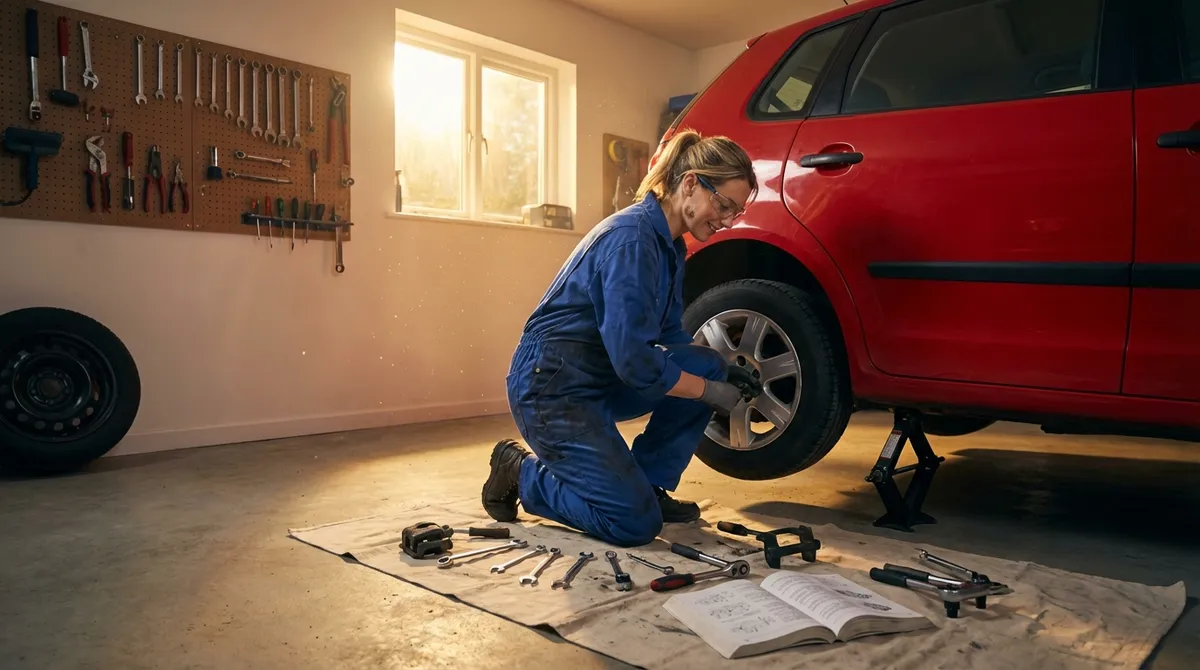
Before grabbing a wrench, set yourself up to work safely and efficiently. Always work on a level surface, use the parking brake, and chock the wheels if you’ll be lifting the car. Never trust a jack alone—use properly rated jack stands and position them at the manufacturer’s recommended lift points (found in your owner’s manual).
Wear safety glasses whenever you’re under the car or working near batteries, fluids, or rusty parts. Gloves help, but make sure you still have good dexterity and grip. Keep a small fire extinguisher (rated for flammable liquids and electrical fires) nearby if you’re doing anything involving fuel or electrical connections.
Finally, keep your phone handy—but use it to take photos of wiring connections, hose routing, and part orientation before you take things apart. Those quick reference shots save a ton of confusion when you’re putting everything back together.
DIY Fix #1: Swapping Out Faded or Dead Headlight Bulbs
Dim or dead headlights are more than a nuisance—they’re a safety hazard and an easy ticket. Most modern headlight bulbs are designed to be replaced without removing the whole bumper, and the job usually takes 15–30 minutes per side.
Tools & supplies:
- Replacement bulbs that match your owner’s manual (buy in pairs)
- Gloves (to avoid touching bulb glass)
- Small flathead screwdriver (sometimes)
Step-by-step:
Confirm the bulb type and access point
Check your owner’s manual for bulb type and how to access it (through the engine bay, wheel well, or behind a cover). Open the hood and locate the back of the headlight housing.
Disconnect power safely
Turn off the car and headlights completely. Unplug the electrical connector from the back of the bulb—usually a simple tab or clip you squeeze and pull.
Release the bulb retainer
Depending on your car, there may be a plastic twist ring, a metal spring clip, or a locking collar. Gently twist or unclip it while noting the orientation; take a photo if needed.
Remove and replace the bulb
Pull the old bulb straight out. Without touching the glass of the new bulb, insert it in the same orientation. Oils from your skin can cause hot spots and early failure, so handle the bulb by the base only.
Reassemble and test
Reinstall the retainer, plug the connector back in, and turn on your headlights to test. Compare both sides for brightness and aim. If one looks off, reseat the bulb—it might not be fully locked in.
If your headlights are still dim even with new bulbs, the lenses may be oxidized. A dedicated headlight restoration kit can often restore clarity and improve light output noticeably.
DIY Fix #2: Replacing Worn Brake Pads (Front Disc Brakes)
Brake work can sound intimidating, but front brake pad replacement is a straightforward job if you follow instructions, use quality parts, and stay organized. If you’re uncomfortable at any point, stop and have a professional finish the job—brakes are critical to safety.
Tools & supplies:
- Jack and jack stands
- Lug wrench
- Socket set and wrench
- C-clamp or disc brake spreader
- New brake pads (and new hardware if recommended)
- Brake cleaner spray and a catch pan
- Wire brush
Step-by-step:
Loosen lugs and raise the car
Loosen (but do not remove) the lug nuts on the wheel with the car on the ground. Jack up the front of the car at approved lift points and support it securely with jack stands. Remove the wheel.
Inspect the brake assembly
You’ll see the rotor (large metal disc) and caliper (clamp-shaped assembly). Take a photo from several angles before disassembly. Visually inspect for fluid leaks, deeply scored rotors, or damaged hoses—serious issues should be handled by a pro.
Remove the caliper and old pads
Locate the two caliper slide bolts on the back side. Remove them carefully and slide the caliper off the rotor. Support the caliper with a wire or bungee; don’t let it hang by the brake hose. Slide the old pads out of their brackets.
Compress the caliper piston
Place the old pad against the piston (inside the caliper) and use a C-clamp to slowly push the piston back into the caliper housing. This makes room for the thicker new pads. Keep an eye on your brake fluid reservoir under the hood—fluid level may rise; if it overflows, carefully remove some with a turkey baster.
Clean and install new pads
Use brake cleaner to spray the rotor and hardware (avoid rubber components). Lightly brush away rust from the pad brackets. Install new pads in the same orientation as the old ones. If your new pads include new clips or shims, replace the old hardware.
Reassemble and test
Slide the caliper back over the new pads and reinstall the caliper bolts, tightening to specs (torque wrench recommended). Reinstall the wheel, tighten lugs by hand, lower the car, then torque the lug nuts in a star pattern. Before driving, pump the brake pedal several times until it feels firm—this seats the pads against the rotor.
After any brake work, perform a low-speed test drive in a safe area, gently applying brakes to ensure even, strong braking without pulls, grinding, or vibration.
DIY Fix #3: Tracking Down and Fixing a Small Coolant Leak
Noticed sweet-smelling steam, a green/orange/pink puddle, or the low coolant light? Small coolant leaks are common and, if caught early, often manageable at home. The key: never open a hot cooling system.
Tools & supplies:
- Flashlight
- Shop towels
- Coolant that matches your vehicle’s specs
- Safety glasses and gloves
- Cardboard or light-colored sheet for leak detection
Step-by-step:
Let the engine cool completely
The cooling system is under pressure when hot. Wait at least an hour after driving before opening the hood. Never remove a radiator cap when the engine is hot.
Identify the leak area
Place cardboard under the engine bay overnight to see where fluid drips. Use a flashlight to inspect around the radiator, hoses, hose clamps, water pump area, and the coolant reservoir for wet spots, white or colored crust, or fresh stains.
Check hoses and clamps first
Hoses often fail at the ends or where they bend. With the engine cool, gently squeeze hoses—if they’re soft, cracked, or bulging, they need replacement. Check clamps for looseness or rust.
Tighten or replace clamps and hoses
If a clamp looks loose, try tightening it a bit and recheck for leaks after a drive. If a hose is damaged, drain enough coolant to work below the hose level, remove the old hose, and install a new one with fresh clamps. Make sure the hose is fully seated on its fittings before tightening.
Top off coolant and bleed air (if required)
Refill the system with the correct coolant mix in the reservoir (and radiator if your design allows), following your owner’s manual. Some cars require a specific bleeding procedure to remove air pockets—ignore this and you could overheat, so follow the manual carefully.
If you spot coolant seeping from the radiator core, heater core, or water pump, or if the leak is significant, that’s typically a job for a professional. Never rely on stop-leak products as a long-term fix—they can create bigger problems in modern cooling systems.
DIY Fix #4: Replacing a Weak Car Battery and Cleaning Corroded Terminals
Slow cranking, dim interior lights, or random electrical glitches often point to a weak battery or poor terminal connections. Swapping a battery and cleaning its terminals is one of the simplest and most useful DIY jobs you can learn.
Tools & supplies:
- Wrench or socket set
- Battery terminal cleaner or wire brush
- Baking soda and water (for corrosion)
- New battery matched to your car’s specifications
- Memory saver (optional) for preserving radio/ECU settings
Step-by-step:
Verify the battery is the culprit
If you have a voltmeter, measure voltage with the car off: around 12.6V is healthy, under ~12.2V is significantly discharged. If jump-starts work but the problem returns quickly, the battery is likely weak.
Prepare for safe removal
Turn off the car and remove the key. If using a memory saver, plug it into the OBD-II port or 12V socket per instructions. Wear gloves and eye protection—battery acid is hazardous.
Disconnect cables (negative first)
Loosen the nut on the negative (black, “–”) terminal and remove the cable, tucking it aside so it can’t spring back. Then do the same for the positive (red, “+”) terminal. Removing negative first reduces the chance of accidental short circuits.
Remove the battery and inspect the tray
Remove any battery hold-down bracket, then lift the battery straight up (they’re heavy). Inspect the tray for rust or spilled acid; neutralize corrosion with a mixture of baking soda and water, then rinse and dry.
Clean terminals and install new battery
Clean the inside of the cable clamps with a wire brush or dedicated terminal cleaner until shiny metal is visible. Place the new battery in the tray, secure it with the hold-down bracket, then connect the positive cable first, followed by the negative cable. Tighten firmly but do not overtighten.
If corrosion frequently returns or you see wetness/cracks on the battery case, have the charging system tested—overcharging can shorten battery life and create ongoing issues.
DIY Fix #5: Stopping a Squeaky Serpentine Belt
A high-pitched squeal when starting the engine or turning on the AC often points to a worn or loose serpentine belt. This belt powers key accessories (alternator, power steering, AC), and replacing it is usually a straightforward “route and tension” job.
Tools & supplies:
- Serpentine belt matched to your vehicle
- Wrench or serpentine belt tool (to move the tensioner)
- Flashlight
- Routing diagram (under hood sticker or owner’s manual)
Step-by-step:
Confirm it’s the belt making noise
Briefly start the engine and listen from a safe distance. If the squeal changes with engine speed or when accessories switch on, it’s often belt-related. Turn the engine off before doing any further inspection.
Locate the belt and routing diagram
Open the hood and find the serpentine belt. Look for a routing diagram sticker under the hood; if missing, draw your own diagram or take multiple photos to record the exact path.
Inspect the belt and pulleys
With the engine off, examine the belt for cracks, glazing (shiny areas), missing ribs, or fraying. Spin accessible pulleys by hand—if any feel rough, wobbly, or noisy, the pulley or its bearing may also need attention.
Relieve tension and remove the belt
Find the belt tensioner (spring-loaded pulley). Use the appropriate wrench or belt tool to rotate the tensioner and relieve belt tension. Slip the belt off while holding the tensioner, then slowly release the tensioner back.
Install the new belt carefully
Route the new belt around all pulleys except the easiest one to reach (often the tensioner or alternator), following the diagram exactly—ribs must sit fully in the pulley grooves. Rotate the tensioner again, slip the belt onto the last pulley, and gently release the tensioner.
Double-check alignment and test
Visually inspect every pulley to ensure the belt is centered and fully seated. Start the engine briefly and watch the belt; it should run smoothly without wobble or noise. If squealing persists, the tensioner or a pulley bearing may need replacement.
Conclusion
Modern cars can feel mysterious, but many common issues don’t require a shop visit if you’re willing to learn, take your time, and respect safety rules. Replacing bulbs, pads, batteries, belts, and tackling small coolant leaks are all jobs that build your confidence and help you spot bigger problems early. Always lean on your owner’s manual, quality parts, and trusted reference sources—and know your limits. If a repair touches critical safety systems beyond your comfort level, getting a professional involved isn’t “giving up”; it’s smart car ownership.
Sources
- [NHTSA: Vehicle Maintenance – Brakes, Tires, and More](https://www.nhtsa.gov/sites/nhtsa.gov/files/811086.pdf) - U.S. National Highway Traffic Safety Administration overview of basic vehicle maintenance and safety considerations
- [AAA: Car Repair & Maintenance Tips](https://exchange.aaa.com/automotive/automotive-maintenance/) - Practical guidance on common car care tasks and when to seek professional help
- [Edmunds: How to Change Your Car’s Brake Pads](https://www.edmunds.com/how-to/how-to-change-your-cars-brake-pads.html) - Step-by-step brake pad replacement walkthrough with photos
- [Consumer Reports: How to Maintain Your Car](https://www.consumerreports.org/cars/car-maintenance/car-maintenance-and-repair-guide-a5953986932/) - Independent advice on DIY-friendly tasks and maintenance schedules
- [Penn State Extension: Automotive Battery Basics](https://extension.psu.edu/automotive-batteries) - Explains how car batteries work, common failure signs, and handling safety tips
Key Takeaway
The most important thing to remember from this article is that this information can change how you think about Auto Repair.