When something breaks at home, you usually have two options: wait (and pay) for a pro, or roll up your sleeves and handle it yourself. The difference between a satisfying DIY win and a stressful mess often comes down to having clear, realistic steps to follow. This guide walks through five practical, step‑by‑step repairs most homeowners and renters can tackle with basic tools—and without turning a small issue into a big problem.
Before You Start: Safety, Tools, and Smart Limits
Before touching anything, set yourself up to succeed—safely.
Always start with safety. For anything electrical, switch off power at the breaker, not just the wall switch. For plumbing, know where your main water shutoff valve is and test that it actually turns. When working at height (even a small ladder), keep three points of contact and avoid overreaching.
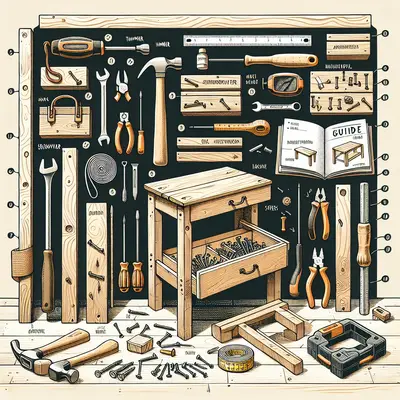
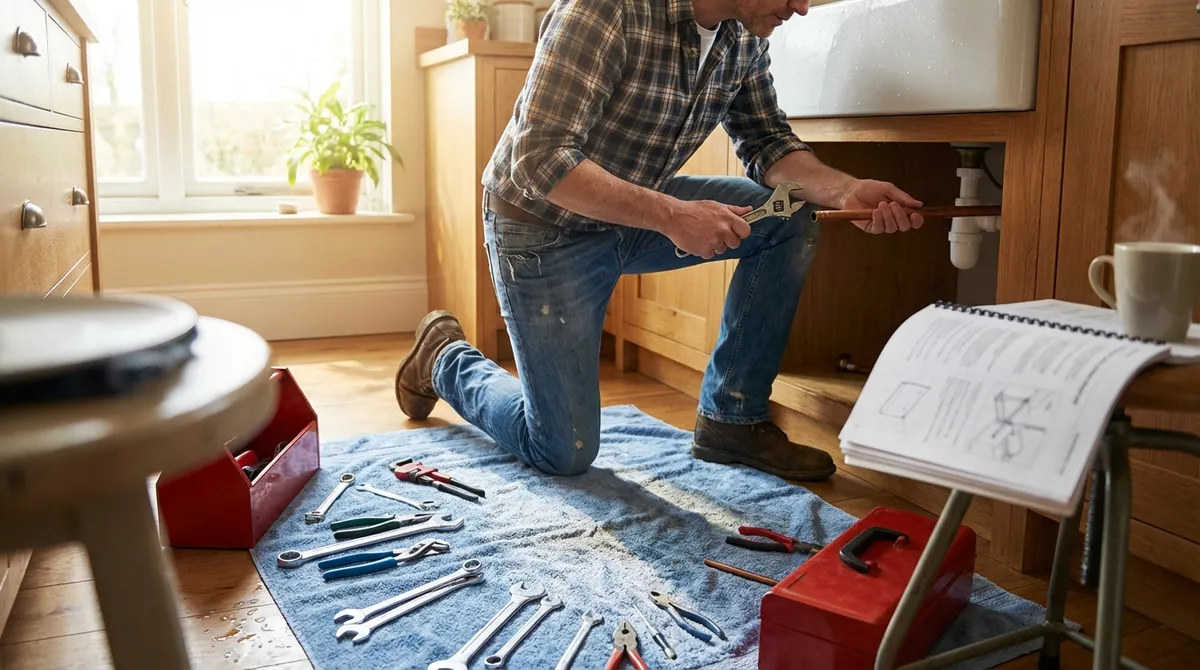
Build a small core tool kit that covers most of the repairs in this article: a set of screwdrivers (Phillips and flathead), adjustable wrench, pliers, utility knife, a basic socket set, tape measure, stud finder, plunger, a small level, and a drill/driver with bits. Add consumables like Teflon (PTFE) tape, wood glue, painter’s tape, and a small assortment of screws and wall anchors.
Know your limits. If you see scorched electrical components, smell gas, discover significant mold, or structural damage (sagging beams, cracking foundations), stop and call a professional. DIY is great for contained, accessible problems with clear, repeatable fixes—not for anything that threatens life safety or the structure of your home.
1. Quiet a Dripping Faucet (Without Replacing the Whole Thing)
A dripping faucet wastes water, raises your bill, and is surprisingly easy to fix once you understand what’s happening inside it.
What you’ll fix: Most drips are caused by worn rubber washers, O‑rings, or ceramic cartridges that no longer seal properly. These parts are cheap and often accessible with just a wrench and screwdriver.
Step‑by‑step:
- Shut off water and plug the drain.
Turn off the shutoff valves under the sink (or the main if needed). Open the faucet to relieve pressure. Place a small plug or rag in the drain so you don’t lose screws or tiny parts.
- Identify your faucet type.
Look at how it operates: single handle (cartridge or ball), two handles (compression or ceramic disc). Snap a quick photo of the whole faucet and handle before disassembly—this helps at the hardware store.
- Remove the handle and trim.
Pry off decorative caps (if any) with a small flat screwdriver, then remove the screw beneath. Pull the handle off. Keep screws and parts organized in a small container.
- Access the cartridge or stem.
Use an adjustable wrench or pliers (with a cloth to avoid scratching) to loosen the retaining nut. Lift out the cartridge (on single‑handle) or stem (on compression faucets). Inspect rubber washers, O‑rings, and seals for cracks, flattening, or mineral buildup.
- Take parts to the store and match them.
Instead of guessing part numbers, bring the cartridge or stem and worn seals with you. Many home centers have matching boards or trays where you can line up and confirm the right replacement.
- Clean and reinstall.
Before installing new parts, gently clean the inside of the faucet body with a soft cloth; remove mineral deposits with vinegar if needed. Reassemble in reverse order: new seals, cartridge/stem, retaining nut (snug but not over‑tight), handle, decorative caps.
- Turn water back on slowly and test.
Open the shutoff valves gradually while the faucet is in the “on” position to bleed air. Then close the faucet and check for drips over several minutes.
If the faucet still drips after replacing internal parts, the faucet body may be damaged or corroded, and replacement might be more economical than further repair.
2. Fix a Running Toilet That Won’t Stop Filling
A toilet that runs long after flushing wastes a surprising amount of water, but the fix is usually simple and doesn’t involve removing the entire toilet.
What you’ll fix: Most run‑on issues are due to a faulty flapper, an improperly set float, or a worn fill valve.
Step‑by‑step:
- Take off the tank lid and observe.
Flush and watch what happens. Does water keep flowing into the bowl? Is water going into the overflow tube (a vertical tube in the middle of the tank)? Is the flapper not sealing? Your eyes will usually tell you which component is misbehaving.
- Adjust the chain and flapper first.
If the chain to the flapper is too tight, the flapper can’t close fully; too loose, and it might not lift enough to flush. Aim for a little slack—about one or two chain links when the flapper is closed. If the flapper looks warped or degraded, plan to replace it.
- Check and adjust the float level.
If water is flowing into the overflow tube, your water level is too high. On older ball‑float arms, gently bend the arm downward so the float stops filling the tank lower. On newer column floats, there’s typically a clip or screw you can slide up or down to set the water level slightly below the top of the overflow tube.
- Replace the flapper if it’s suspect.
Turn off the shutoff valve at the wall, flush to empty the tank, then unhook the old flapper from the overflow tube and chain. Install the new flapper in the same position and connect the chain. Turn water back on and test for a tight seal (no water movement visible around the flapper when at rest).
- Replace the fill valve if noise or slow shutoff persists.
If the fill valve hisses or never fully shuts off, it may be worn. With water off and tank drained, disconnect the fill line under the tank, then remove the retaining nut holding the fill valve. Lift out the old valve, insert the new one per instructions, adjust height, tighten the nut (hand tight then a quarter‑turn with pliers), reconnect supply line, and test.
- Final checks.
Flush several times, making sure the tank fills to about 1 inch below the top of the overflow tube and then stops cleanly. Listen for slow seepage or refilling; there should be silence once full.
A properly calibrated toilet should flush strongly, refill quickly, and then stay absolutely quiet until the next flush.
3. Secure a Loose Interior Door That Won’t Latch Cleanly
Doors that won’t latch, rub the frame, or swing open on their own are annoying but usually fixable without replacing the entire door or frame.
What you’ll fix: Misaligned latch, loose hinges, or screws that can no longer bite into the wood.
Step‑by‑step:
- Identify the problem point.
Close the door slowly and watch: does the latch hit above or below the strike plate hole? Does the top or bottom rub the jamb? Or does the door sag and scrape the floor? Mark the contact points lightly with a pencil.
- Tighten hinge screws.
Open the door and tighten all hinge screws on both the door and the jamb. Often, this alone will lift and realign the door. If screws just spin, the wood is stripped and you’ll need to repair those holes.
- Repair stripped screw holes.
Remove the loose screw. Insert wooden toothpicks or a short piece of wooden dowel coated in wood glue into the hole. Break off flush with the surface, let it set for at least 30–60 minutes (longer is better), then drive the screw back in. This gives the screw fresh material to grip.
- Adjust the strike plate if the latch is close but not engaging.
If the latch hits slightly high or low, you can file the strike plate opening a bit in that direction, or move the plate up or down slightly. To move it, remove the screws, chisel a small amount of wood from the mortise, reposition the plate, and reinstall. Fill any exposed old screw holes with wood filler or toothpick/glue as above.
- Trim door edges only as a last step.
If the door is still rubbing a specific spot after hinge and latch adjustments, lightly sand or plane that edge. Remove the door and lay it across sawhorses if you need to take off more than paint. Take off very small amounts, checking the fit frequently to avoid over‑trimming.
- Test for smooth closure.
Open and close the door several times. It should latch cleanly with a gentle push, not slam or rebound, and not rub the frame. Minor squeaks at hinges can be eased with a drop of light oil or silicone spray (wipe away excess).
This type of repair not only fixes the immediate annoyance but also prevents long‑term wear on hinges and latch hardware.
4. Patch a Small Drywall Hole So It Actually Disappears
Small dings and holes in drywall—especially from door handles, nails, or accidents—can make a room look tired. A clean patch that blends with the wall is completely achievable with patience and the right sequence.
What you’ll fix: Small holes and dents up to about 4–5 inches across; larger or structural cracks may need more advanced techniques.
Step‑by‑step (holes up to nail/anchor size):
- Prep the area.
Lightly scrape around the hole with a putty knife to remove loose paint or paper. Wipe with a dry cloth to clear dust.
- Apply patching compound.
For nail and screw holes, a lightweight spackle is enough. Load a small amount on your putty knife and press it into the hole, then smooth it flat, slightly overlapping the surrounding wall.
- Let it dry, then sand.
Once fully dry (follow product instructions), sand lightly with fine‑grit sandpaper (180–220 grit) until smooth and level with the wall. Wipe dust away.
- Prime and paint.
Even for small holes, primer helps prevent “flashing” (a visible patch spot under certain light). Apply primer to the patched area, let dry, then touch up with matching wall paint, feathering the edges.
Step‑by‑step (holes about 1–4 inches):
- Use a self‑adhesive wall patch or mesh tape.
For holes up to a few inches, stick a metal‑backed patch or mesh over the hole, centered and flat. This gives joint compound something to grip and keeps the area supported.
- Apply the first coat of joint compound.
With a 4–6 inch putty knife, spread compound over the patch, pressing through the mesh to fill the hole and covering an area a few inches beyond the patch. Smooth the edges as thinly as possible.
- Dry, sand, and feather with a wider knife.
After drying, sand lightly, then apply a second coat with a wider knife (8–10 inches), feathering the compound even farther out. The goal is a gentle, barely noticeable slope rather than a bump.
- Final sand and inspection.
Once the last coat dries, sand with fine grit, then run your hand over the area with your eyes closed; it should feel level with no abrupt ridges.
- Prime and paint the area, not just the spot.
Prime the patched zone and then paint from corner to corner or at least a larger section to blend sheen and color. Touch‑ups in only a small square often show.
Done carefully, a proper patch should disappear under normal lighting, making walls look new again instead of “repaired.”
5. Replace a Broken Light Switch Safely
Light switches wear out, click loosely, or sometimes fail entirely. Replacing a standard single‑pole switch is a straightforward electrical task, provided you follow safety steps and stay within your comfort zone.
What you’ll fix: A standard single‑pole switch that controls one light from one location (not a three‑way). If you’re unsure what you have, compare with diagrams from a trusted source before proceeding.
Step‑by‑step:
- Turn off power at the breaker and verify.
Find the correct circuit breaker, switch it off, and put a note on the panel so no one turns it back on. At the switch, turn it on/off to confirm the light no longer works. Use a non‑contact voltage tester at the switch wires to ensure power is truly off.
- Remove the cover and old switch.
Unscrew the cover plate, then the switch mounting screws. Gently pull the switch out from the box, keeping track of how wires are connected. Take a clear photo before disconnecting anything.
- Inspect and label wires if needed.
For a basic single‑pole switch, you’ll generally see two insulated hot wires on brass screws and a bare or green ground wire on a green screw. If the wires are back‑stabbed into holes rather than wrapped around screws, note which one is the “common” (often the feed from the panel).
- Disconnect and prepare wires.
Loosen the terminal screws and remove the wires. If they were back‑stabbed, you may need to insert a small screwdriver into a release slot to pull them out. Straighten and, if needed, strip a small amount of insulation to have about 1/2 inch of exposed copper.
- Connect the new switch.
Attach the ground wire to the green screw. Connect the two hot wires to the brass screws on the new switch (direction doesn’t matter for a single‑pole). Wrap each wire clockwise around the screw and tighten firmly so no bare copper is exposed beyond the screw head.
- Reinstall into the box.
Carefully fold the wires back into the box, avoiding sharp bends. Secure the switch with its mounting screws, making sure it sits straight. Reinstall the cover plate.
- Restore power and test.
Turn the breaker back on and test the switch. The light should operate normally, with a solid click and no flicker. If anything seems off (buzzing, warmth, no function), turn power off again and recheck your connections—or call a licensed electrician.
If at any point you feel unsure about what you’re seeing in the electrical box (multiple cables, wire nuts, unfamiliar configurations), stop and consult a professional; safety is non‑negotiable with electrical work.
Conclusion
DIY repairs don’t have to be complicated or risky. With a methodical approach and realistic boundaries, you can stop a faucet drip, tame a running toilet, realign stubborn doors, erase wall damage, and swap out worn switches—all with basic tools and some patience. Start with the simpler tasks, pay attention to safety, and document what you do with photos so you can retrace your steps if needed.
Each successful repair builds your confidence and saves you money—and the more familiar you become with how your home is put together, the better you’ll be at spotting small issues before they become big, expensive problems.
Sources
- [U.S. Environmental Protection Agency – Fix a Leak](https://www.epa.gov/watersense/fix-leak-week) – Explains how household leaks (including faucets and toilets) waste water and offers basic troubleshooting guidance.
- [Family Handyman – How to Fix a Leaky Faucet](https://www.familyhandyman.com/project/how-to-fix-a-leaky-faucet/) – Step‑by‑step visuals and tips for different faucet types and internal parts.
- [The Spruce – How to Fix a Running Toilet](https://www.thespruce.com/how-to-fix-a-running-toilet-1824660) – Covers diagnosing and repairing common toilet tank issues like flappers and fill valves.
- [Lowe’s – How to Patch and Repair Drywall](https://www.lowes.com/n/how-to/patch-drywall) – Detailed instructions and illustrations for repairing drywall holes of various sizes.
- [U.S. Consumer Product Safety Commission – Electrical Outlet and Switch Safety](https://www.cpsc.gov/safety-education/safety-guides/home/electrical-outlet-and-switch-safety) – Safety considerations and warning signs for electrical components in the home.
Key Takeaway
The most important thing to remember from this article is that this information can change how you think about Home Repairs.