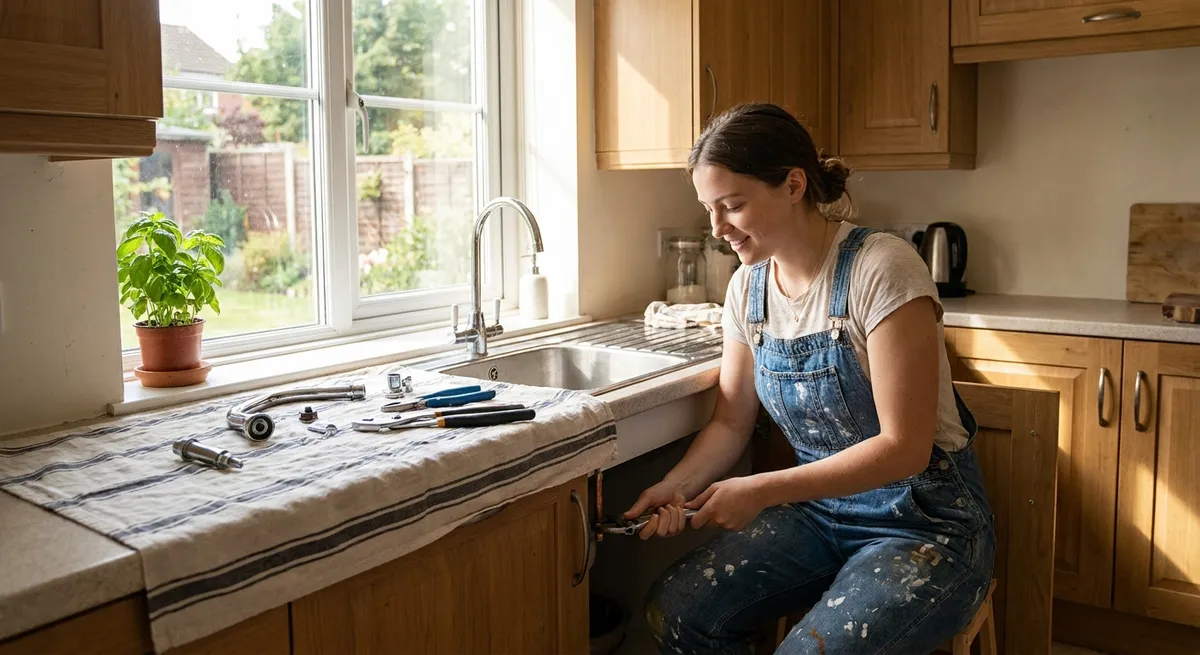
If you own or rent a home long enough, something will leak, sag, jam, or just stop working correctly. That doesn’t always mean you need to call a pro. With a few basic tools and a calm, step-by-step approach, you can safely handle a surprising number of common repairs yourself—and save real money in the process.
This guide walks through five practical, step‑by‑step repairs that DIY‑minded homeowners can tackle with basic skills. Each one is chosen because it’s:
- Common in most homes
- Safe for beginners when done carefully
- High-impact in terms of comfort and cost savings
Use these as a starting point to build your repair confidence and your toolkit over time.
Before You Start: Tools, Safety, and When to Stop
Before diving into specific fixes, set yourself up for success with three basics: tools, safety, and limits.
Essential starter tools
You don’t need a contractor-grade workshop. For the repairs in this article, a small starter kit will do:
- Adjustable wrench
- Phillips and flathead screwdrivers (multiple sizes)
- Utility knife
- Tape measure
- Drill/driver with a few bits
- Plunger (cup plunger for sinks, flange plunger for toilets)
- Pliers (needle-nose and slip-joint)
- Stud finder and level
- Painter’s tape and masking tape
- Flashlight or headlamp
As you take on more projects, you can add items like a caulk gun, basic socket set, and a small hacksaw.
Safety basics you should never skip
- Power and water off first.
- For anything electrical: turn off the correct circuit at your breaker panel and test that the power is off.
- For anything plumbing-related: turn off the fixture’s shutoff valve or, if needed, the main water supply.
- Use the right protection.
- Safety glasses when drilling, scraping, or working overhead.
- Gloves when handling sharp, rough, or possibly moldy materials.
- A dust mask when sanding, scraping old paint, or working in enclosed, dusty spaces.
- Work with good light and a stable stance.
- Don’t balance on furniture; use a solid step stool or ladder.
- Keep the floor clear of tools where you’re stepping.
Know when to call a professional
DIY is empowering—but knowing your limits is part of being smart. Stop and call a pro if:
- You see aluminum wiring or heavily modified electrical panels
- You smell gas or hear hissing near gas appliances or lines
- There’s major structural movement (cracked beams, sagging ceilings)
- Mold covers a large area (more than about 10 square feet)
- A repair affects your home’s main structure, roof, or major plumbing stacks
Think of small DIY repairs as building blocks. Each successful project gives you skills and confidence for the next one.
Step‑By‑Step Fix #1: Quiet a Running Toilet and Reduce Water Waste
A running toilet can waste hundreds of gallons of water per month—and drive you crazy at night. The good news: most causes are simple and fixable without special tools.
What you’ll need
- Adjustable wrench (maybe)
- Replacement flapper or fill valve kit (if necessary)
- Towel or sponge
Step 1: Identify where the water is going
- Remove the tank lid carefully and set it aside.
Watch and listen: is water trickling into the bowl or constantly filling from the side?
Gently lift the float (or ball) with your finger:
- If the water stops running, the fill valve/float likely needs adjustment or replacement. - If water still seeps into the bowl, the flapper or flush valve seal is likely the problem.
Step 2: Check and clean the flapper
- Turn off the toilet’s shutoff valve (usually on the wall below the tank).
- Flush once to empty most of the water from the tank.
Inspect the rubber flapper at the bottom:
- Look for warping, cracks, or mineral buildup. 4. Wipe it clean with a sponge or cloth and also wipe the seat where it rests. 5. Turn the water back on and let the tank fill. Listen: - If the sound stops and the water line stays steady, you may be done. - If water still leaks into the bowl, replace the flapper.
Step 3: Replace the flapper if needed
- Turn the water off again and flush to empty the tank.
- Unhook the chain from the flush handle arm.
- Remove the flapper from its pegs on the overflow tube.
Install the new flapper:
- Clip it onto the same pegs. - Connect the chain, leaving a bit of slack (but not so much that it tangles). 5. Turn water back on, let it fill, and test a few flushes.
Step 4: Adjust or replace the fill valve (if the tank overfills)
If water drips into the overflow tube at the center of the tank:
- Look for an adjustment screw or clip near the float.
- Turn the screw or slide the clip down so the float shuts off the water lower in the tank (about 1 inch below the top of the overflow tube).
- If adjustment doesn’t help or the valve is corroded, replace the fill valve following the instructions that come with the kit.
You’ve now fixed one of the most common household leaks—and cut your water bill in the process.
Step‑By‑Step Fix #2: Unclog a Slow Sink Without Harsh Chemicals
Store-bought drain cleaners can damage pipes and are hazardous to handle. A mechanical approach is often safer, faster, and more effective for common bathroom or kitchen sink clogs.
What you’ll need
- Bucket
- Old towel
- Cup plunger (for flat sink drains)
- Adjustable wrench
- Small brush or bottle brush
- Optional: small drain snake
Step 1: Start with the simplest test
Run water and confirm: is it draining slowly or basically not at all?
2. If it’s just slow, there’s a good chance the clog is in the trap under the sink, not deeper in the line.
Step 2: Try plunging the sink
- Remove the sink stopper if possible.
- Block any overflow openings with a damp cloth or tape.
- Fill the sink with enough water to cover the plunger cup.
- Place the plunger squarely over the drain and plunge firmly 10–15 times.
- Pull the plunger away sharply and see if the water drains faster.
- Repeat a few times. If still slow, move on to the trap.
Step 3: Clean the P‑trap under the sink
- Place a bucket under the curved section of pipe (the P‑trap).
- Use the adjustable wrench (or hand-loosen if possible) to unscrew the slip nuts at both ends of the trap.
- Carefully lower the trap and dump the contents into the bucket.
- Clean out hair, food, or sludge with a brush or gloved hand.
Rinse the trap with hot water and reassemble:
- Hand-tighten the nuts, then snug them slightly more with the wrench—don’t overtighten.
Step 4: Test for leaks and drainage
- Remove the bucket and towels from under the sink.
Run water and check:
- Look and feel around all joints for leaks. - Confirm that water is draining at normal speed.
If the drain is still slow, you may have a deeper clog and a longer drain snake (or a plumber) is the next step. But in many cases, you’ll restore full flow with just these actions.
Step‑By‑Step Fix #3: Secure a Loose Wall Outlet or Switch
A loose outlet or switch isn’t just annoying—it can stress the wiring and create a safety hazard. The repair is usually straightforward, as long as you work carefully and kill the power.
What you’ll need
- Flathead and Phillips screwdrivers
- Voltage tester (non-contact type preferred)
- Outlet or switch spacers (or small washers)
- Optional: new cover plate if the old one is cracked
Step 1: Turn off the correct circuit
- Go to your breaker panel.
- Flip off the breaker labeled for that room or outlet.
Back at the outlet or switch, plug in a lamp or use a voltage tester to confirm it’s dead:
- The tester should show no voltage at the hot (usually smaller) slot.
Never work on an energized circuit.
Step 2: Remove the cover plate and inspect
- Unscrew the cover plate and gently remove it.
Check for:
- Loose mounting screws - Cracked plastic around the mounting ears - Wires that appear strained or pulled tight
If you see burn marks, melted plastic, or scorched insulation, stop and call an electrician.
Step 3: Tighten and level the device
- Slightly loosen the two small screws that hold the outlet or switch to the electrical box.
- Adjust the device so it sits straight.
- Tighten the screws evenly—do not overtighten, as it can crack the device or strip threads.
- If the device is set too far back in the wall, use outlet spacers or small washers behind the mounting ears to bring it flush with the wall surface.
Step 4: Reinstall the cover and test
- Replace the cover plate and tighten its screw just enough to hold—overtightening can crack it.
- Turn the circuit breaker back on.
- Test the outlet or switch under normal use.
A solid, non-wobbly outlet or switch looks better and reduces stress on your wiring every time you plug in.
Step‑By‑Step Fix #4: Repair a Small Drywall Hole So It Actually Blends In
Nail pops, doorknob dings, and accidental “oops” moments leave plenty of small holes in drywall. Filling them properly makes a huge difference when you repaint—or if you’re moving and want your security deposit back.
What you’ll need
- Lightweight spackle or joint compound
- Putty knife (2–4 inch)
- Sanding sponge or fine sandpaper (120–220 grit)
- Damp cloth or sponge
- Primer and touch-up paint
- Self-adhesive patch (for holes larger than a coin)
Step 1: Prep the damaged area
- Use the putty knife to scrape away loose material or flaking paint around the hole.
- Lightly sand the area to smooth edges.
- Wipe away dust with a damp cloth and let it dry.
Step 2: Fill small nail or screw holes
For holes up to about the size of a pencil eraser:
- Apply a small amount of spackle with the putty knife.
- Press firmly into the hole, then scrape the knife across the surface to smooth it flush.
- Let it dry according to the product instructions (often 30–60 minutes).
For slightly larger holes (up to about 1/2 inch), apply in two thin layers, allowing drying between coats.
Step 3: Patch larger holes with a self‑adhesive patch
For holes up to a few inches across:
- Stick the patch over the hole, centering it.
- Apply a thin coat of joint compound over the patch, feathering the edges out 1–2 inches past the patch.
- Let dry fully (this may take several hours).
- Lightly sand to smooth, wipe dust away, then apply a second thin coat to blend the area further.
- Sand again after drying until the surface feels uniform to the touch.
Step 4: Prime and paint
- Apply a small amount of primer over the repair. This prevents the patch from “flashing” or showing through the paint.
- Once dry, paint the area with matching wall paint.
- For best blending, feather the paint out beyond the repair area rather than stopping right at the edges.
When done right, you’ll have to look closely to find where the damage ever was—even under good lighting.
Step‑By‑Step Fix #5: Re-Caulk a Leaky or Mildewed Tub or Shower Joint
Cracked, missing, or moldy caulk around your tub or shower isn’t just ugly—it lets water creep behind walls and under floors. Re-caulking is a manageable DIY project that protects your bathroom from long-term damage.
What you’ll need
- Utility knife or caulk removal tool
- Painter’s tape
- Bathroom/kitchen caulk (100% silicone or siliconized acrylic, mold-resistant)
- Caulk gun (if using standard tubes)
- Paper towels or rags
- Rubbing alcohol or mild cleaner
- Bucket and sponge
Step 1: Remove the old caulk completely
- Use the utility knife or caulk removal tool to cut along both sides of the old caulk bead.
- Gently pull up strips of caulk. Take your time—getting it all out helps the new caulk stick.
- Scrape away any residue, but avoid cutting into the tub or tile.
Step 2: Clean and dry the joint
- Scrub the area with a mild cleaner and a sponge to remove soap scum and mildew.
- Rinse and dry thoroughly.
- Wipe the joint with a bit of rubbing alcohol on a rag to remove any remaining residue.
- Let everything dry completely; moisture under new caulk can cause adhesion problems and mildew.
Step 3: Tape for a clean line
- Apply painter’s tape above and below the joint, leaving a gap where the new caulk will go (usually 1/8"–1/4" wide).
- Run the tape straight and parallel for the neatest result.
Step 4: Apply the new caulk
- Cut the caulk tube tip at a 45-degree angle, starting with a small opening.
- Puncture the inner seal if needed (most caulk guns have a built-in poker).
- Holding the gun at a consistent angle, run a smooth, continuous bead of caulk along the joint. Aim for steady, even pressure rather than stopping and starting.
Step 5: Tool the bead and remove tape
- Wet your finger or use a caulk-smoothing tool to gently press and smooth the bead into the joint.
- Wipe excess caulk on a paper towel as you go.
- Carefully remove the painter’s tape while the caulk is still wet, pulling it away at a 45-degree angle.
- Allow the caulk to cure fully per the manufacturer’s directions (often 24 hours) before using the shower or tub.
You’ve just completed a repair that looks professional and helps prevent hidden water damage behind your walls.
Conclusion
Home repair doesn’t have to be a mystery or a money pit. By tackling manageable, high-impact projects like fixing a running toilet, clearing a slow drain, tightening a loose outlet, patching drywall, and re-caulking a tub, you build real skills and confidence one step at a time.
Start small, work safely, and don’t rush. Over time, you’ll recognize more problems early, know which ones you can handle, and which truly need a professional. That mix—DIY where it makes sense, expert help where it doesn’t—is how you keep your home comfortable, safe, and running smoothly without constant repair panic.
Sources
- U.S. Environmental Protection Agency – Fix a Leak - Details how common household leaks (including toilets) waste water and how to spot them
- Family Handyman – How to Fix a Running Toilet - Step-by-step examples and diagrams for diagnosing toilet tank components
- The Home Depot – How to Clean a Clogged Drain - Visual guide to unclogging drains with plungers, traps, and snakes
- U.S. Consumer Product Safety Commission – Electrical Safety in the Home - Guidance on safe handling of electrical receptacles, switches, and circuits
- Lowe’s – How to Repair Drywall - Instructions and illustrations for patching different sizes of drywall damage
Key Takeaway
The most important thing to remember from this article is that this information can change how you think about Home Repairs.