If you love the idea of keeping your car running longer without draining your bank account, simple DIY repairs are one of the best skills you can pick up. You don’t need a full shop, a lift, or a mechanic’s toolbox—just some basic tools, a little patience, and clear steps you can follow safely. This guide walks you through five practical repairs you can realistically do in your driveway, with tips to avoid common mistakes and know when to stop and call a pro.
Safety and Prep: What to Do Before You Touch a Wrench
Before any repair, treat safety as part of the job, not an optional extra. Always work on a flat, solid surface and engage the parking brake; if you’re lifting the car, use jack stands, never rely on a jack alone. Disconnect the negative battery terminal if you’re working on electrical components or near moving parts like the serpentine belt—this reduces the risk of shorts and surprise cranks.
Keep a basic kit handy: a metric and SAE socket set, combination wrenches, screwdrivers, a torque wrench, pliers, a flashlight or work light, nitrile gloves, and safety glasses. A code reader (OBD-II scanner) is a surprisingly affordable tool that can turn vague warning lights into specific starting points. Finally, look up your exact year, make, and model before you begin: torque specs, fluid types, and even part designs often change from one year to the next.
Step‑By‑Step Repair Tip #1: Replacing Worn Brake Pads
Worn brake pads are one of the most common wear issues and a great entry-level repair if you work carefully and methodically.
Confirm pad wear and gather parts
Listen for squealing, grinding, or longer stopping distances. Through the wheel spokes (or after removing the wheel), visually inspect the pad thickness; most manufacturers recommend replacing when friction material is around 3 mm or less. Buy quality pads that match your vehicle and, if necessary, new hardware (clips/shims).
Safely lift and support the vehicle
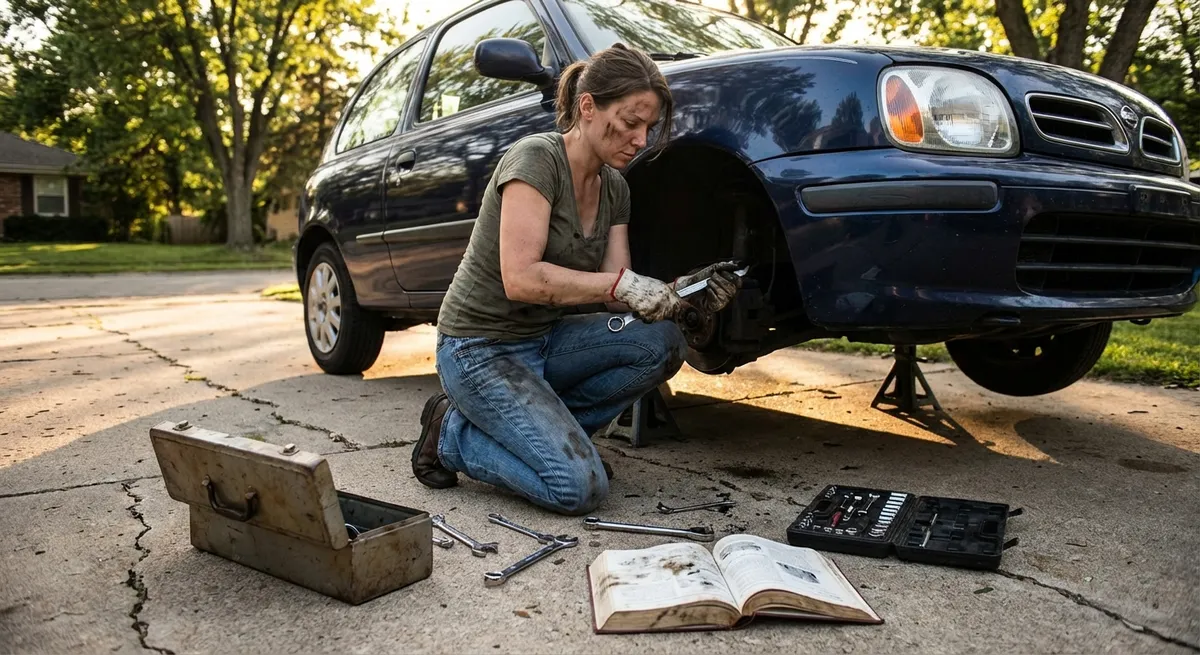
Loosen lug nuts slightly with the car on the ground, then jack up the vehicle at the designated jacking point and place jack stands under approved support points. Remove the wheel and set it aside.
Remove the caliper and old pads
Locate the caliper bolts, usually on the backside of the caliper. Remove them and gently slide the caliper off the rotor—hang it with a bungee or wire to avoid stressing the brake hose. Remove the old pads and any hardware from the caliper bracket.
Compress the caliper piston correctly
Use a C-clamp or dedicated brake caliper tool to slowly push the piston back into the caliper; this makes room for the thickness of new pads. Open the brake fluid reservoir cap beforehand and ensure it doesn’t overflow as fluid backs up.
Install new pads and reassemble
Clean and lightly lube (with high-temp brake grease) the pad contact points and sliding pins—never get grease on pad friction surfaces or rotors. Install new hardware if provided, then the new pads. Reinstall the caliper, torque bolts to spec, and put the wheel back on, tightening lug nuts in a star pattern.
Key checks before driving: Pump the brake pedal several times until it feels firm to seat the pads; confirm no leaks, no odd noises on the test drive, and that the car stops straight without pulling.
Step‑By‑Step Repair Tip #2: Swapping Out a Dead Battery the Right Way
Battery replacement sounds simple, but rushed mistakes can corrupt electronics or leave you stranded again.
Verify the battery is the real problem
Dim lights, slow cranking, and a clicking sound when you turn the key can point to a weak battery, but alternator or starter issues can look similar. If you have a multimeter, check voltage: around 12.6V is fully charged; under ~12.0V is very low. Many auto parts stores will test your battery and charging system for free.
Choose the correct replacement
Match group size, terminal orientation, and cold cranking amps (CCA) to your vehicle’s spec. Higher CCA is okay, but the wrong size or terminal layout can be unsafe or simply not fit.
Disconnect safely and protect memory
Turn the ignition off and remove the key. If your car is sensitive to power loss (radio codes, window calibration), consider a memory saver device plugged into the OBD-II port or a 12V outlet. Always disconnect the negative (–) terminal first, then the positive (+).
Remove old battery and clean the area
Undo the hold-down bracket, lift the battery straight up (they’re heavy; use proper posture), and set it aside upright. Clean corrosion from terminals and tray with a dedicated battery cleaner or a baking soda/water mix, then dry thoroughly.
Install new battery and reconnect in the right order
Place the new battery in the tray, secure the hold-down, then connect the positive (+) terminal first, followed by the negative (–). Apply a thin layer of dielectric grease or anti-corrosion spray to terminals if recommended. Start the vehicle and check that electronics work correctly, re-entering radio codes or reprogramming windows if needed.
Step‑By‑Step Repair Tip #3: Fixing Headlight Bulbs That Keep Burning Out
Driving with a burnt-out headlight is both unsafe and a quick way to get pulled over. Replacing bulbs is simple, but frequent failures usually mean an installation or moisture problem.
Confirm the correct bulb type and access method
Check your owner’s manual or parts catalog for the exact bulb number (e.g., H11, 9006). Some cars allow access from behind the headlight through the engine bay; others require removing trim or even loosening the bumper cover.
Disconnect power and remove the old bulb
Turn off lights and ignition. Unplug the wiring connector at the back of the bulb, then twist the bulb counterclockwise (or release the retaining clip) and pull it straight out. Avoid touching the glass—finger oils can create hot spots that shorten life.
Inspect for moisture, damage, or overheating
Check the inside of the housing for condensation, cracked lenses, or burnt connectors. Persistent moisture can kill bulbs early; you may need to reseal the housing or replace a damaged gasket.
Install the new bulb carefully
Holding the bulb by the base, insert it into the housing with the alignment tabs lined up. Twist or clip it into place securely. Plug the connector back on firmly—loose connections can cause flicker and heat.
Test beam pattern and aim
Turn on headlights and check both sides on a flat surface facing a wall. The pattern should be even and not pointed too high. If needed, adjust using the factory adjustment screws, following your manual to avoid blinding oncoming traffic.
Step‑By‑Step Repair Tip #4: Handling a Flat Tire with a Plug Repair
Tire plugs aren’t a cure-all, but for simple tread punctures (like a nail) they can get you safely back on the road and even serve as a long-term repair if done correctly and within guidelines.
Decide if the puncture is repairable
Only repair holes in the tread area, typically under about 1/4 inch (6 mm) in diameter. Sidewall or shoulder damage, long cuts, or multiple closely spaced punctures are unsafe—replace the tire in those cases.
Remove the wheel and find the leak
Loosen the lug nuts, jack up the car, and remove the wheel. Inspect for foreign objects; use soapy water over the tread to spot bubbling where air escapes. Mark the puncture location.
Prepare the hole for the plug
Remove the object (like a screw or nail) with pliers. Use the rasp tool from your plug kit to clean and slightly enlarge the hole, pushing in and out several times. This roughens the inner rubber for better bonding.
Insert the plug properly
Thread a plug strip through the insertion tool so it’s centered. Push it into the hole until about 1/2 inch of plug remains above the tread, then pull the tool out sharply, leaving the plug in place. Trim excess flush with the tread, if recommended by the kit instructions.
Reinstall and monitor
Reinflate the tire to the recommended pressure (found on the driver’s door jamb sticker), then recheck with soapy water to confirm no bubbles. Reinstall the wheel, torque lug nuts properly, and monitor pressure over the next few days. If it continues to lose air, have a tire shop inspect it internally or perform a plug-patch from the inside.
Step‑By‑Step Repair Tip #5: Replacing a Serpentine Belt Before It Strands You
Your serpentine belt drives critical accessories like the alternator, power steering pump, and AC compressor. Replacing it at the first sign of wear is far easier than dealing with a roadside failure.
Identify wear and get the correct belt
Inspect the belt with the engine off and cool. Look for cracks, missing chunks, glazing (shiny spots), or fraying. Use your owner’s manual or an under-hood sticker to confirm the belt routing and part number; some cars have multiple belt options depending on options (e.g., with or without AC).
Document the routing before removal
Even if there’s a diagram under the hood, take a clear photo of the belt path. Misrouting can cause squeals, poor charging, or component damage.
Relieve tension safely
Locate the automatic tensioner and use the appropriate socket or wrench to rotate it, relieving belt tension. Slip the belt off one pulley while holding the tensioner, then slowly release tensioner pressure.
Remove and compare belts
Remove the old belt completely and compare its length and rib count to the new one. A slight difference in relaxed length can be normal, but rib count and general size should match.
Install the new belt and double-check alignment
Route the new belt around all pulleys except the last one (usually easiest on an accessible smooth pulley). Rotate the tensioner again and slip the belt over the final pulley, then release tensioner pressure. Ensure the belt is seated in all pulley grooves and not riding on any flange. Start the engine and listen—squeaks, chirps, or visible wobble suggest misalignment or a failing pulley or tensioner that may also need replacement.
Conclusion
Doing your own auto repairs doesn’t mean tackling everything a professional shop can do; it means knowing which jobs are realistic, preparing properly, and following safe, clear steps. Replacing brake pads, swapping a dead battery, fixing a headlight, plugging a simple tire puncture, and installing a new serpentine belt are all within reach for a careful DIYer with basic tools and patience. Start with the repair that feels most manageable, give yourself plenty of time, and don’t hesitate to stop and research or seek help if something doesn’t look right. Every successful fix builds your confidence—and keeps more of your money in your pocket.
Sources
- [NHTSA: Vehicle Maintenance Tips](https://www.nhtsa.gov/road-safety/vehicle-maintenance) - U.S. National Highway Traffic Safety Administration guidance on basic vehicle upkeep and safety considerations
- [AAA: Car Care Maintenance & Repair](https://aaa.com/autorepair/articles) - Articles from AAA on common vehicle repairs, warning signs, and maintenance intervals
- [Bridgestone: Tire Repair Guidelines](https://www.bridgestonetire.com/learn/maintenance/can-a-flat-tire-be-repaired/) - Detailed explanation of when a flat tire can be safely repaired and when it must be replaced
- [Advance Auto Parts: How to Replace Brake Pads](https://shop.advanceautoparts.com/r/car-projects/how-to/how-to-change-brake-pads) - Step-by-step brake pad replacement guide with photos and tool lists
- [YourMechanic: Symptoms of a Bad or Failing Serpentine/Drive Belt](https://www.yourmechanic.com/article/symptoms-of-a-bad-or-failing-serpentine-drive-belt) - Overview of common signs that a serpentine belt needs replacement
Key Takeaway
The most important thing to remember from this article is that this information can change how you think about Auto Repair.