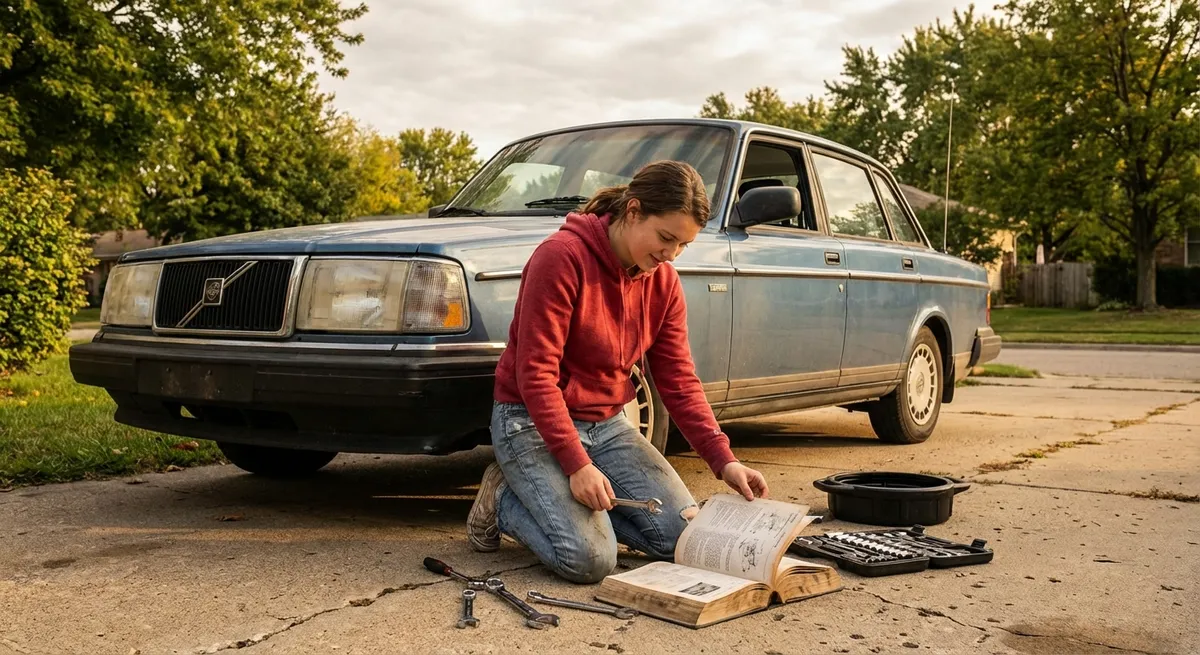
Most drivers assume anything under the hood requires a professional, but a surprising amount of auto maintenance and minor repair can be done right in your driveway with basic tools and a bit of patience. Learning a few core skills doesn’t just save money—it makes you more confident every time a warning light flicks on or a strange noise pops up.
Below are five step-by-step repair jobs that many DIYers can handle safely at home, plus what to watch for and when to stop and call a pro.
Before You Start: Safety and Setup Matter
Before turning a single wrench, set yourself up to succeed. Work on a flat, stable surface with the parking brake engaged and the wheels chocked (blocks in front of and behind the tires that stay on the ground). Never crawl under a car supported only by a jack—use proper jack stands rated for your vehicle’s weight.
Wear safety glasses, gloves, and avoid loose clothing that could catch in belts or fans. Disconnect the negative (black) battery cable if you’ll be near electrical connectors, sensors, or moving engine parts. Keep a basic fire extinguisher nearby, and don’t smoke or work near open flames, especially when dealing with fuel or batteries.
Finally, keep your owner’s manual handy and use it. It contains fluid types, torque specs, fuse diagrams, and jacking points specific to your vehicle. Combine that with a reputable repair guide or service manual, and you’re ready to tackle common problems methodically instead of guessing.
Tip 1: Swap Worn Brake Pads for Fresh Stopping Power
Brake pads are a wear item, and replacing them yourself is one of the most cost-effective repairs you can learn—as long as you’re careful and patient. If you hear squealing, grinding, or feel vibration while braking, it may be time to check them.
Tools & supplies: Jack, jack stands, lug wrench, socket set, C-clamp or brake caliper tool, new brake pads, brake cleaner, wire brush, bungee cord or wire, torque wrench.
Step-by-step:
Secure and lift the vehicle
Loosen lug nuts slightly with the car on the ground. Jack up the car at the recommended jacking point, place jack stands under the frame, and lower the car onto the stands. Remove the wheel.
Inspect the caliper and pads
Locate the brake caliper. You’ll usually see the pad surface through an opening. If the friction material is very thin (often ~3 mm or less), it’s due for replacement. Take a picture for reference so you know how everything should look reassembled.
Remove the caliper and old pads
Remove the caliper bolts (usually on the back side). Gently slide the caliper off and support it with a bungee cord or wire so it doesn’t hang by the hose. Remove the old pads and any clips or shims.
Compress the caliper piston
Use a C-clamp or brake tool and an old pad to slowly push the piston back into the caliper. This makes room for the thicker new pads. Work slowly and evenly to avoid damaging seals. If the piston won’t move or the rubber boot is torn, stop and consult a pro.
Clean and reassemble
Clean the bracket with brake cleaner and a wire brush. Install new clips if provided. Slide the new pads into place the same way the old ones were oriented. Refit the caliper over the pads and reinstall the bolts to the specified torque. Reinstall the wheel, torque lug nuts in a star pattern, then pump the brake pedal several times before driving to restore proper pedal feel.
If at any point you’re unsure, or if you notice fluid leaks, deep rotor grooves, or cracked components, have a mechanic inspect your braking system before you drive.
Tip 2: Restore a Weak Start with a New Battery
A slow crank, clicking sound when turning the key, or dim headlights may signal a failing battery. Replacing most modern batteries is straightforward, as long as you respect the fact that batteries contain acid and can deliver high current.
Tools & supplies: Wrench or socket set, battery terminal cleaner or brush, baking soda and water, gloves, eye protection, new battery of correct size and rating, memory saver (optional to preserve radio/ECU settings).
Step-by-step:
Confirm the battery is the issue
Check that the terminals are tight and not heavily corroded. If accessories power on but the engine cranks slowly or not at all, test the battery with a voltmeter or have it tested at an auto parts store.
Power down safely
Turn off the engine and all accessories, remove the key, and open the hood. If you have a memory saver and know how to use it, connect it according to instructions.
Disconnect the battery (negative first)
Loosen and remove the negative (black, “-”) terminal first. Tuck it aside where it cannot spring back and touch the post. Then remove the positive (red, “+”) terminal. This order reduces the chance of accidental short circuits.
Remove the battery and clean the tray
Remove hold-down brackets or straps and lift the battery straight up—use both hands and lift with your legs; they’re heavy. Mix a little baking soda with water and scrub any corrosion on the tray or terminals. Dry thoroughly.
Install the new battery (positive first)
Place the new battery in the tray, oriented exactly like the old one. Reinstall the hold-downs. Connect the positive terminal first, then the negative. Tighten snugly, but don’t overtighten. Start the car and confirm strong cranking and normal dashboard behavior.
If your vehicle shows warning lights after installation or has complex start/stop or hybrid systems, consult the manual or a technician, as some vehicles require specialized procedures.
Tip 3: Fix Rough Running with a Spark Plug Change
Worn spark plugs can cause misfires, poor fuel economy, sluggish acceleration, and hard starts. On many vehicles, they’re accessible enough for a patient DIYer—though some engines are notoriously tight and are best left to pros.
Tools & supplies: Ratchet, extension, spark plug socket, torque wrench, dielectric grease (optional), new spark plugs of the exact specified type, compressed air or a clean brush.
Step-by-step:
Verify the correct plugs and interval
Check your owner’s manual for the exact plug type and replacement interval. Using the wrong plugs can cause misfires or engine damage.
Access the ignition coils or plug wires
Remove any plastic engine covers. One by one, unplug the ignition coil connector or plug wire from the spark plug. Work on one cylinder at a time to avoid mixing up wires or coils.
Clean the area before removal
Use compressed air or a clean brush to remove dirt around the plug well. This keeps debris from falling into the cylinder once the plug is out.
Remove the old plug carefully
Insert the spark plug socket and extension, then turn counterclockwise to loosen. If a plug feels stuck, don’t force it; apply a bit of penetrating oil, let it sit, and try again gently. Severe resistance is a sign to stop and get professional help.
Install the new plug to spec
Check the gap if your vehicle requires it (many modern plugs come pre-gapped). Thread the new plug by hand first to avoid cross-threading. Once snug by hand, use a torque wrench to tighten to the manufacturer’s specification. Apply a small amount of dielectric grease inside the coil boot or plug wire, then reinstall and reconnect. Repeat for each cylinder.
If your check-engine light was on from misfires, it may clear after a few drive cycles. If it persists, have the codes scanned for other issues like ignition coils or fuel problems.
Tip 4: Stop Minor Coolant Leaks Before They Overheat You
Small coolant leaks from hoses or clamps can escalate into overheating and engine damage if ignored. While major cooling system work is complex, many minor hose and clamp issues are manageable at home.
Tools & supplies: Screwdrivers, pliers, replacement hose or clamps (as needed), drain pan, coolant specified in owner’s manual, rags, safety glasses, gloves.
Step-by-step:
Let the engine cool completely
Never open a hot radiator cap or coolant reservoir. Wait until the engine is completely cool to the touch—this can take an hour or more.
Locate the leak
Look under the car for dried coolant residue (often white, green, pink, or orange, depending on type). Trace it up to hoses, clamps, the radiator, or the reservoir. Small drips at hose connections are often clamp-related.
Tighten or replace clamps
If a clamp is slightly loose, try tightening it gently and wipe the area dry. Top off the coolant, then run the engine and watch for new leaks. If the clamp is rusted or broken, drain enough coolant into a pan to get below the leak level and replace the clamp.
Replace a simple hose if needed
For accessible hoses (like upper radiator or short heater hoses), loosen both clamps, twist the hose to break it free, and remove it. Compare with the new hose to confirm size and shape. Install the new hose, slide clamps into place, and tighten securely.
Refill and bleed air from the system
Refill with the correct coolant mix. Some vehicles have bleed screws to remove air; others self-bleed. Run the engine with the heater on high and watch the temperature gauge. Check again for leaks and top off the coolant once the engine cools.
If you see coolant seeping from the water pump, radiator seams, or engine block, or if the temperature gauge spikes rapidly, stop driving and consult a professional immediately.
Tip 5: Silence Headlight Failures with a Quick Bulb Replacement
A burned-out headlight or taillight is not only unsafe, it’s also an easy ticket. Swapping bulbs is one of the most beginner-friendly auto fixes, and it doesn’t require special tools on most vehicles.
Tools & supplies: Replacement bulb of the correct type, gloves, possibly a screwdriver or small socket.
Step-by-step:
Confirm which light is out
Turn on your headlights and hazard lights. Walk around the car or have someone help you check low beams, high beams, brake lights, and turn signals. Some dashboards will also show a bulb-out indicator.
Access the bulb from behind
Open the hood for headlamps or the trunk/hatch for rear lights. Most assemblies have a removable cover, tab, or twist-off cap behind the bulb. Consult your manual for the exact access point.
Disconnect and remove the old bulb
Gently unplug the electrical connector. Release the retaining clip or twist the bulb counterclockwise to remove it. Avoid pulling on wires directly.
Install the new bulb without touching the glass
Skin oils can shorten bulb life, especially on halogen bulbs. Wear gloves or hold the bulb by its base. Insert it into the housing, ensuring it seats fully and aligns with tabs. Re-secure the clip or twist-lock.
Reconnect and test
Plug in the connector, reattach any covers, and test the light functions. Repeat on the opposite side if you’re replacing bulbs in pairs (recommended for headlamps so brightness and color match).
If you find the entire housing is cracked or full of moisture, you may need a replacement assembly—still a doable DIY project on many vehicles, but more involved than a simple bulb swap.
Conclusion
You don’t need a full workshop to take control of basic auto repairs—just a few essential tools, reliable information, and a methodical mindset. By learning to handle jobs like brake pad replacement, battery swaps, spark plug changes, small coolant fixes, and bulb replacements, you not only save on labor costs but also catch problems earlier and drive with more confidence.
Start with the easier tasks, follow your owner’s manual, and respect your limits. When a job feels beyond your comfort zone or the symptoms suggest deeper trouble, stepping back and calling a pro is part of being a smart DIYer. The more you practice these driveway fixes, the more your car’s “mystery problems” turn into manageable weekend projects instead of expensive surprises.
Sources
- [National Highway Traffic Safety Administration (NHTSA) – Vehicle Maintenance](https://www.nhtsa.gov/equipment/car-maintenance) - Safety-focused guidance on basic car maintenance and inspection
- [AAA – Car Care Resources](https://exchange.aaa.com/automotive/car-care/) - Practical articles on batteries, brakes, cooling systems, and general auto upkeep
- [Bridgestone / Firestone – Car Care 101](https://www.firestonecompleteautocare.com/maintain/) - Step-by-step explanations of common maintenance and repair topics
- [U.S. Department of Energy – Fuel Economy: Maintenance](https://www.fueleconomy.gov/feg/maint.shtml) - Explains how spark plugs, filters, and other maintenance items affect performance and efficiency
- [Consumer Reports – Car Repair & Maintenance Guide](https://www.consumerreports.org/cars/car-repair-maintenance-guide/) - Independent advice on when DIY repairs make sense and when to use a professional mechanic
Key Takeaway
The most important thing to remember from this article is that this information can change how you think about Auto Repair.