You don’t need a full shop or a mechanic’s license to handle some of the most common car problems. With a few basic tools, a bit of patience, and the right steps, you can safely tackle repairs that keep your vehicle running longer and save serious money. This guide focuses on real-world, driveway-ready jobs that DIY enthusiasts can actually finish—without fancy equipment.
Before You Start: Tools, Safety, and Smart Limits
Before any wrenching, get clear on three things: basic tools, safety habits, and where to draw the line.
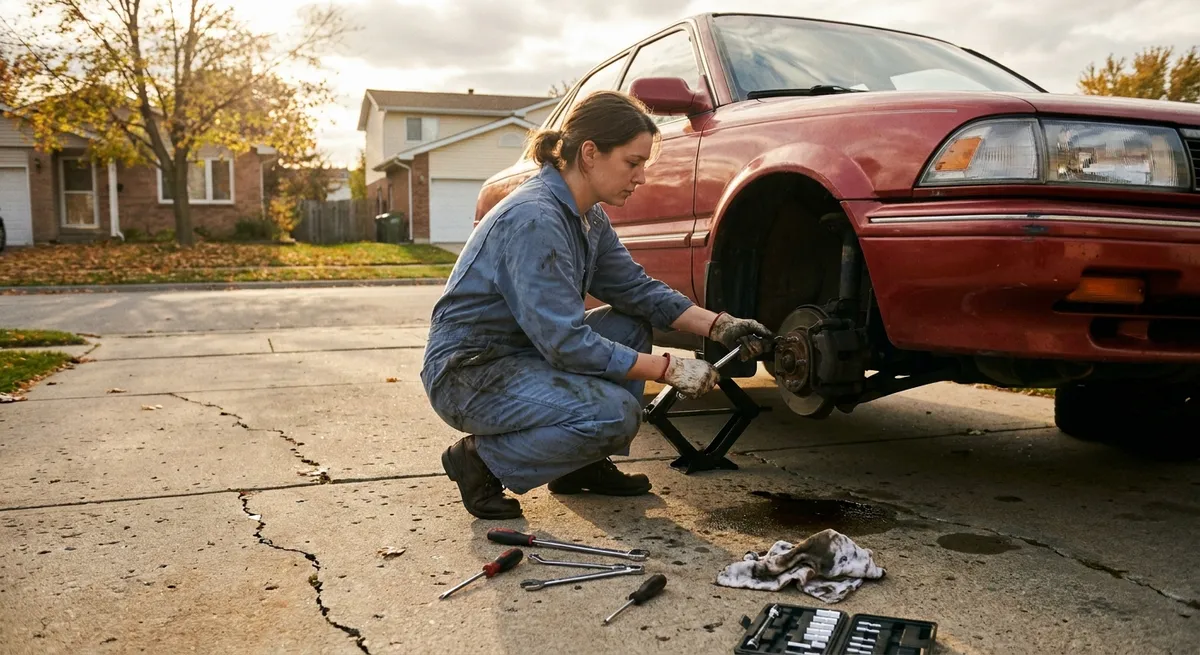
At minimum, you’ll want a metric socket set, combination wrenches, a flathead and Phillips screwdriver, a tire pressure gauge, a torque wrench, pliers, and a good LED work light. Add a hydraulic floor jack and jack stands rated for your vehicle, plus wheel chocks, and you can safely lift and support your car on flat ground.
Safety isn’t optional: always work on a cool engine when dealing with fluids, wear safety glasses, and use gloves when handling chemicals like brake fluid or coolant. Never rely on a jack alone—always support the car with jack stands on solid ground, and shake the car gently before getting under it to confirm stability. Finally, know your limits: anything involving airbag systems, major engine internals, or critical structural damage is usually best left to a professional with the right tools and insurance.
Step-by-Step Tip 1: Replacing Worn Brake Pads
Spongy brakes or grinding noises when you stop are warning signs you shouldn’t ignore. Replacing worn brake pads is one of the most impactful DIY jobs you can do for safety, and the process is very similar on many modern disc-brake systems.
Prep and lift the car
Park on a flat surface, set the parking brake, and place wheel chocks behind the opposite wheels. Loosen the lug nuts on the wheel slightly before lifting. Use a floor jack to lift the car at the correct jacking point (check your owner’s manual), then support it securely with jack stands.
Remove the wheel and inspect the brakes
Take off the lug nuts and remove the wheel. You’ll see the brake caliper clamped over the rotor. Look through the caliper window or from behind to inspect the pad thickness; if the friction material is about 3 mm (1/8 inch) or less, it’s time to replace.
Remove the caliper and old pads
Locate the caliper slide bolts on the back of the caliper and remove them with the correct socket or wrench. Carefully swing the caliper up or remove it completely, supporting it with a bungee cord or wire so it doesn’t hang by the brake hose. Slide out the old pads and note their orientation and how any clips or shims are positioned.
Compress the caliper piston
Before installing new, thicker pads, you must push the caliper piston back into its bore. Use a C-clamp or disc brake piston tool with an old pad as a contact surface, tightening slowly until the piston is flush with the caliper housing. Keep an eye on the brake fluid reservoir under the hood so it doesn’t overflow; you might need to remove some fluid with a clean syringe or turkey baster.
Install new pads and reassemble
Apply a thin layer of high-temp brake grease to pad backing plates and contact points (but never on the friction surfaces or rotor). Install the new pads in the same orientation as the old ones, then reposition the caliper and reinstall the slide bolts, tightening them to the torque spec listed in your service manual. Reinstall the wheel, hand-tighten lug nuts, lower the car, then torque the lug nuts in a star pattern to specification. Before driving, pump the brake pedal several times until it feels firm to seat the pads against the rotors.
Step-by-Step Tip 2: Fixing a Sluggish Engine with a DIY Tune-Up
If your car feels lazy, idles poorly, or burns more fuel than usual, a basic tune-up can restore performance. While modern vehicles don’t have the old-style distributor adjustments, you can still replace key wear items and sensors that affect how the engine runs.
Replace spark plugs
With a cool engine, remove the plastic engine cover if equipped. Unplug the ignition coil connectors and remove each coil (or plug wire) to access the spark plugs. Use a spark plug socket with an extension to break each plug loose and remove it carefully. Compare the old plugs to new ones to ensure they match. Check the gap with a feeler gauge and adjust only if your manufacturer allows it. Thread new plugs in by hand, then torque them to spec—overtightening can strip aluminum cylinder heads.
Inspect or replace ignition coils and wires
Coil-on-plug systems usually either work or fail, but if you’ve had misfires, consider replacing coils on the problem cylinder(s). On older vehicles with plug wires, inspect for cracks, burn marks, or brittleness and replace as a set if needed. Always move one wire at a time to avoid mixing up firing order.
Change the engine air filter
A clogged air filter can choke power and fuel economy. Open the airbox, usually held with clips or screws, and remove the old filter. Wipe out debris with a clean cloth (don’t allow dirt into the intake), then install the new filter with the correct orientation arrow or markings.
Clean the mass airflow (MAF) sensor (if serviceable)
Many cars have a MAF sensor in the intake tube after the airbox. Carefully unplug the connector, remove the sensor, and spray it with MAF-specific cleaner only—never use carb cleaner or touch the sensor wire. Let it air-dry completely before reinstalling.
Clear codes and test drive
If you’ve had a check engine light, use an OBD-II scanner to read and clear codes after completing work. Then take the car for a mixed-speed test drive, listening for smooth idle, better throttle response, and consistent acceleration. Re-scan for codes if the light reappears.
Step-by-Step Tip 3: Stopping a Slow Coolant Leak Before It Grows
Small coolant leaks can turn into overheating and engine damage if ignored. If you regularly top off your coolant but don’t see obvious puddles, you can track and fix minor leaks yourself—within reason.
Locate the leak source safely
Always inspect cooling components when the engine is fully cool and system pressure has dropped. Check around the radiator, upper and lower radiator hoses, heater hoses, thermostat housing, and water pump. Look for white or green crust, wet spots, or dried coolant trails. A cooling system pressure test kit (available to rent at many parts stores) can help by pressurizing the system while the engine is off and cool.
Replace cracked or swollen hoses
If the leak is from a hose, clamp the ends of the suspect hose (or drain some coolant from the radiator petcock into a clean container) to minimize spillage. Loosen hose clamps and twist gently to break the seal before pulling the hose off. Compare length and diameter to a new hose, then slip the replacement on fully, position new clamps behind the raised bead on each fitting, and tighten snugly. Refill coolant as needed with the correct type specified in your owner’s manual.
Address radiator cap issues
A weak radiator cap can cause slow fluid loss and overheating. Inspect the rubber seal for cracks or deformation and the spring for stiffness. If in doubt, replace it with a cap that exactly matches the pressure rating printed on your original.
Check and top off coolant properly
Once repairs are complete, slowly fill the radiator (if accessible) and overflow reservoir to the recommended levels with the proper mixture—typically 50/50 coolant and distilled water, unless your coolant is pre-mixed. Some engines need specific bleeding procedures to remove trapped air; follow the steps in your service manual, which may include opening bleeder screws or raising the front of the vehicle.
Monitor temperature and fluid level
Start the engine with the radiator cap off (if safe and allowed by your vehicle design) and heater on high, watching for small bubbles and a stable coolant level. Once warm, top off as needed and reinstall the cap. Over the next few drives, monitor the temperature gauge closely and recheck coolant levels once the engine is cool again. Persistent or mysterious coolant loss, especially with white exhaust smoke or milky oil, can indicate internal problems that require a professional.
Step-by-Step Tip 4: Fixing a Dead or Weak Battery the Right Way
A no-start situation doesn’t always mean a dead battery, but battery issues are common and very DIY-friendly. Taking a methodical approach can help you decide if you need a simple charge, a new battery, or further electrical diagnosis.
Test before replacing
Visual signs like swelling, corrosion, or leaking electrolyte are clear indicators the battery needs replacement. If it looks normal, use a multimeter: a healthy, rested battery should read around 12.6 volts. If it’s under about 12.0 volts, it’s significantly discharged. Many auto parts stores will load-test your battery and alternator for free; use this service if available.
Clean terminals and cables
Corroded terminals can mimic a dead battery. Disconnect the negative cable first, then the positive. Use a battery terminal cleaner or wire brush and a baking soda–water mixture to neutralize and remove corrosion, taking care not to get debris inside the battery vents. Rinse with water and dry thoroughly. Install anti-corrosion washers or apply a thin layer of dielectric grease before reconnecting (positive first, then negative).
Jump-start safely
If the battery is low but otherwise good, you can jump-start it. Connect red jumper cable to the positive (+) terminal of the dead battery, then to the positive of the donor battery. Connect black cable to the negative (–) of the donor, then to a clean, unpainted metal point on the engine block or frame of the dead-vehicle—not the negative terminal—to reduce spark risk. Start the donor car, let it run a few minutes, then try starting yours. Once started, remove cables in reverse order.
Replace an old or failing battery
If your battery is more than 3–5 years old or fails a load test, replacement is usually the smartest move. Note the group size, cold cranking amps (CCA), and terminal layout from your old battery or owner’s manual. After disconnecting the old battery (negative first), remove any hold-down clamps and lift it straight up, keeping it level. Install the new battery oriented the same way, secure it with the hold-down, then reconnect positive and negative cables, tightening firmly but not excessively.
Confirm charging system health
A new battery won’t last if your alternator isn’t working. With the engine running, check battery voltage again; it should typically be between about 13.5 and 14.7 volts. If it’s much lower or fluctuates wildly, have your charging system professionally tested.
Step-by-Step Tip 5: Restoring Clear Headlights for Safer Night Driving
Cloudy, yellowed headlights don’t just look bad—they drastically cut nighttime visibility. Restoring them is a straightforward DIY job that makes a noticeable difference in safety and appearance.
Clean and mask the area
Wash the headlights with car soap and water to remove dirt and grime. Dry completely. Use painter’s tape to mask around the headlight edges, protecting paint and trim from sanding and polishing.
Sand off the oxidized layer
If using a headlight restoration kit, follow its grit sequence. Typically, you’ll start with a coarser grit (e.g., 800–1000) and move to finer (1500–3000). Wet-sand in straight, overlapping strokes, keeping the surface and sandpaper wet. Wipe frequently to check progress—the lens will look evenly cloudy once the damaged layer is removed.
Polish to clarity
Apply the included polishing compound or a plastic polish to the lens and work it in using a foam pad or microfiber applicator. You can do this by hand with firm, circular motions or use a low-speed drill with a polishing pad if you’re comfortable. Wipe off residue and repeat until the lens looks clear and smooth.
Seal with UV protection
The clear coat or UV sealant step is critical; skipping it means the headlights will quickly re-yellow. Apply the supplied clear coating or a dedicated headlight UV sealant in thin, even layers according to product directions. Allow proper drying or curing time before exposing to moisture.
Test at night and adjust if needed
Once cured, test your headlights at night on a dark road. Ensure the beam pattern is even and bright. If your vehicle allows headlight adjustment and your beams seem too high or low, use the adjustment screws described in your service manual to fine-tune aim without blinding oncoming drivers.
Conclusion
Tackling your own auto repairs doesn’t have to mean diving into complex engine work. By focusing on realistic, high-impact jobs—brakes, tune-ups, cooling leaks, batteries, and visibility—you build skills and confidence with every fix. Start with one repair that matches your comfort level, follow the steps carefully, and always put safety first. Over time, your driveway becomes more than a parking spot; it turns into a place where you can keep your car reliable, safe, and on the road longer—on your own terms.
Sources
- National Highway Traffic Safety Administration (NHTSA) – Vehicle Maintenance Tips - Safety-focused guidance on maintaining key systems like brakes, tires, and lights
- AAA – Car Repair and Maintenance Resources - Practical articles on common auto repairs, diagnostics, and when to see a professional
- U.S. Department of Energy – Fuel Economy: Keeping Your Car in Shape - Explains how tune-ups, filters, and tire care affect performance and efficiency
- Advance Auto Parts – How to Replace Brake Pads - Detailed visual walk-through of disc brake pad replacement
- Consumer Reports – Headlight Restoration Guide - Test-based comparison of headlight restoration methods and durability
Key Takeaway
The most important thing to remember from this article is that this information can change how you think about Auto Repair.