Cars rarely pick a convenient time to act up. A weird noise, a warning light, or a dead battery can throw off your whole day—and your budget. The good news: many common issues can be safely handled at home with basic tools, a bit of patience, and the right guidance. This article walks through five practical, step-by-step auto repair tips that DIY enthusiasts can realistically tackle in their own driveway.
Each repair below focuses on real-world problems, clear steps, and what to watch out for so you don’t make things worse while trying to save money.
Before You Start: Safety, Tools, and When to Stop
Before turning a single bolt, set yourself up to work safely and efficiently.
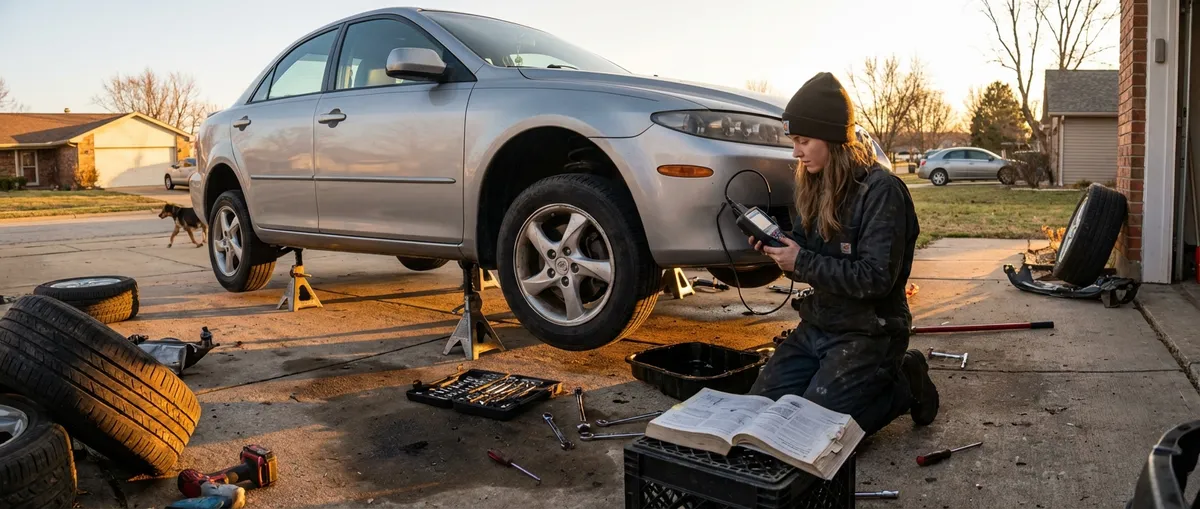
Work on a flat surface and engage the parking brake. Use wheel chocks (even pieces of 2×4 lumber are better than nothing) to keep the vehicle from rolling. If you need to lift the car, never rely on the jack alone—always support the vehicle with rated jack stands placed at the manufacturer’s recommended lift points (check your owner’s manual).
Build a basic tool kit you can trust: a quality socket set (metric and SAE), combination wrenches, screwdrivers, pliers, a trim removal tool, a torque wrench, a tire pressure gauge, a multimeter, a funnel, gloves, and safety glasses. Over time you can add specialized items like an OBD-II scanner and a brake bleeder kit.
Know when to back off: if you smell raw fuel, see brake fluid leaking, notice major oil loss, or feel unsure about supporting the vehicle safely, that’s the time to call a professional. DIY repairs are about saving money and learning—not gambling with safety.
Step-by-Step Tip #1: Replace Front Brake Pads Without Guesswork
Worn brake pads are one of the most common wear items and a perfect entry-level repair if you’re careful and methodical.
What you’ll need:
Jack and jack stands, lug wrench, socket set, C-clamp or disc brake spreader, new brake pads (correct for your car), brake cleaner, bungee cord or wire, torque wrench.
Step 1: Safely lift and remove the wheel
Loosen the lug nuts slightly while the car is on the ground. Jack the car up at the correct lift point, support it with jack stands, then remove the wheel completely. Keep lug nuts in a tray—losing one in the driveway is more common than you think.
Step 2: Inspect the brake assembly
Look at the rotor (the metal disc), the caliper (the clamp), and the pads. If the rotor is deeply grooved, cracked, or heavily rusted, plan on replacing or resurfacing it later. Confirm the new pads match the old ones in size and shape before you go further.
Step 3: Remove the caliper and old pads
Find the caliper slide bolts on the back side. Remove them with a socket or wrench, then carefully lift the caliper off the rotor. Do not let it hang from the brake hose—support it with a bungee cord or wire hung from the suspension. Slide the old pads out of the caliper bracket.
Step 4: Compress the caliper piston
Use a C-clamp or brake tool to slowly press the caliper piston back into the caliper body. Place the old pad against the piston to distribute pressure. Go slow—if it fights you or fluid overflows from the master cylinder, stop and reassess. Don’t let dirt or grease get on the piston seal.
Step 5: Install the new pads and reassemble
Clean the rotor and caliper area with brake cleaner. Install any new hardware clips that came with the pads, then slide the new pads into the bracket. Reinstall the caliper over the new pads and tighten the slide bolts to the manufacturer’s torque specs. Reinstall the wheel, snug the lugs, lower the car, and torque the lugs in a star pattern.
Final checks:
Before driving, pump the brake pedal several times until it feels firm to seat the pads against the rotors. Test brakes at low speed in a safe area. If the pedal feels spongy, stops aren’t consistent, or you hear metal-on-metal noise, stop and diagnose before regular driving.
Step-by-Step Tip #2: Track Down a Battery That Keeps Dying
A dead battery isn’t always a bad battery. Sometimes the problem is corrosion, a weak alternator, or a “parasitic draw” from something staying on when it shouldn’t.
What you’ll need:
Multimeter, battery terminal brush or sandpaper, wrench (usually 10mm), safety glasses and gloves.
Step 1: Visual inspection first
Open the hood and inspect the battery. Look for swollen sides, cracks, or acid leaks—if you see any of these, replace the battery, don’t clean it. Check cable ends for green/white corrosion and confirm the terminals are tight.
Step 2: Clean and tighten connections
Disconnect the negative terminal first, then the positive. Clean the posts and clamps with a battery brush or fine sandpaper until metal is bright and clean. Reinstall the terminals (positive first, then negative) and snug them down so they cannot twist by hand.
Step 3: Test battery voltage
With the engine off and the car sitting for at least 30 minutes, measure across the battery posts with a multimeter set to DC volts. About 12.6V means fully charged; 12.2V or less is partially discharged; under ~12V is very low. If the battery won’t charge or voltage falls quickly after charging, it may be failing.
Step 4: Check charging system with engine running
Start the car and measure across the battery again. A healthy alternator typically shows around 13.7–14.7V. Much lower means it’s not charging properly; much higher can indicate an overcharging condition, both reasons to have the charging system inspected professionally.
Step 5: Look for parasitic draw (basic check)
With the car off, lights out, and doors closed (or latched with a screwdriver), feel around for clues: dome or trunk lights staying on, aftermarket electronics that don’t shut off, or a faint buzzing from a stuck relay. A proper parasitic draw test with a multimeter in series is more advanced but doable once you’re comfortable with your meter and fuse diagrams.
Final checks:
If a clean, fully charged battery still dies overnight, and your alternator is charging correctly, capture your observations (how quickly it dies, what’s been installed recently) and bring that info to a shop—this will save diagnostic time and cost.
Step-by-Step Tip #3: Fix a Check Engine Light with an OBD-II Scanner
The check engine light (CEL) doesn’t automatically mean an expensive repair. Often it’s a sensor issue, loose gas cap, or emissions component. Learning to read the codes yourself is a huge confidence booster.
What you’ll need:
OBD-II code reader or Bluetooth scanner and phone app, your owner’s manual, web access.
Step 1: Locate the OBD-II port
The port is usually under the dashboard on the driver’s side. It’s a trapezoid-shaped connector. Plug in your scanner with the ignition off.
Step 2: Turn the key to “ON” (engine off)
Most scanners power up once the key is in the ON position. Follow the scanner prompts to connect to your car’s computer and read stored and pending codes.
Step 3: Record the codes and freeze frame data
Common codes include P0300 (random misfire), P0420 (catalyst efficiency), or P0442 (small EVAP leak). Write them down or save them in the app, including “freeze frame” data if available—that’s a snapshot of conditions when the code set.
Step 4: Research the code, not just the part
Use reputable sources (OEM info, technical bulletins, trusted forums) to understand possible causes, not just the most commonly replaced part. For example, a P0442 might be caused by a loose gas cap, cracked EVAP hose, or leaking canister—not just the purge valve.
Step 5: Address simple causes first, then clear and retest
For many EVAP or fuel system codes, tighten or replace the gas cap and clear the code with your scanner. Drive for a few days. If the light comes back with the same code, you’ll need deeper diagnosis. Avoid clearing codes right before an emissions or safety inspection—many states require all monitors to be set before passing.
Final checks:
If the CEL is flashing (not solid) while driving, that usually indicates a severe misfire that can damage the catalytic converter. Reduce speed and load, and get to a shop quickly—this isn’t a “wait and see” situation.
Step-by-Step Tip #4: Replace an Engine Air Filter and Track Down Vacuum Leaks
A clogged air filter or small vacuum leak can cause rough idle, poor fuel economy, and reduced power. Both are relatively simple to check with basic tools and your hands.
What you’ll need:
New air filter (correct for your vehicle), screwdriver or socket set (for airbox clips/bolts), flashlight, short length of vacuum hose (optional “stethoscope”).
Step 1: Find and open the air filter housing
Your owner’s manual will show the airbox location. It’s usually a plastic box connected to the intake ducting. Release clips or remove screws, then lift the lid enough to access the filter.
Step 2: Inspect and replace the filter
Remove the old filter and tap it gently on the ground—if a cloud of dust comes out, it was overdue. Hold it to the light: if you can’t see much light through it, replace it. Install the new filter in the same orientation, ensuring the sealing edges sit properly, then close and secure the airbox.
Step 3: Visually inspect intake hoses and vacuum lines
With the hood open and engine off, follow the large intake hose from the airbox to the engine, looking for cracks or loose clamps. Then inspect smaller rubber vacuum hoses for brittleness, splits, or disconnections. Flex them gently—old hoses may crack when bent.
Step 4: Listen for leaks with the engine idling
Start the engine and listen carefully around the intake area. A vacuum leak can sound like a steady hissing. You can use a short length of hose as a stethoscope: put one end to your ear and move the other end around suspected leak points (stay clear of belts and moving parts).
Step 5: Repair minor issues
Loose clamps? Tighten them. A small hose split near the end? You can trim off the damaged section and reconnect if there’s enough length. Severely cracked hoses should be replaced entirely with the correct diameter vacuum or fuel-rated hose—not generic aquarium tubing or tape.
Final checks:
After repairs, let the engine idle for a few minutes. If idle smooths out and response improves, you likely found the culprit. Persistent rough running, stalling, or fuel smell warrants professional diagnostics.
Step-by-Step Tip #5: Quiet Squeaks and Clunks in Your Suspension
Those squeaks over speed bumps or clunks when turning the wheel are more than annoyances—they can be early signs of wear. You may not always fix them fully at home, but you can often identify the cause and handle smaller issues yourself.
What you’ll need:
Floor jack and jack stands, flashlight, pry bar or sturdy piece of wood, spray silicone lubricant or white lithium grease (for rubber/metal interfaces only—never on brakes), work gloves.
Step 1: Recreate the noise safely
Before jacking the car up, drive slowly in a quiet area with the windows down. Note when the noise happens: over bumps, while turning, when braking, or at certain speeds. This helps you know where to look.
Step 2: Lift and secure the vehicle
Raise the car and support it on jack stands. Remove the wheel near where the noise seems to come from. Never crawl under a vehicle supported only by a jack.
Step 3: Inspect bushings, joints, and mounts
Use a flashlight to examine rubber bushings (control arms, sway bar links, stabilizer bar mounts) and ball joints. Look for torn rubber, missing pieces, shiny metal where parts contact abnormally, or leaking grease from joints that should be sealed.
Step 4: Check for play using a pry bar and hand tests
Gently pry on control arms or sway bar links to see if there is excessive movement in the bushings. With the wheel mounted and off the ground, grab it at 12 and 6 o’clock and rock it—looseness can indicate ball joint or bearing issues. At 3 and 9 o’clock, play can indicate tie rod or steering rack problems. Significant play is a safety issue—don’t ignore it.
Step 5: Address minor squeaks, document bigger problems
If you find dry rubber bushings that squeak but are otherwise intact, a light application of silicone spray on the contact surfaces can quiet them temporarily. Avoid petroleum-based products that can degrade rubber. For worn ball joints, severely cracked bushings, or loose tie rods, record photos and your observations and have those parts replaced professionally if you’re not equipped—these are critical to safe handling.
Final checks:
Reinstall wheels, torque lug nuts properly, and test drive on the same route where you noticed the noise. If the sound changes or disappears and you’ve only done safe lubrication or tightening, you’ve likely addressed a minor issue. Any worsening clunks, pulling, or vibration require immediate attention.
Conclusion
DIY auto repair isn’t about turning your driveway into a full-service shop—it’s about building enough skill and confidence to handle common problems, spot trouble early, and talk to professionals from a position of knowledge. Replacing brake pads, chasing down a weak battery, reading check engine light codes, refreshing your engine’s air supply, and investigating suspension noises are all realistic projects for a careful, patient DIYer.
Start with one repair that matches your comfort level. Document what you do, keep your work area safe and organized, and learn from every job—successful or not. Over time, the combination of saved repair bills and increased confidence behind the wheel is hard to beat.
Sources
- [National Highway Traffic Safety Administration (NHTSA) – Vehicle Maintenance & Safety](https://www.nhtsa.gov/road-safety/vehicle-maintenance) – Guidance on basic vehicle maintenance and safety considerations
- [AAA – How to Diagnose a Dead Car Battery](https://newsroom.aaa.com/2017/09/aaa-tips-diagnose-car-battery-trouble/) – Detailed information on recognizing and diagnosing battery and charging issues
- [U.S. Environmental Protection Agency – Onboard Diagnostics (OBD)](https://www.epa.gov/vehicle-and-engine-certification/onboard-diagnostics-obd-frequently-asked-questions) – Background on OBD-II systems and check engine light behavior
- [Bridgestone / Firestone – Brake Maintenance Tips](https://www.firestonecompleteautocare.com/repair/brakes/) – Practical explanations of brake components, wear symptoms, and service intervals
- [Your Car’s Owner’s Manual (Example: Toyota – Owner’s Manuals](https://www.toyota.com/owners/resources/owners-manuals)) – Official reference for torque specs, lift points, fluid types, and service intervals
Key Takeaway
The most important thing to remember from this article is that this information can change how you think about Auto Repair.