Modern cars are packed with tech, but a lot of common issues still show up in simple, predictable ways. If you know what to look for—and how to tackle a few basic fixes—you can solve problems earlier, spend less at the shop, and avoid getting stranded on the side of the road.
This guide walks through five practical, step‑by‑step repair tips you can actually do in your driveway with basic tools. These aren’t cosmetic tweaks—they’re real fixes that help your car run better and last longer.
1. Fixing a Weak or Corroded Battery Connection
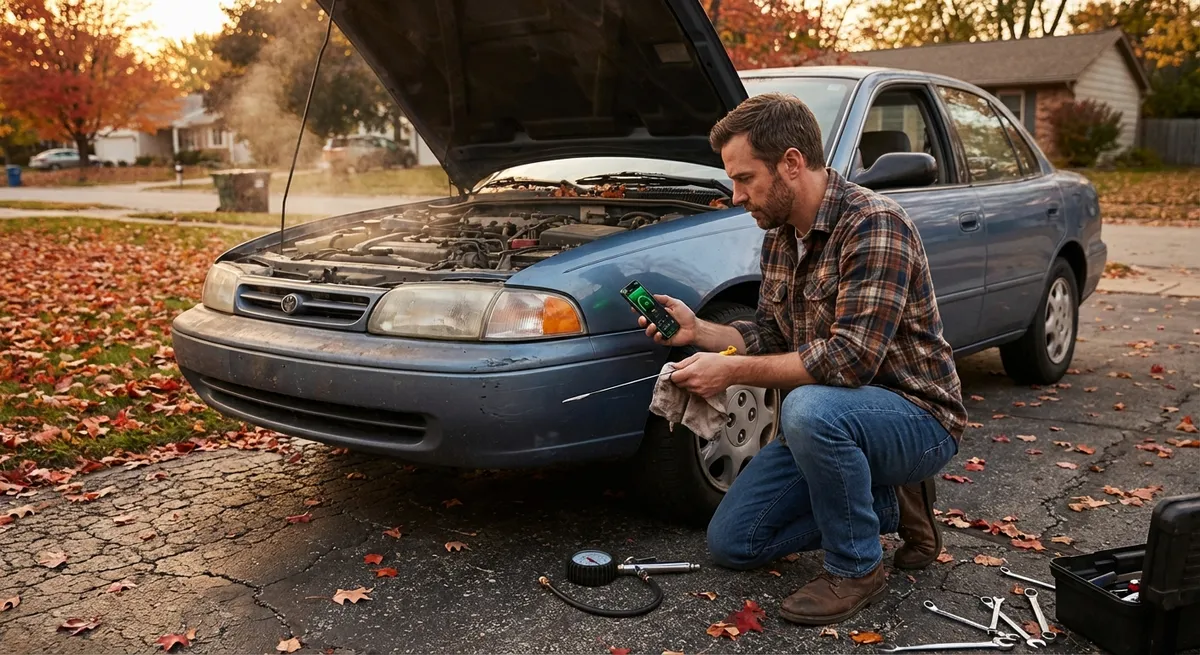
A surprising number of “my car won’t start” problems come down to dirty or loose battery connections, not a dead battery. Before you assume you need a new battery or starter, it’s worth checking the basics.
What you’ll need:
Safety glasses, gloves, wrench or socket set (typically 10mm), baking soda, water, small brush (old toothbrush works), clean rag, petroleum jelly or dielectric grease.
Step-by-step:
Shut everything down and pop the hood
Turn the engine off, remove the key, and make sure all lights and accessories are off. Open the hood and locate the battery.
Inspect the terminals and cables
Look for white, blue, or green crust on the terminals and cable ends. Gently wiggle each cable—if it moves, it’s too loose.
Disconnect the battery safely
Always remove the negative (-) cable first, then the positive (+). This helps prevent accidental short circuits if your tool touches metal.
Mix a simple cleaning solution
In a small container, mix a tablespoon of baking soda with a cup of water. This neutralizes battery acid and loosens corrosion.
Clean the terminals and cable ends
Dip your brush in the solution and scrub the terminals and inside the cable ends. Avoid splashing. When the buildup is gone, wipe everything dry with a rag.
Check for damage
Look for cracked terminals, frayed cables, or broken clamps. If you see major damage (wire strands exposed, clamp split, insulation missing), plan to replace that cable—don’t just clean it and hope for the best.
Protect and reconnect
Lightly coat the terminals with petroleum jelly or dielectric grease to slow future corrosion. Reconnect the positive (+) cable first, then the negative (-). Tighten both so they don’t move when you tug on them.
Test your work
Start the car. If cranking is stronger or more consistent than before, you likely solved a big piece of the problem. If it’s still weak, you may need a battery or starter test—but now you’ve eliminated a common cause.
2. Swapping Out Worn Brake Pads Before They Squeal Metal
Brake pads are a wear item—ignoring them can damage rotors and turn a simple job into an expensive one. If you hear light squealing when you brake (especially at low speeds), it may be the pad wear indicators doing their job.
What you’ll need:
Jack and jack stands, lug wrench, basic socket set, C‑clamp or brake piston tool, new brake pads, flathead screwdriver, shop towels, brake cleaner.
Step-by-step (front disc brakes, typical setup):
Loosen lug nuts before lifting
With the car on the ground, turn off the engine and set the parking brake (for rear brakes, use wheel chocks instead). Loosen the wheel lug nuts a half turn—don’t remove them yet.
Lift and support the vehicle
Use the jack on a proper jack point, then place jack stands under the recommended lift points. Lower the car onto the stands and confirm it’s stable before removing the wheel.
Remove the wheel and inspect the brakes
Take the lug nuts off, remove the wheel, and locate the brake caliper (the clamp around the rotor). Look through the caliper opening at the pad thickness; if the friction material is thin (around 3 mm or less), it’s time to replace.
Remove the caliper (not the hose)
Remove the caliper slide bolts (usually on the back side). Carefully slide the caliper off and support it with a wire or bungee so it doesn’t hang by the brake hose.
Remove old pads and hardware
Slide the old pads out of the caliper bracket. Note their orientation. Remove any metal clips or hardware that will be replaced with the new kit.
Compress the caliper piston
Place an old pad against the piston, then use a C‑clamp or brake tool to gently push the piston back into the caliper. Go slowly and watch the brake fluid reservoir—if it’s very full, you may need to remove a little fluid so it doesn’t overflow.
Install new hardware and pads
Snap in new hardware clips (if included) and apply a small amount of brake grease to the contact points (not on the pad surface). Slide the new pads into place.
Reinstall the caliper and wheel
Position the caliper over the new pads and reinstall the slide bolts, tightening to the manufacturer’s specified torque if possible. Reinstall the wheel, hand‑tighten lug nuts, lower the car, then torque the lugs in a star pattern.
Pump the brake pedal before driving
Before moving the car, pump the brake pedal several times until it feels firm. This seats the pads against the rotors. Test braking at low speed in a safe area.
3. Stopping a Belt Squeal by Replacing a Worn Serpentine Belt
That high‑pitched squeal when you start the car, use the A/C, or turn the steering wheel all the way can come from a glazed or cracked serpentine belt. Replacing it before it fails keeps your alternator, power steering, and A/C working.
What you’ll need:
Serpentine belt tool or ratchet (often 3/8" or 1/2"), new belt matched to your vehicle, flashlight, gloves.
Step-by-step:
Locate the belt and routing diagram
With the engine off, open the hood and find the belt at the front of the engine. Look for a routing diagram sticker under the hood; if there isn’t one, take a clear photo of the belt routing before you start.
Inspect the old belt
Check for cracks across the ribs, fraying along the edges, missing chunks, or shiny/glazed areas. These are signs it’s due for replacement.
Find the tensioner
The belt tensioner is a spring‑loaded pulley that keeps the belt tight. It usually has a square hole or bolt head for a ratchet or serpentine belt tool.
Relieve tension and remove the belt
Insert your tool into the tensioner and rotate it in the direction that loosens the belt (typically clockwise). While holding tension off, slip the belt off one of the top pulleys first, then slowly release the tensioner. Remove the belt fully.
Compare new and old belts
Lay them side by side to check length and rib count. They should match closely.
Route the new belt
Follow the diagram or your photo, routing the belt around all pulleys except one easy‑to‑reach upper pulley. Make sure ribs sit fully in the pulley grooves.
Set tension and double‑check
Again rotate the tensioner to create slack, slip the belt over the final pulley, then slowly release the tensioner. Check every pulley to ensure the belt is centered and fully seated.
Start and listen
Start the engine and watch the belt for a few moments. It should run smoothly without wobble or noise. If squealing persists, the issue could be a failing tensioner or idler pulley, which may require further work or a professional.
4. Refreshing Cloudy Headlights for Better Night Visibility
Cloudy, yellowed headlights aren’t just ugly—they cut down how far you can see at night and how visible you are to others. Restoring them is straightforward and makes a noticeable difference in safety.
What you’ll need:
Headlight restoration kit or wet/dry sandpaper (e.g., 600, 1000, 2000 grit), masking tape, plastic polish, microfiber cloths, UV sealant or clear coat (often included in kits), spray bottle with water.
Step-by-step:
Clean and tape off the area
Wash the headlights with soap and water, and dry thoroughly. Mask around the headlight with tape to protect paint and trim.
Wet sand the lens (if using sandpaper)
Start with the lowest grit provided (e.g., 600). Spray the headlight and paper with water and sand in straight, overlapping passes. The cloudy slurry you see is the oxidized plastic coming off.
Progress through finer grits
Move up to 1000, then 2000 grit, changing sanding direction slightly each time. Keep everything wet and avoid dry sanding. Your goal is an even, matte finish with no shiny spots.
Polish the surface
Apply a small amount of plastic polish to a microfiber cloth or the pad included in your kit. Buff the lens in circular motions until it looks clear and glossy. Wipe away residue.
Seal with UV protection
This step is crucial. Apply the provided UV sealant or a clear coat made for plastic headlights, following the instructions. This helps prevent the lens from quickly turning cloudy again.
Let it cure and compare
Allow the coating to dry fully before driving or washing the car. Step back and compare your restored headlight to the other side. Once satisfied, repeat on the other headlight.
5. Tracing and Fixing a Simple Vacuum Leak That Causes Rough Idle
A small vacuum leak can cause rough idle, a “check engine” light, poor fuel economy, or even stalling. While complex diagnosis is best left to a pro, you can often spot and fix obvious leaks in rubber hoses and connections.
What you’ll need:
Flashlight, basic OBD‑II code reader (optional but helpful), replacement vacuum hose (correct size), utility knife or hose cutter, small hose clamps (if needed), safety glasses.
Step-by-step:
Note the symptoms and scan for codes (if you can)
Rough idle, hissing noises, and a “check engine” light with lean codes (like P0171/P0174) can point to vacuum issues. If you have a code reader, scan and write down any codes before you start.
Locate common vacuum lines
With the engine off and cool, open the hood. Look around the intake manifold, throttle body, and brake booster (large round component on driver’s side firewall). You’ll see small rubber or plastic hoses—these are your vacuum lines.
Do a visual and feel inspection
Gently flex each hose and look for cracks, splits, or loose connections. Pay attention to bends and where hoses slide onto fittings. Listen (with engine running) for a faint hissing sound that changes when you move a hose.
Confirm an obvious leak
If you find a hose that’s cracked, split at the end, or barely hanging on, that’s a likely leak source. If it’s brittle and breaking in your hands, it’s far beyond due for replacement.
Cut and replace damaged sections
For minor end cracks, you can sometimes cut 1/2"–1" off the end of the hose with a utility knife and reconnect it if there’s enough slack. For longer cracks or hardened hoses, replace the entire section with new hose of the correct inner diameter.
Secure connections
Push hoses fully onto fittings so they’re snug. If the connection still feels loose, add a small hose clamp—but don’t overtighten and crush the hose or fitting.
Retest and clear codes
Start the engine and let it idle. If it runs smoother and any hissing is gone, you’ve likely fixed at least part of the issue. If you pulled codes, clear them with the reader and see if they return over the next few drives.
Conclusion
Most drivers don’t need a full mechanic’s toolbox to make meaningful improvements to their car’s reliability and safety. Solid battery connections, healthy brakes, a fresh belt, clear headlights, and leak‑free vacuum lines all make a difference you can feel every time you drive.
Start with one repair you feel comfortable with, take your time, and use your car’s owner’s manual as a guide. The more you learn in your own driveway, the better prepared you’ll be to spot problems early, talk confidently with pros, and keep your car on the road longer—without wrecking your budget.
Sources
- [National Highway Traffic Safety Administration (NHTSA) – Vehicle Maintenance](https://www.nhtsa.gov/sites/nhtsa.gov/files/811075.pdf) - Federal guidance on basic vehicle maintenance and safety checks
- [AAA – Car Battery Maintenance & Safety](https://www.ace.aaa.com/automotive/advocacy/car-battery-maintenance.html) - Practical advice on battery care, corrosion, and starting issues
- [U.S. Department of Transportation – Brake Safety](https://www.nhtsa.gov/brakes) - Overview of brake system components and safety considerations
- [Family Handyman – How to Replace a Serpentine Belt](https://www.familyhandyman.com/project/how-to-replace-a-serpentine-belt/) - Step‑by‑step example of belt replacement with photos
- [Penn State University – Automotive Headlight Restoration Study](https://www.engr.psu.edu/khan/docs/Headlamp_Restoration.pdf) - Technical look at headlight degradation and restoration effectiveness
Key Takeaway
The most important thing to remember from this article is that this information can change how you think about Auto Repair.